


What Are Lab Chemicals Used For?
Lab chemicals support much more than experiments in a research facility. They help scientists measure, identify, clean, preserve, and compare materials. In hospitals, carefully controlled reagents support diagnostic testing. In universities, students use buffers, indicators, and solvents to observe reactions safely. Manufacturers rely on them for quality control, product development, and process monitoring. Environmental laboratories also use lab chemicals to examine water, soil, and air samples.
Their purpose depends on concentration, purity, storage, and handling. A small labeled vial may contain a reagent for testing acidity. Another may help reveal trace metals in a water sample. Every container should have a readable label, an accessible safety data sheet, and suitable storage conditions. Dr. James A. Kaufman, founder of the Laboratory Safety Institute, stated, “Safety is not a priority; it is a prerequisite.” That principle remains practical, especially when routine work creates overconfidence.
The details matter.
Professional laboratories select chemicals according to validated methods, equipment requirements, and applicable regulations. Trained personnel also check expiration dates, compatibility, ventilation, and waste procedures before use. These habits demonstrate experience, not unnecessary caution. Still, no laboratory process is perfect. Labels can fade, instructions can be misunderstood, and a familiar task can hide a new risk. Responsible chemical use therefore requires continual review, documented training, and honest reporting of mistakes. Understanding what lab chemicals are used for means understanding their value, their limits, and the discipline required to use them reliably.
What Are Laboratory Chemicals?
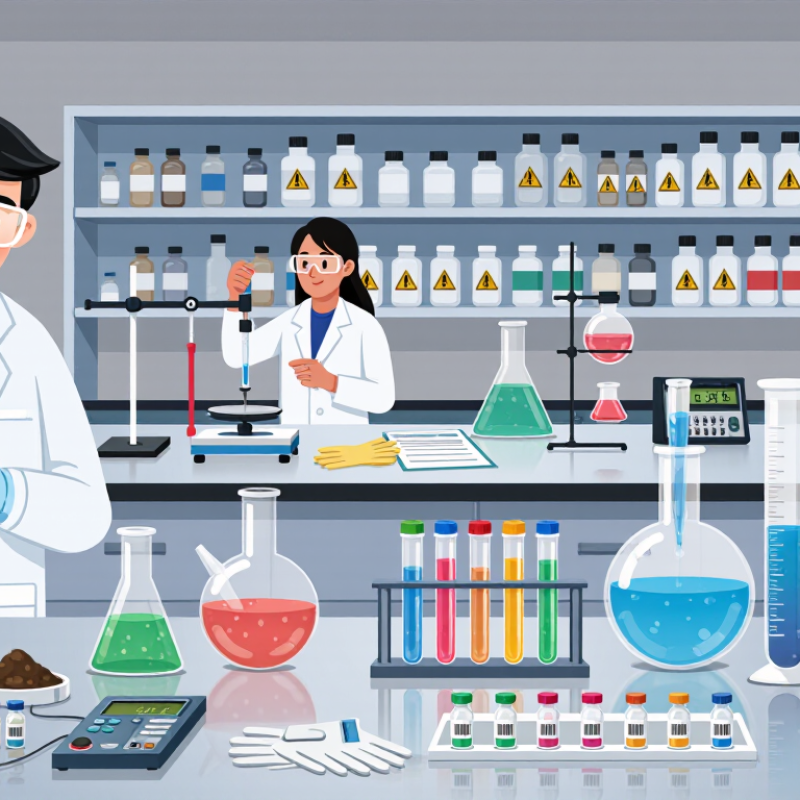
Laboratory chemicals are substances chosen for controlled testing, measurement, cleaning, or biological work. They include reagents, solvents, buffers, indicators, stains, reference standards, and culture materials. Each chemical has a defined purpose and expected behavior. A buffer helps maintain stable acidity during an experiment. A solvent dissolves another substance without changing the target reaction. A reference standard helps analysts compare unknown samples with a known value. Small differences matter. Purity, concentration, and storage conditions can change a measured result.
In a working laboratory, every container should display its name, concentration, hazard information, lot number, and expiry date. A technician should check the safety data sheet before opening an unfamiliar material. Suitable gloves, eye protection, ventilation, and clean tools reduce avoidable exposure. For example, a stained sample may require a carefully prepared dye solution and controlled timing. A calibration standard needs traceable preparation, not a guessed volume. Even water has a role. Ultrapure water can reduce background ions in sensitive tests.
Chemical choice depends on the method, sample type, and required accuracy. An analytical-grade reagent may suit quantitative testing. A technical-grade material may work for general cleaning or preparation. The distinction is not always neat. It is easy to assume that a clear liquid is harmless, which is unsafe reasoning. A rushed transfer, damp container, or overlooked expiry date can weaken confidence in the result. Experienced teams review unexpected findings instead of forcing them to fit.
What Are Lab Chemicals Used For? - What Are Laboratory Chemicals?
| Chemical Category | Representative Chemicals | Main Laboratory Uses | Typical Applications | Key Properties | Primary Safety Considerations | Typical Storage Guidance |
|---|---|---|---|---|---|---|
| Acids | Hydrochloric acid; sulfuric acid; acetic acid | pH adjustment, acid-base titration, digestion, cleaning, and chemical synthesis | Determining alkalinity, preparing acidic solutions, and dissolving selected mineral deposits | Low pH; some are corrosive and may react strongly with bases or reactive metals | Corrosive; can cause severe skin and eye damage. Some concentrated acids generate heat when diluted. | Store in a compatible corrosive-chemical cabinet, separated from bases and incompatible materials. |
| Bases and Alkalis | Sodium hydroxide; potassium hydroxide; ammonia solution | pH adjustment, neutralization, hydrolysis, and preparation of alkaline solutions | Buffer preparation, titration, sample treatment, and cleaning of suitable laboratory glassware | High pH; many are corrosive and react with acids | Corrosive to skin, eyes, and some metals. Ammonia solutions may release irritating vapors. | Keep tightly closed in a corrosive-chemical cabinet, away from acids and incompatible metals. |
| Organic Solvents | Ethanol; methanol; acetone; ethyl acetate | Dissolution, extraction, rinsing, chromatography, and sample preparation | Separating compounds, cleaning compatible equipment, and preparing analytical samples | Many are volatile, flammable, and effective at dissolving organic substances | Fire risk; some solvents are toxic by inhalation, ingestion, or skin absorption. Methanol can cause serious systemic poisoning. | Store in an approved flammable-liquid cabinet when applicable, away from ignition sources and oxidizers. |
| Buffers | Phosphate buffer; acetate buffer; citrate buffer | Maintaining a relatively stable pH during experiments and analyses | Biological assays, enzyme studies, calibration checks, and analytical sample preparation | Resist moderate pH changes when small amounts of acid or base are added | Usually lower hazard than concentrated acids or bases, but the complete formulation must be assessed. | Use clean, labeled containers and follow the specified temperature and contamination-control requirements. |
| Inorganic Salts | Sodium chloride; potassium chloride; calcium chloride | Preparing solutions, controlling ionic strength, conducting precipitation reactions, and calibration work | Electrolyte solutions, analytical chemistry, cell or tissue media, and controlled reaction environments | Often crystalline solids that dissolve in water to form ionic solutions | Hazards vary by substance; dust may irritate the eyes or respiratory tract, and some salts are toxic. | Keep dry, sealed, clearly labeled, and protected from contamination and incompatible chemicals. |
| Oxidizing Agents | Hydrogen peroxide; potassium permanganate; nitrate salts | Oxidation reactions, disinfection-related studies, analytical chemistry, and controlled synthesis | Redox titrations, oxidation-state investigations, and treatment of selected laboratory materials | Accepts electrons and can accelerate combustion or react vigorously with reducing substances | May intensify fires and react dangerously with combustible, organic, or reducing materials. | Store separately from flammables, organic solvents, reducing agents, and heat sources. |
| Reducing Agents | Sodium thiosulfate; ascorbic acid; sodium borohydride | Reduction reactions, removal of residual oxidants, and redox analysis | Quenching selected oxidizing species, redox titrations, and chemical synthesis | Donates electrons and may be sensitive to moisture, oxygen, or acidic conditions | Some substances release heat or flammable gases when improperly mixed with acids, water, or oxidizers. | Store according to the substance-specific safety data, protected from incompatible oxidizers and moisture where required. |
| Indicators and Dyes | Phenolphthalein; methyl orange; methylene blue | Showing pH changes, identifying reaction endpoints, and staining biological or chemical samples | Acid-base titrations, microscopy, qualitative tests, and visual detection of chemical changes | Produce a visible color change within a defined chemical or pH range | Hazards differ widely; powders and concentrated solutions may irritate skin, eyes, or the respiratory system. | Keep sealed, labeled, and protected from light or moisture when specified by the safety documentation. |
| Analytical Standards | Standard solutions of sodium chloride, potassium hydrogen phthalate, or metal ions | Instrument calibration, method verification, quality control, and quantitative measurement | Calibrating pH meters, chromatographic systems, spectrometers, and titration procedures | Known and documented concentration or purity | Risk depends on the chemical used; contamination or incorrect concentration can compromise results. | Store under the stated conditions, monitor expiration dates, and prevent evaporation or contamination. |
| Biochemical Reagents | Glucose; amino acids; urea; tris(hydroxymethyl)aminomethane | Supporting biochemical assays, cell or enzyme studies, and preparation of biological media | Protein analysis, metabolic testing, molecular biology, and physiological solution preparation | Often water-soluble compounds selected for biological compatibility or specific reactivity | Generally moderate hazard, but biological compatibility, purity, and contamination controls are important. | Follow specified temperature, light, moisture, and sterility requirements; label prepared solutions with dates. |
| Laboratory Gases | Carbon dioxide; nitrogen; oxygen; helium | Creating controlled atmospheres, supporting instruments, purging systems, and gas analysis | Incubation, inert-atmosphere work, combustion studies, chromatography, and instrument operation | Compressed gases with properties that may be inert, oxidizing, or capable of displacing oxygen | Cylinders can cause physical injury if mishandled; leaks may create asphyxiation, oxidation, or fire hazards. | Secure upright cylinders, protect valves, separate incompatible gases, and use suitable regulators. |
| Water and Purified Solvent Systems | Distilled water; deionized water; ultrapure water | Solution preparation, rinsing, dilution, extraction, and analytical procedures | Preparing reagents, washing glassware, blank measurements, and instrument workflows | Low levels of dissolved ions or contaminants compared with ordinary tap water | Usually low chemical hazard, but contamination can affect results and microbial growth may occur in stored water. | Use clean, compatible containers and follow laboratory requirements for freshness and contamination control. |
Important: Actual handling, storage, transport, and disposal requirements depend on the specific chemical, concentration, quantity, and local regulations. Always consult the current Safety Data Sheet and follow the laboratory’s approved procedures.
Related Posts
-
Top 10 Lab Chemicals Suppliers for Global Buyers
-

What is the Importance of Scientific Supplies in Research and Education?
-
2026 How to Choose the Right Lab Supplies for Your Research Needs?
-
Why Choose Lab Freezers for Reliable Sample Storage?
-

2026 How to Choose the Best Pathology Equipment for Your Laboratory Needs?
-

2026 Top Lab Supplies Trends for Researchers and Scientists?
Newsletter
Subscribe to our newsletter and receive the latest news and exclusive insights every month. No spam.

LabConsulting GmbH and LC LabService GmbH are Austrian companies which cooperate with over 600 manufacturers and offers a selection of more than 180,000 products and various laboratory product and service solutions for our Labcustomers.
Die LabConsulting GmbH und die LC LabService GmbH sind österreichische Unternehmen, die mit über 600 global verteilten Herstellern zusammenarbeiten und mit einer Auswahl von mehr als 180.000 Produkten und verschiedenen Laborprodukt- und Servicelösungen unseren Parnern im Labor anbieten.
INSTOCK CATALOG


Our services
Our services

