
BlogsBlogs

Explore cutting-edge articles on laboratory products, industry innovations, and research trends with Lab Consulting.

Explore cutting-edge articles on laboratory products, industry innovations, and research trends with Lab Consulting.

Why Choose Lab Freezers for Reliable Sample Storage?

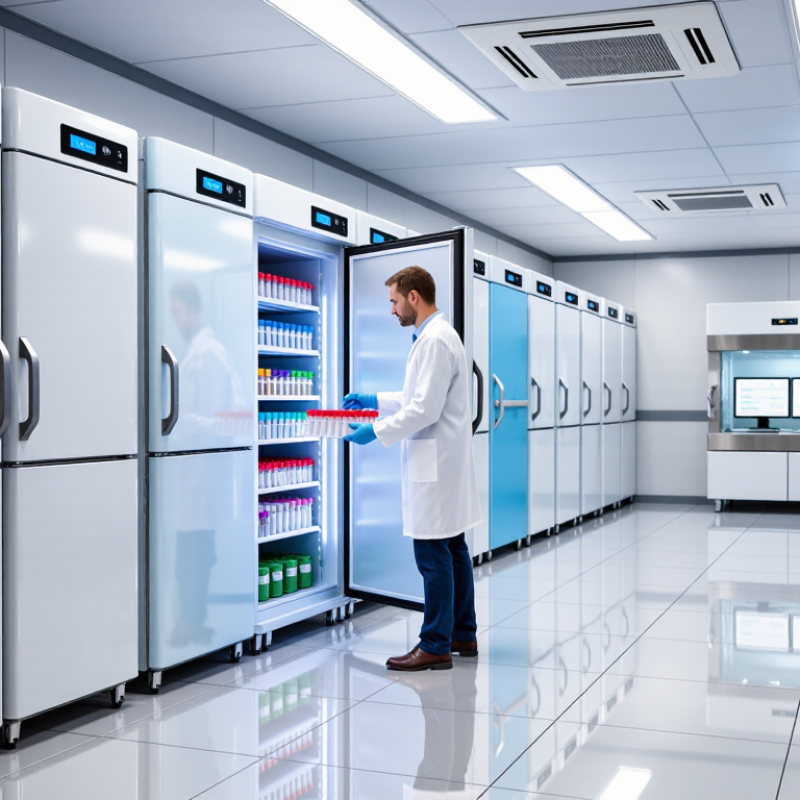
Reliable sample storage is not simply a matter of choosing the coldest cabinet. It requires stable temperatures, controlled access, alarm visibility, and documented recovery procedures. Lab freezers support this chain by protecting specimens during overnight runs, power interruptions, and repeated door openings.

The World Health Organization’s Laboratory Biosafety Manual emphasizes risk-based storage, traceability, and equipment monitoring. The CDC Vaccine Storage and Handling Toolkit specifies -90°C to -60°C for ultra-cold storage and -50°C to -15°C for frozen products. These ranges show why ordinary household appliances are unsuitable for valuable laboratory materials. A laboratory freezer must also limit temperature drift. A few warm minutes may matter when samples contain irreplaceable DNA, enzymes, cultures, or clinical research material.

Cryobiologist Dr. John G. Baust has expressed a useful principle: “Cryopreservation is a process, not a single event.” That idea applies directly to lab freezers. Preservation begins with validated loading patterns and continues through calibration, alarm testing, maintenance, and emergency transfer. The ISBER Best Practices guidelines also stress documented procedures and continuous quality oversight for biorepositories.

Market reports from Grand View Research and Fortune Business Insights identify expanding demand for laboratory cold-storage equipment, driven by biobanking, pharmaceutical research, and diagnostic testing. Yet growth alone does not guarantee quality. A freezer can look advanced while suffering from poor organization or delayed alarm response. That is the uncomfortable part. Reliable storage depends on disciplined human habits, not hardware alone.
Why Choose Lab Freezers for Reliable Sample Storage?

What Are Lab Freezers and How Do They Support Sample Storage?

Lab freezers are temperature-controlled units designed to preserve research samples under consistent conditions. Unlike domestic freezers, they provide tighter temperature control, stronger insulation, and monitoring features. Common models operate around -20°C, -40°C, or -80°C, depending on sample sensitivity. Some use mechanical refrigeration, while others use staged cooling and insulated storage chambers. This design slows enzymatic activity, oxidation, and microbial growth without unnecessarily changing the sample. A freezer is not just a cold box. It is part of a controlled storage system. Reliable units support calibrated sensors, digital displays, door alarms, and temperature data logging. These features help staff identify temperature excursions before valuable material is compromised.

In daily laboratory work, placement matters. Leave clearance around vents, limit door openings, and label shelves clearly. Small habits protect stability. Samples should be divided into workable aliquots, so one experiment does not warm an entire collection. A written inventory also reduces searching time and repeated door opening. Validated temperature mapping is important because the center, corners, and door area may not behave identically. Backup power and an emergency transfer plan add another layer of protection. Still, no freezer is effortless. Frost buildup, crowded shelves, or a forgotten alarm test can weaken reliability. I would review alarm records and maintenance notes regularly, even when readings look normal. That extra check may reveal a pattern before it becomes a failure.

Key Features That Make Lab Freezers Reliable

Reliable lab freezers protect samples through controlled temperature, stable airflow, and disciplined monitoring. A setpoint alone is not enough. Good units use calibrated sensors, independent high and low alarms, and battery-backed notifications. ISBER’s Best Practices for Repositories, Fifth Edition, stresses documented temperature records, alarm response, and preventive maintenance. These features turn a cold box into a controlled storage system. Small details matter. A door left open for two minutes can warm racks near the front.

Mechanical reliability also depends on compressor design, insulation, gasket quality, and defrost strategy. U.S. Department of Energy efficiency guidance reports that ultra-low-temperature freezers commonly consume about 20–30 kWh daily. Better insulation and efficient compressors reduce heat load, operating cost, and room-cooling demand. ENERGY STAR testing guidance also considers energy use, temperature performance, and recovery after door openings. Recovery speed matters during busy sample retrieval. Yet efficiency should not outrank stability. A low-energy freezer with weak recovery is a poor bargain.

Look for data logging, remote alerts, access records, and a visible temperature display. Verify alarm points with an independent, calibrated thermometer. The WHO Laboratory Biosafety Manual, Fourth Edition, recommends suitable monitoring and maintenance for equipment affecting specimen integrity. In practice, alarm escalation needs named staff, backup contacts, and written response times. This is often overlooked. Shelves should hold labeled boxes without blocking vents. I would question claims lacking test conditions, ambient temperature, or recovery measurements. Reliability is not perfection. It is measurable performance under ordinary mistakes.

Why Choose Lab Freezers for Reliable Sample Storage?

Reliable laboratory storage depends on maintaining a defined temperature range. The chart below shows commonly used temperature ranges for chilled, standard frozen, and ultra-low-temperature sample storage.

Stable temperature control, continuous monitoring, visual and audible alarms, secure doors, and backup protection help reduce the risk of sample degradation during long-term storage. These ranges are representative starting points; validated protocols may require tighter limits.

How Temperature Control Protects Sample Integrity

Why Choose Lab Freezers for Reliable Sample Storage?

How Temperature Control Protects Sample Integrity

Temperature control is the core of dependable sample storage. Biological materials can deteriorate when temperatures drift, even if the change seems minor. A lab freezer maintains a defined range through sensors, insulation, and controlled cooling cycles. Stable conditions slow enzymatic activity and reduce unwanted chemical reactions. That matters for tissues, reagents, extracts, and other temperature-sensitive materials. Cold air alone is not enough. The real protection comes from consistency.

In daily laboratory work, door openings create brief warm zones near the front shelves. A well-designed freezer limits recovery time after each opening. Digital displays show current conditions, while independent alarms warn about rising temperature, power loss, or an unsealed door. Data logging adds evidence, not guesswork. Staff can review trends, document excursions, and check whether samples faced repeated stress. Sensors should be calibrated against traceable references, and temperature mapping should cover corners, shelves, and frequently used areas. Small details matter.

Reliable storage also depends on human practice. Samples need clear labels, organized racks, and enough space for air circulation. Overloading a cabinet can create uneven temperatures. A backup power plan helps, but it may not solve every failure. Batteries expire, alarms get muted, and procedures can become outdated. That is an uncomfortable reality. Regular alarm tests, maintenance records, and staff training make control more trustworthy. Teams should question their assumptions: a freezer reading -80°C at one sensor may not mean every container shares that temperature. Independent checks can reveal weaknesses before sample integrity is lost.

Choosing the Right Lab Freezer for Different Storage Needs

Why Choose Lab Freezers for Reliable Sample Storage?

Choosing the Right Lab Freezer for Different Storage Needs

Choosing a lab freezer starts with the sample, not the equipment catalog. Routine specimens may suit a standard -20°C freezer. Long-term preservation often requires temperatures near -80°C. Ultra-low storage needs tighter control and stronger backup planning. A freezer should match the sample’s stability requirements, container size, and expected storage period.

Access frequency also matters. A busy laboratory needs organized drawers, clear labels, and rapid temperature recovery. A large unit may hold more boxes, but unused space can waste energy. I once treated capacity as the main criterion. That decision made daily retrieval slower than expected. Smaller compartments can improve workflow, even when they reduce total volume.

Temperature Uniformity and Everyday Reliability

Temperature uniformity deserves careful attention. Ask for performance data, alarm functions, and documented calibration procedures. Independent temperature mapping can reveal warm areas near the door or upper shelves. Frost-free designs may simplify maintenance, but they are not ideal for every sensitive sample. Manual defrosting is inconvenient. Still, it can reduce temperature fluctuations in certain applications.

Keep an inventory log, inspect door seals, and test alarms regularly. A reliable freezer depends on these habits, not only its lowest temperature.

Maintenance Practices for Safe and Consistent Performance

Reliable sample storage depends on maintenance, not freezing temperature alone. In daily laboratory work, small temperature swings can damage sensitive materials before alarms become urgent.

Keep it simple. Record the displayed temperature at a fixed time each day, then compare it with an independent calibrated probe. Review the trend weekly. A single reading can look normal while the freezer slowly loses performance.

Clean the door gasket and cabinet surfaces with approved, non-abrasive materials. Check the seal with a thin sheet of paper; resistance should feel consistent around the frame. Inspect vents and condenser areas for dust, leaving safe clearance for airflow.

Never pack shelves tightly. Cold air needs a path to circulate. Test audible and remote alarms on a planned schedule, including power-failure alerts. Document every test, repair, and temperature excursion in a controlled log.

Defrost when ice buildup affects the door seal or usable space, following the unit’s procedure. Move samples to validated backup storage before service begins.

Maintenance staff should verify calibration after major repairs or sensor replacement. We sometimes postpone these checks during busy periods. That is a weakness, not a strategy. Clear ownership, written procedures, and periodic review make performance more consistent.

Newsletter

Subscribe to our newsletter and receive the latest news and exclusive insights every month. No spam.