BlogsBlogs

Explore cutting-edge articles on laboratory products, industry innovations, and research trends with Lab Consulting.

Explore cutting-edge articles on laboratory products, industry innovations, and research trends with Lab Consulting.

Where to Buy Second Hand Laboratory Equipment in 2026?

In 2026, buying second hand laboratory equipment can stretch a research budget, but a low price is only the beginning of the decision. A used centrifuge may look clean in a listing photo and still have an undocumented service history. That matters. Grand View Research estimated the global laboratory equipment market at about US$40.4 billion in 2023, with continued growth projected through 2030. This figure describes the overall market, not the resale sector, so it should not be mistaken for proof of used-equipment demand. Still, it shows how broad the equipment landscape is.

Where should buyers look? Options include specialist refurbished-equipment dealers, manufacturer resale programs, university surplus departments, laboratory auctions, and established online marketplaces. Each route carries different trade-offs in price, support, and inspection access. A dealer may provide testing records and a limited warranty; a surplus listing may offer a better price but fewer assurances. Sometimes the cheaper option costs more later.

The WHO Laboratory Biosafety Manual, fourth edition, promotes a risk-based approach to laboratory safety. Applied to purchasing, that means matching equipment to its intended use and checking its condition, calibration, service records, and available parts before committing. Ask for serial numbers, maintenance documentation, and a demonstration where practical. For temperature-sensitive instruments, request recent performance data rather than relying on a seller’s description. This guide will compare purchasing channels and explain the checks that help buyers make informed choices. No checklist removes every risk, and refurbished equipment is not automatically the right choice for every laboratory.
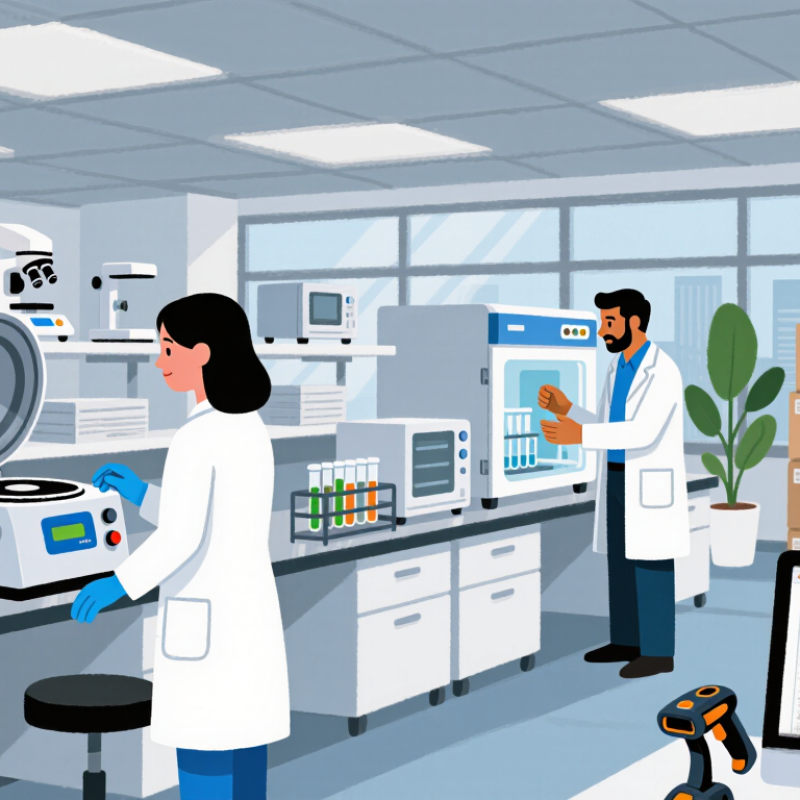
Where to Buy Second Hand Laboratory Equipment in 2026?

Types of Sellers Offering Second-Hand Laboratory Equipment

Second-hand laboratory equipment in 2026 comes from several types of sellers. University and hospital surplus departments sell equipment no longer needed for teaching or research. Listings may describe age, condition, and included accessories, but service histories can be incomplete. Ask who inspected the unit and when. Photos can mislead.

Specialist resellers may inspect, repair, or refurbish instruments before resale. Some provide test reports or limited warranties, so confirm exactly what those cover. Independent brokers and online marketplaces offer wider choice, but listing quality varies. Buying directly from a laboratory that is closing or upgrading may provide useful context, such as storage conditions and recent use.

No seller type is automatically best. A polished listing is not proof of reliability.

Tips: Request the model and serial details, maintenance records, calibration status, included probes or cables, and a written return policy. For measurement or temperature-sensitive equipment, ask for recent test results. Check that the unit suits your method before paying.

Online Marketplaces for Used Laboratory Equipment

Online marketplaces make it easier to compare used laboratory equipment across locations and price ranges. Search by equipment type, model specifications, working capacity, and condition rather than relying on broad category labels.

A centrifuge listing, for example, should state its rotor compatibility, operating status, and included accessories. Details matter.

Read the description carefully and ask for clear photographs of controls, connectors, labels, and visible wear. Request available service records, maintenance history, and calibration documentation when relevant to the instrument.

These documents can help you judge whether the equipment suits your procedures, but they do not guarantee future performance. A polished listing is not proof.

Ask how the seller tested the unit, what is included, and whether a return window or support is available. Check shipping arrangements, too; sensitive instruments may need careful packing and suitable transport.

Compare the full delivered cost, not just the listed price. One detail is easy to miss: a low-cost instrument may need parts, installation, or verification before use.

I would still treat marketplace information as a starting point, not a substitute for a qualified inspection.

Buying Directly from Labs, Universities, and Refurbishers

When buying second-hand laboratory equipment in 2026, consider contacting laboratories and universities directly. Their staff may know how an instrument was used, when it was last serviced, and why it is being sold. Ask for its operating history, maintenance records, and any calibration documents. A folder of records helps. It is not a guarantee.

University surplus listings can offer useful details, but equipment may be sold as-is. Before arranging collection, request clear photos of the display, connectors, accessories, and identification plate. Check that the instrument’s power requirements, dimensions, and software fit your workspace. A microscope without its correct eyepieces, for example, may need extra parts before it is useful. Small omissions add up.

Refurbishers can be a better route when you need inspection, repairs, or a limited warranty. Ask what testing was performed and whether the report records actual measurements, not just a pass mark. Confirm which parts were replaced and how returns are handled. Compare the total cost, including freight, installation, and possible recalibration, with the seller’s price. Still, even careful checks leave some uncertainty, especially when older equipment has incomplete records. That is worth admitting before purchase.

Where to Buy Second-Hand Laboratory Equipment in 2026

A practical comparison of buying directly from labs, universities, and refurbishers.

Scores are qualitative guidance on a 1–5 scale, not measured market statistics. Direct lab sales may offer stronger price potential, while refurbishers typically provide more inspection and after-sale support. University sales and surplus channels vary by institution and listing.

Laboratory Auctions and Surplus Sales in 2026

Laboratory auctions and surplus sales can offer useful savings in 2026, especially for equipment from facility upgrades or closed research spaces. Listings may include microscopes, centrifuges, balances, and cold-storage units. Some items are barely used; others have sat in storage for months. Look closely at photographs, inventory notes, and sale conditions.

Ask for the model details, service history, and any available calibration records. Check whether essential parts are included, such as a rotor, power cable, shelf, or software key. A low bid can become expensive after packing, freight, installation, or repairs. It happens. Confirm the pickup window and transport requirements before bidding, particularly for heavy or temperature-sensitive equipment.

Surplus sales may allow more time for questions than timed auctions, but inspection access varies. If possible, view the equipment running and check for warning lights, unusual noise, or damaged seals. Ask how the seller defines “working”; the phrase can mean different things. Auction terms may limit returns, so read them carefully and set a firm budget. A clean exterior is reassuring, but it is not proof of reliable performance.

How to Verify Equipment Before Purchasing

Before buying used laboratory equipment, inspect it in person or request a live video demonstration. Ask the seller to show the serial plate, power cable, chamber, and control panel clearly. Look for corrosion, cracked insulation, residue, loose hinges, or uneven display readings. Small signs matter. Request service history, calibration records, manuals, and a list of replaced parts. A clean exterior does not prove accurate performance. Have the unit run through a normal operating cycle with a suitable test load. Record its displayed values and compare them with an independent reference instrument when possible.

For temperature-controlled devices, check stability at several points, not just the set temperature. For balances, inspect the leveling feet and test repeatability with appropriate reference weights. For pumps or centrifuges, listen for unusual vibration and watch for leaks or excess heat. Ask who is responsible for packing, freight damage, and commissioning, then put agreed terms in writing. If records are missing, treat performance as unverified rather than assuming the equipment is ready. That may feel cautious. It is. Even a careful demonstration has limits; a brief test may not reveal intermittent faults. For equipment used in critical work, allow for inspection and calibration by a qualified technician after delivery.

Newsletter

Subscribe to our newsletter and receive the latest news and exclusive insights every month. No spam.