


What Are the Top Scientific Lab Supplies from China?
Choosing the right scientific lab supplies from China takes more than comparing prices. Buyers may encounter beakers, pipette tips, centrifuge tubes, microscope slides, protective gloves, and benchtop instruments across a wide range of suppliers. The best option depends on the task, material compatibility, and required measurement accuracy. A low unit price can look attractive. It may not tell the whole story.
Physicist Richard Feynman offered a useful reminder: “The first principle is that you must not fool yourself—and you are the easiest person to fool.” His words concern scientific thinking, not product sourcing, but they suit careful purchasing. Check product specifications, batch consistency, calibration records where relevant, and available quality documentation. Inspect practical details, too: clear graduations on a tube, an intact seal, or packaging that keeps tips clean. These small details matter.
There is no single “top” product for every laboratory. A teaching lab may prioritize durable glassware, while a research team may need precise consumables and dependable instrument support. That sounds simple. It isn’t. Supplier claims should be checked against samples, documentation, and the lab’s own requirements. Even careful checks can miss a weakness, so evaluation should continue after delivery. This guide introduces common scientific lab supplies from China and the criteria that help buyers compare them with greater confidence.
What Scientific Lab Supplies Are Made in China?
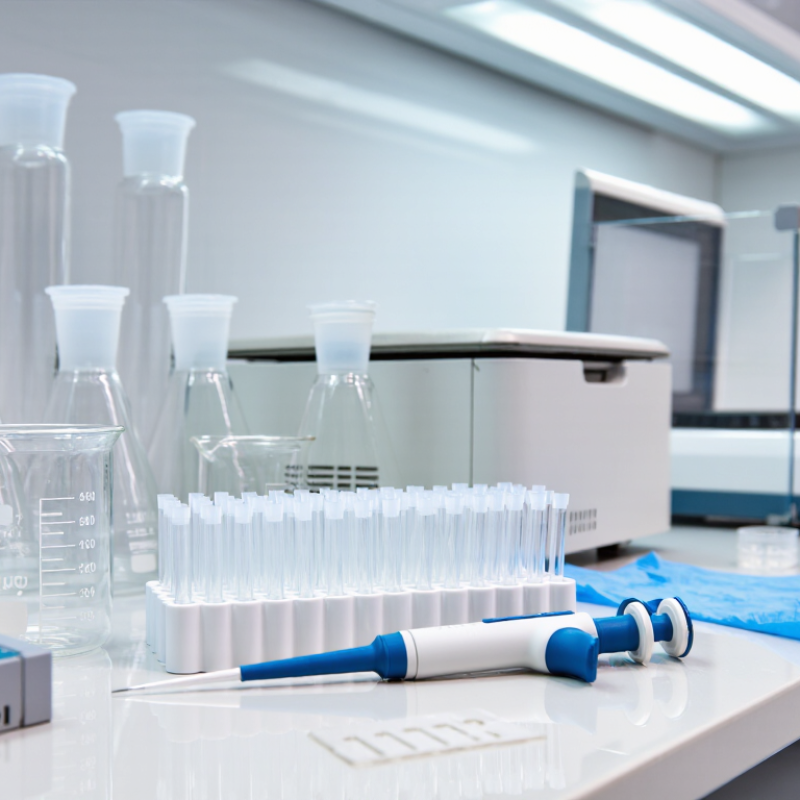
China-made scientific laboratory supplies cover everyday consumables and more complex instruments. Common products include borosilicate beakers, flasks, test tubes, reagent bottles, plastic pipette tips, centrifuge tubes, and Petri dishes. Suppliers also manufacture balances, microscopes, centrifuges, incubators, pH meters, water baths, and laboratory safety cabinets. The range is broad. Product specifications and consistency can differ between factories, so “made in China” alone does not describe performance. World Bank World Development Indicators recorded China’s research and development spending at about 2.56% of GDP in 2022. China’s National Bureau of Statistics reported manufacturing value added grew 5.0% in 2023. These figures describe the wider research and manufacturing base, not the output of lab supplies specifically.
Tips: Match the item to its use. For glassware, check material, volume markings, and heat resistance. For pipette tips and tubes, confirm dimensions and compatibility with your instruments. Ask for calibration records or test documents when precision matters. Inspect a sample before placing a large order; small defects can disrupt routine work. And specifications may look clear on paper, yet still need practical verification.
Some details are easy to miss. A centrifuge’s stated maximum speed may not tell you which rotor is included. A low-cost balance may also need a stable, vibration-free bench. Compare the exact configuration, warranty terms, and replacement-part availability, rather than relying only on a product category or catalogue image.
| Product Category | Common Examples | Typical Materials or Specifications | Common Laboratory Uses |
|---|---|---|---|
| Laboratory glassware | Beakers, measuring cylinders, flasks, test tubes, and reagent bottles | Borosilicate glass is commonly used for laboratory glassware because it has good thermal and chemical resistance. Graduated items are marked with volume scales. | Preparing, measuring, mixing, heating, and storing laboratory liquids. |
| Plastic laboratory consumables | Centrifuge tubes, sample containers, Petri dishes, pipette tips, and microtubes | Common plastics include polypropylene (PP), polystyrene (PS), and polyethylene (PE). Centrifuge tubes are often supplied in 15 mL and 50 mL sizes; pipette tips are available in ranges such as 10 µL, 200 µL, and 1,000 µL. | Sample collection, liquid handling, cell culture, and routine bench work. |
| Pipettes and liquid-handling equipment | Adjustable micropipettes, serological pipettes, pipette controllers, and dispensers | Micropipettes are commonly designed for defined volume ranges and use disposable tips. Accuracy and precision depend on the model, calibration, and operating conditions. | Measuring and transferring liquid volumes in research, clinical, and teaching laboratories. |
| Filtration supplies | Syringe filters, membrane discs, filter holders, and vacuum filtration assemblies | Membranes may be made from materials such as PES, PVDF, nylon, or PTFE. Common nominal pore sizes include 0.22 µm and 0.45 µm; material and pore size should match the sample and application. | Clarifying samples, particle removal, and preparing solutions for analysis. |
| Centrifuges and rotors | Benchtop centrifuges, mini centrifuges, and compatible tube rotors | Specifications vary by model and include maximum rotational speed or relative centrifugal force (RCF), rotor type, and tube capacity. RCF depends on both speed and rotor radius. | Separating components of suspensions, collecting pellets, and processing biological samples. |
| Balances and weighing supplies | Analytical balances, precision balances, weighing boats, and calibration weights | Analytical balances commonly provide readability down to 0.1 mg, while precision balances are available with coarser readability. Capacity and performance depend on the instrument model. | Weighing chemicals, samples, and prepared materials. |
| Microscopes and imaging accessories | Compound microscopes, stereo microscopes, slides, and cover glasses | Optical microscopes use objective lenses of different magnifications. Slide and cover-glass dimensions vary by product; standard microscope slides are commonly about 25 mm × 75 mm. | Examining cells, microorganisms, materials, and prepared specimens. |
| Temperature-control equipment | Laboratory ovens, incubators, water baths, and refrigerated units | Temperature ranges and uniformity are model-specific. Equipment should be selected according to the required operating temperature, capacity, and intended use. | Incubation, controlled heating, drying, and temperature-sensitive sample storage. |
| Sterilization and safety equipment | Autoclaves, laboratory safety cabinets, fume hoods, and protective accessories | Autoclaves use pressurized steam cycles; cycle settings must suit the load and be validated for the intended process. Fume hoods and safety cabinets serve different purposes and should be selected accordingly. | Sterilizing suitable materials, controlling exposure to hazards, and supporting safe laboratory work. |
| Personal protective equipment | Laboratory coats, protective eyewear, gloves, and disposable masks | Materials and protection levels vary by product. Selection should be based on the hazards present and applicable workplace safety requirements. | Reducing exposure to routine laboratory hazards and protecting personnel and samples. |
| These are established categories of scientific laboratory products manufactured by suppliers in China. Product availability, materials, specifications, certifications, and performance vary by model and intended application; verify technical documentation before purchase. | |||
Related Posts
-
The Best 10 Lab Chemicals You Need for Your Experiments?
-

China Top 10 Scientific Lab Supplies Manufacturers?
-
How to Choose Scientific Lab Supplies for Global Sourcing?
-
Why You Need a Comprehensive Lab Equipment List for Successful Experiments?
-
Top 10 Essential Laboratory Equipment Every Buyer Needs
-
Top Laboratory Equipment Trends 2026 What Buyers Need to Know
Newsletter
Subscribe to our newsletter and receive the latest news and exclusive insights every month. No spam.

LabConsulting GmbH and LC LabService GmbH are Austrian companies which cooperate with over 600 manufacturers and offers a selection of more than 180,000 products and various laboratory product and service solutions for our Labcustomers.
Die LabConsulting GmbH und die LC LabService GmbH sind österreichische Unternehmen, die mit über 600 global verteilten Herstellern zusammenarbeiten und mit einer Auswahl von mehr als 180.000 Produkten und verschiedenen Laborprodukt- und Servicelösungen unseren Parnern im Labor anbieten.
INSTOCK CATALOG


Our services
Our services

