What Are the Top Lab Glassware Types in 2026?
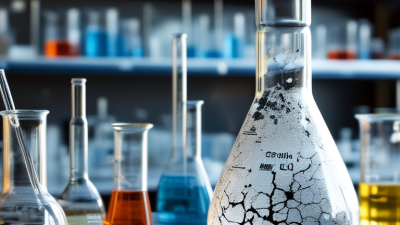
In 2026, lab glassware is becoming more than a collection of transparent vessels. It supports accuracy, safety, repeatability, and cleaner laboratory workflows. A modern laboratory may use borosilicate beakers beside volumetric flasks, condenser systems, chromatography columns, and microfluidic components. Each type serves a different purpose. Small design details matter.
Dr. Andrea Sella, a chemist and science communicator, captures this principle clearly: “Good glassware should make the experiment easier to see, control, and repeat.” His observation reflects a practical truth. Glassware affects measurement stability, heat resistance, chemical compatibility, and contamination control. A poorly chosen flask can distort a result. A damaged joint can interrupt an entire procedure. Even a scratched surface deserves attention.
This guide examines the top lab glassware types expected to remain important in 2026. It considers traditional essentials, specialized assemblies, and newer designs shaped by automation and sustainability goals. Readers will see why borosilicate glass remains widely trusted, while precision vessels and modular systems gain stronger demand. The discussion also considers washing, inspection, storage, and replacement decisions. These steps are easy to underestimate. They should not be.
The industry is not perfect. “Reusable” does not always mean environmentally superior, especially when cleaning consumes substantial energy and water. Likewise, advanced glassware can improve control but increase training requirements. Choosing well requires evidence, not fashion. A reliable laboratory begins with glassware matched to the method, material, temperature, and operator.
Defining Lab Glassware and Its Role in Modern Laboratories
What Are the Top Lab Glassware Types in 2026?
Defining Lab Glassware and Its Role in Modern Laboratories
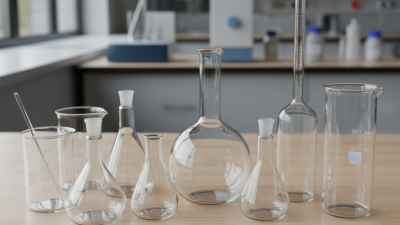
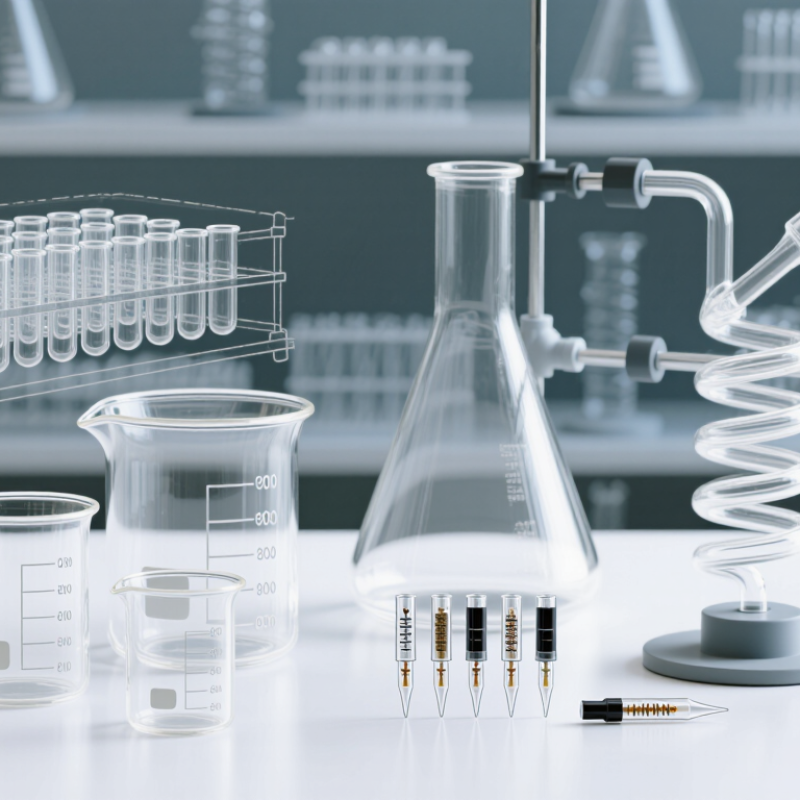
Lab glassware includes vessels designed to contain, measure, transfer, heat, or separate materials during controlled work. Common types include beakers, Erlenmeyer flasks, volumetric flasks, graduated cylinders, burettes, pipettes, test tubes, and condensers. Each shape supports a different level of accuracy. A beaker handles mixing, while a volumetric flask supports precise solution preparation.
Material choice matters. Borosilicate glass tolerates repeated heating and cooling better than ordinary glass. It also resists many common laboratory chemicals. Still, it is not indestructible. Small scratches, chips, or sudden temperature changes can cause failure. That detail is often overlooked. Visual inspection remains essential before every critical procedure.
The OECD’s Main Science and Technology Indicators reported OECD research and development intensity at approximately 2.7% of GDP in 2022. More active research environments increase demand for dependable, reusable equipment. Grand View Research’s 2024 laboratory glassware analysis also forecasts continued market growth through 2030, driven by pharmaceutical, academic, and testing laboratories. These figures suggest expanding use, but they do not guarantee better practice. Proper calibration, cleaning, drying, and storage still determine measurement quality. A perfectly shaped flask cannot correct careless technique. Temperature control, transparent markings, and compatibility with laboratory procedures remain central when selecting glassware in 2026.
Beakers, Flasks, and Test Tubes: Essential Vessels Explained
What Are the Top Lab Glassware Types in 2026?
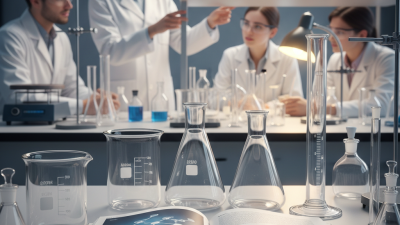
Beakers, flasks, and test tubes remain essential vessels in modern laboratories. Each shape supports a different task. Beakers are useful for mixing, warming, and transferring liquids. Their wide opening allows easy access with a stirrer or pipette. However, their graduation marks usually provide estimates, not precise measurements. A rushed technician may trust these markings too much.
Flasks offer better control for specific procedures. Erlenmeyer flasks support swirling with less splashing because of their narrow necks. They are practical for preparing solutions, holding cultures, and gentle heating. Volumetric flasks are designed for accurate preparation at one marked volume. Round-bottom flasks provide more even heating, but they need proper support. The choice is not always obvious.
Test tubes suit small-scale reactions, sample storage, and quick observations. Their compact shape reduces material use and makes changes easier to see. Test tube racks keep them upright and reduce accidental spills. Glass quality, wall thickness, and thermal resistance still matter. Not every clear vessel is safe for heat.
Careful handling protects both results and users. Inspect glassware under bright light for chips, cracks, or cloudy stress lines. Avoid sudden temperature changes, even with heat-resistant glass. Clean residues before reuse, since invisible contamination can alter a reaction. In routine practice, I would also separate measuring vessels from general mixing vessels. That simple habit is easy to neglect. Calibration records and documented cleaning procedures make results easier to trust.
Measuring Glassware: Graduated Cylinders, Burettes, and Pipettes
Measuring glassware remains central to reliable laboratory work in 2026. Grand View Research’s 2024 market analysis projects the laboratory glassware sector to grow at about 4.6% annually through 2030. That growth reflects continuing demand for accurate liquid handling, not simply larger equipment inventories.
Graduated cylinders suit quick volume checks, usually with lower precision than volumetric pipettes. Their wide bodies make the meniscus easier to see, but parallax can still distort readings. Read at eye level, near the liquid’s lowest curve. Small details matter.
Burettes support controlled titration, where the delivered volume depends on two readings. Check the zero point, remove air from the tip, and read the meniscus consistently. A Class A burette is preferable when analytical accuracy matters. However, glass movement and temperature can still influence results around the 20°C calibration reference used in volumetric standards.
Pipettes provide the strongest control for transferring defined volumes. Volumetric pipettes generally offer better accuracy than graduated pipettes, while micropipettes require careful technique and regular verification. ISO 8655 emphasizes systematic performance testing for piston-operated instruments. That standard does not make poor handling disappear.
In practice, analysts should inspect chips, cloudiness, loose stopcocks, and damaged graduations before use. A clean cylinder may still be unsuitable for precise measurement. I have found that rushed meniscus readings create more uncertainty than the glassware itself. That is an uncomfortable, but useful, reminder. Calibration records, temperature notes, and repeat measurements strengthen defensible results.
What Are the Top Lab Glassware Types in 2026?
Measuring Glassware: Graduated Cylinders, Burettes, and Pipettes
The chart compares representative nominal capacities commonly available in laboratory measuring glassware. Graduated cylinders support a broad range of liquid volumes, burettes are commonly used for controlled titration delivery, and pipettes are designed for smaller, more precise transfers. Actual available sizes vary by laboratory standard and application.
Specialized Glassware for Heating, Filtration, and Distillation
In 2026, lab glassware is becoming more specialized, not merely more decorative.
Heating work often depends on borosilicate flasks, evaporating dishes, and crucibles. These vessels tolerate repeated temperature changes better than ordinary glass. A round-bottom flask distributes heat evenly across curved surfaces. Use a heating mantle or controlled bath. Direct flame can create damaging hot spots. Small details matter. Inspect every vessel for chips, cloudy areas, and fine scratches before heating. I still consider this step easy to rush during busy preparation.
Filtration glassware needs a different kind of precision.
A Büchner funnel supports rapid vacuum filtration, while a sintered-glass funnel provides an integrated porous filter. Match the pore size to the suspension, not simply to the funnel diameter. Wet the filter surface when appropriate. This improves contact and reduces bypass. Check the flask wall before applying vacuum. A hairline crack may remain invisible until pressure changes. That is an uncomfortable lesson. Clamps, thick tubing, and gradual pressure adjustment improve reliability.
Distillation setups combine heat control, vapor movement, and condensation.
A distillation flask, still head, thermometer adapter, condenser, and receiver must align without force. The thermometer bulb should sit near the vapor path, not deep in the liquid. Cooling water enters the condenser from the lower port. Secure joints, but avoid overtightening. Lubricant is not always suitable. Consult the procedure and compatibility data. Experienced technicians also record heating rates, leaks, and unexpected color changes. Those notes can reveal weak points that a perfect-looking setup hides.
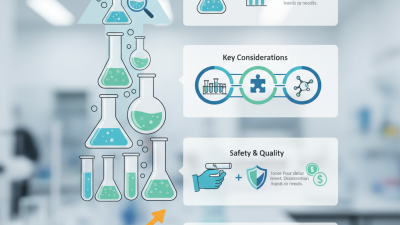
Choosing the Right Glassware for Safety, Accuracy, and Durability
In 2026, the most useful lab glassware is not always the most advanced. Beakers, Erlenmeyer flasks, volumetric flasks, graduated cylinders, test tubes, and watch glasses remain essential. Each shape supports a different task. A volumetric flask offers higher measuring accuracy than a beaker. An Erlenmeyer flask reduces splashing during swirling. Small details matter.
Safety should guide every selection.
Choose borosilicate glass for work involving temperature changes, because it generally resists thermal shock better than ordinary glass. Inspect rims, bases, and walls before use. A hairline crack can become a sudden break under heat or pressure. Never use damaged glassware.
Keep it clean.
Accuracy also depends on technique. Read liquid levels at eye height, and use the correct flask for final volume preparation. Graduated cylinders work well for routine measurements, but they should not replace calibrated volumetric equipment when precision is critical. I have seen rushed readings create larger errors than imperfect instruments. That is easy to overlook.
Durability requires practical care. Avoid placing hot glass directly on cold benches, and allow it to cool gradually. Use suitable brushes, mild cleaning methods, and storage that prevents pieces from knocking together. Some laboratories prefer reusable glassware, while others choose disposable options for specific workflows. The right decision depends on contamination control, cleaning capacity, and staff training. Even experienced technicians can miss a small chip during a busy shift. Regular inspection remains necessary.