Explore cutting-edge articles on laboratory products, industry innovations, and research trends with Lab Consulting.
Choosing a laboratory bench is a practical design decision, not a furniture-shopping exercise. Its height, surface, storage, and service connections shape daily work. A poor fit can mean cramped elbows, awkward reach, or equipment crowding the aisle. Small details matter.
Industry benchmarks put laboratory energy use at roughly five to ten times that of office space, though figures vary by building and operating hours. I2SL’s laboratory benchmarking resources explain why efficient layouts matter: ventilation and equipment needs make space planning consequential. The CDC and NIH’s Biosafety in Microbiological and Biomedical Laboratories, 6th edition, also places risk assessment at the center of safe laboratory work. These references do not prescribe one ideal bench; they make clear that work, hazards, and room systems must guide the choice. That distinction is easy to miss.
Laboratory safety educator James A. Kaufman has said, “Safety is a continuing journey, not a destination.” That principle applies to bench selection: consider the tasks people perform, the chemicals or instruments involved, and how the room may change. A corrosion-resistant top may suit one workflow, while a height-adjustable bench may help another. Check load ratings, cleanability, edge details, utility access, and clearance for stools or carts. Then test the layout at working height, with real equipment if possible. The paper plan may look tidy; actual rooms are less forgiving. A laboratory bench should support safe, repeatable work—not merely fill an empty wall.
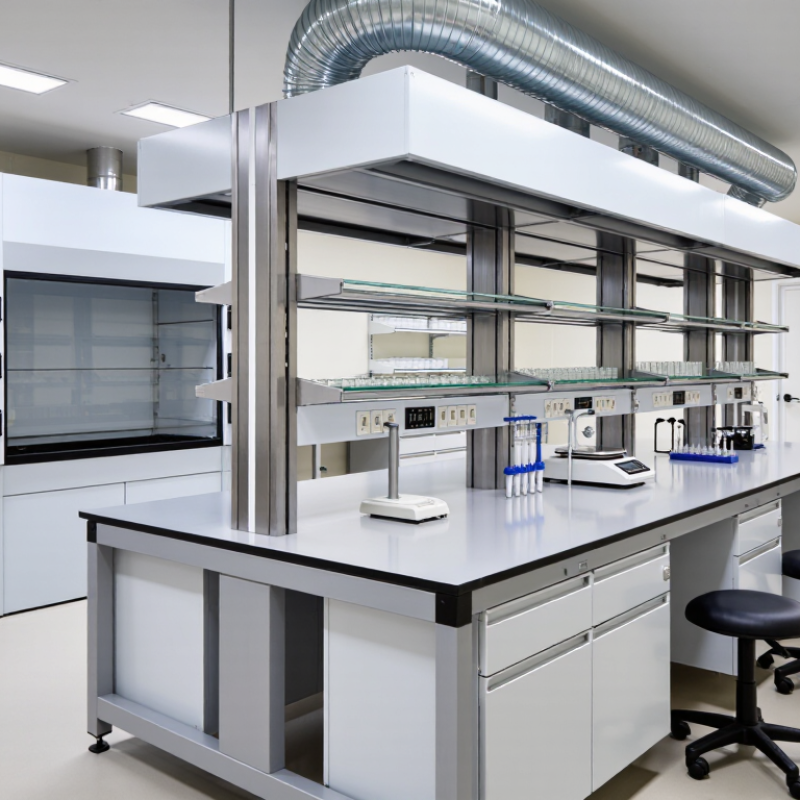
Begin with the work the bench must support: routine sample preparation, instrument use, or wet procedures. Each task places different demands on the surface, storage, and utilities. Note the equipment’s footprint, weight, and heat output, then check where power, water, or other services are needed. A crowded sketch can reveal problems before delivery.
Tip: Mark the planned bench outline on the floor with removable tape. Place equipment cutouts within it, leaving room to open doors and drawers. Check that people can pass safely and reach frequently used items without twisting. Measure twice. It sounds obvious, but small access gaps are easy to miss on a floor plan.
Match the bench material and construction to the actual conditions, including chemical exposure, cleaning routines, vibration, and expected loads. Confirm requirements with the people who will use and maintain the space; their daily work may expose needs absent from the equipment list. Avoid choosing a “versatile” bench by default. I have seen that word hide a vague plan. Revisit the layout after a trial arrangement, because real workflows rarely follow a perfect drawing.

A laboratory bench surface should match the chemicals, temperatures, and work habits in the room. Epoxy resin is often chosen for broad chemical resistance and can tolerate routine spills when cleaned promptly. Still, strong acids, solvents, or prolonged exposure may damage some formulations. Check the manufacturer’s resistance chart against the exact chemical, concentration, and contact time. A quick wipe is not the same as an overnight spill.
Phenolic resin is lighter and may suit general-purpose work, but its limits vary by grade. Stainless steel handles heat well and cleans easily, yet certain acids and salts can stain or corrode it. Ceramic surfaces resist many chemicals and high temperatures, though impacts can chip them. Small details matter. Inspect seams, sink edges, and cutouts; liquid often lingers there longer than on the main worktop.
Heat resistance deserves its own check. A surface rated for brief contact with warm glassware may not withstand a hot crucible or repeated heating. Use a heat-resistant mat when procedures involve direct, intense heat, and confirm the bench’s load rating before placing heavy equipment. I would not choose from a label alone. Compare test conditions with actual tasks, then ask staff what spills and wear they encounter. Their observations may challenge the original specification.
| Surface Material | Chemical Resistance | Heat Resistance | Key Strengths | Limitations and Care | Best-Suited Applications |
|---|---|---|---|---|---|
| Epoxy Resin | Generally resists many acids, alkalis, and common laboratory reagents. Strong oxidizers and some solvents may damage the surface, depending on concentration and exposure time. | Often tolerates brief contact with hot equipment, but heat limits vary by formulation. Use a heat-resistant mat for hot vessels and avoid direct flames. | Nonporous, seamless-looking surface; good general-purpose chemical and moisture resistance; can often be repaired if chipped. | Prolonged exposure to aggressive chemicals or high heat can discolor, dull, or damage the surface. Clean spills promptly and follow the supplier’s chemical-resistance chart. | General chemistry laboratories, teaching labs, and work areas with varied chemical use. |
| Phenolic Resin | Resists many common acids, bases, and laboratory chemicals. Performance varies with chemical concentration and contact duration; some solvents can cause damage. | Typically suitable for moderate heat and brief contact with hot items. It is not intended for direct flame or prolonged exposure to very high temperatures. | Relatively lightweight, moisture-resistant, and often available in durable, easy-to-clean panels. | Edges and cutouts need protection from prolonged moisture. Check compatibility before using concentrated acids, strong oxidizers, or unfamiliar solvents. | General-purpose labs where a practical, lighter-weight work surface is preferred. |
| Ceramic or Porcelain | Usually highly resistant to many acids, solvents, and stains. Strong alkalis may attack some glazed surfaces, and grout or joints can be more vulnerable than the tile itself. | The tile surface tolerates very high temperatures, but joints, backing, and installation materials may have lower limits. Thermal shock can crack the surface. | Hard, noncombustible surface with strong resistance to scratching, staining, and many chemicals. | Can chip or crack under impact; seams may collect contaminants. Inspect joints regularly and use suitable installation materials. | High-heat work areas and laboratories handling chemicals that are compatible with the selected glaze and joints. |
| Stainless Steel | Resists water and many routine laboratory substances. Chlorides, concentrated acids, and certain corrosive chemicals can pit or corrode it; grade selection matters. | The metal tolerates high temperatures, although hot items can discolor the finish and may transfer heat to nearby components. | Strong, nonporous, hygienic, and easy to clean; can suit wet or frequently sanitized work areas. | Can scratch and show fingerprints. Choose an appropriate alloy and finish, and rinse chemical residues—especially chloride-containing solutions—promptly. | Wash-down areas, clean workspaces, and laboratories where sanitation and durability are priorities. |
| Polypropylene | Excellent resistance to many acids, alkalis, and salts. Compatibility with organic solvents varies, so consult a chemical-resistance chart before use. | Limited compared with mineral or metal surfaces. It can soften or deform at elevated temperatures; avoid hot plates, flames, and hot vessels unless protected. | Lightweight, corrosion-resistant, and well suited to wet processes and many corrosive chemical environments. | More susceptible to scratching and heat-related deformation than rigid mineral surfaces. Confirm the load and temperature limits for the specific panel. | Acid-handling areas, wet laboratories, and applications where corrosion resistance is more important than heat tolerance. |
| High-Pressure Laminate | Offers useful resistance to many everyday laboratory spills, but strong acids, oxidizers, solvents, or long contact times may damage the surface or seams. | Limited heat tolerance. Hot cookware or equipment can scorch, blister, or loosen the laminate; use a protective pad. | Cost-effective, available in many finishes, and suitable for light-duty work in controlled environments. | Seams and exposed edges are vulnerable to moisture and chemical ingress. Not a substitute for a dedicated chemical-resistant worktop. | Office-style lab areas, dry workstations, and spaces with low chemical and heat exposure. |
| Granite | Often resists many common laboratory chemicals, but performance depends on the stone, finish, and any sealer. Strong acids can etch or discolor susceptible stone. | Generally tolerates hot items better than laminate, but rapid temperature changes can cause cracking or damage to sealers and supports. | Rigid, durable, and resistant to wear; useful where a stable, flat surface is important. | Natural stone can be porous and variable. Sealing and routine inspection may be required; avoid assuming all granite has the same chemical resistance. | Precision or general work areas with moderate chemical exposure and a need for a rigid surface. |
| Selection tips: Match the surface to the chemicals actually used, including concentration and contact time; consider heat, impact, seams, and edge protection; and verify limits with the surface supplier’s current compatibility data. Ratings are general guidance, not a guarantee for every formulation or laboratory condition. | |||||
A laboratory bench should fit the room and the work performed on it. Measure the available wall length, doorways, and aisle clearance before selecting a bench. Include space for drawers, seated users, and equipment doors that swing outward. Measure twice. A bench that fits on paper may still block a cart or make an emergency route awkward.
Check both the bench’s rated load and how that load is distributed. A microscope, centrifuge, and supply containers can create concentrated weight, not an even spread across the surface. Compare their combined weight with the bench rating, and ask whether the rating applies to uniform loading or specific points. Leave breathing room. Keep heavy equipment near supported areas, and account for vibration-sensitive work when choosing a frame and top. Bench height matters, too: users should be able to work without raised shoulders or bent wrists. A common planning miss is forgetting future equipment. It may be tempting to use every available inch, but a little open surface can make daily work safer and easier. Confirm floor capacity and utility access with qualified facilities staff when loads or installations are substantial.
Tip 1: Map storage to the work you actually do. Keep frequently used glassware and tools within easy reach, while reserving lower cabinets for heavier supplies. Check shelf depth against bottles and instrument cases before ordering. A crowded bench looks efficient until daily work begins.
Tip 2: List every utility connection your equipment needs, including power, data, water, or gas where applicable. Confirm outlet locations, loads, and service access with qualified facility staff. Cables crossing a work area can snag sleeves or block cleaning. Details matter. Leave room for future equipment, but avoid paying for unused connections.
Tip 3: Match bench height and knee clearance to the tasks and users. Seated work may need legroom; standing tasks may benefit from a different height. Test reach with common items, not an empty tabletop. Small adjustments help. Edge shape, footrests, and adjustable seating can reduce awkward posture during repetitive work. One limitation: a setup that suits one person may not fit everyone, so assess the actual team and workflow.
Tip: Check safety before comparing finishes. OSHA’s Laboratory Standard, 29 CFR 1910.1450, requires covered employers to maintain a Chemical Hygiene Plan. It does not certify a bench, so match the surface to your actual chemicals, heat exposure, and equipment load. Ask your environmental health and safety team to review the layout. Check stability, weight limits, and access to emergency equipment. Small details matter.
Tip: Plan maintenance around daily work. Ask how to clean the surface, inspect joints, and service adjustable legs or utility fittings. Confirm that replacement parts and repairs will remain available. A surface that stains easily can become a recurring problem. So can a loose connection. I would not assume that a glossy finish is automatically more durable; test care instructions against your cleaning routine.
Tip: Compare total cost, not just purchase price. Include delivery, installation, maintenance, downtime, and eventual replacement. U.S. Department of Energy Labs21 guidance reports that laboratories can use five to ten times the energy of typical office buildings. A bench does not cause that energy use alone, but poor layouts can complicate efficient workflows and access to ventilation. Request itemized quotes, then compare expected costs over the bench’s service life. A low price may feel reassuring. It may not stay low.
Subscribe to our newsletter and receive the latest news and exclusive insights every month. No spam.
LabConsulting GmbH and LC LabService GmbH are Austrian companies which cooperate with over 600 manufacturers and offers a selection of more than 180,000 products and various laboratory product and service solutions for our Labcustomers.
Die LabConsulting GmbH und die LC LabService GmbH sind österreichische Unternehmen, die mit über 600 global verteilten Herstellern zusammenarbeiten und mit einer Auswahl von mehr als 180.000 Produkten und verschiedenen Laborprodukt- und Servicelösungen unseren Parnern im Labor anbieten.
INSTOCK CATALOGOur services
Our services