Why is Lab Equipment Essential for Scientific Research?
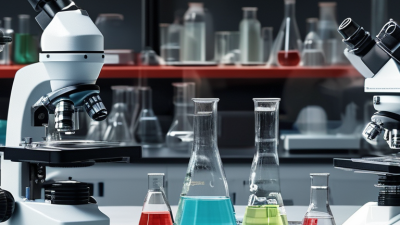
In the world of scientific research, lab equipment serves as the backbone of innovation and discovery. Dr. Emily Carter, a renowned expert in laboratory technologies, emphasizes, "The right lab equipment can transform our research capabilities." This assertion is particularly true as modern research demands precision and reliability.
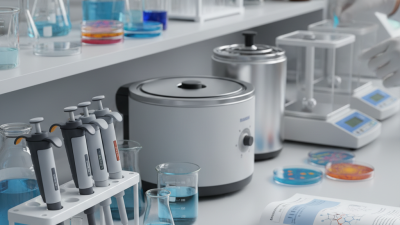
Lab equipment ranges from basic tools, like pipettes and beakers, to advanced machinery such as mass spectrometers and centrifuges. Each piece plays a crucial role in experiments, enabling scientists to gather accurate data. Without this essential gear, the validity of scientific findings would be jeopardized.
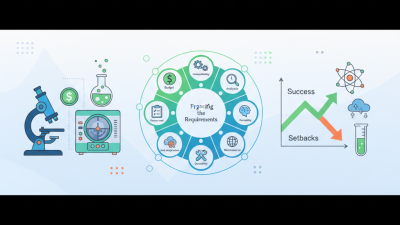
However, acquiring lab equipment is not without its challenges. Budget constraints often limit access to the latest technologies. Additionally, the learning curve associated with new equipment can be steep. Hence, researchers must continually adapt, ensuring that the tools they use meet both their research needs and the evolving standards of scientific inquiry.
Importance of Precision in Scientific Experiments
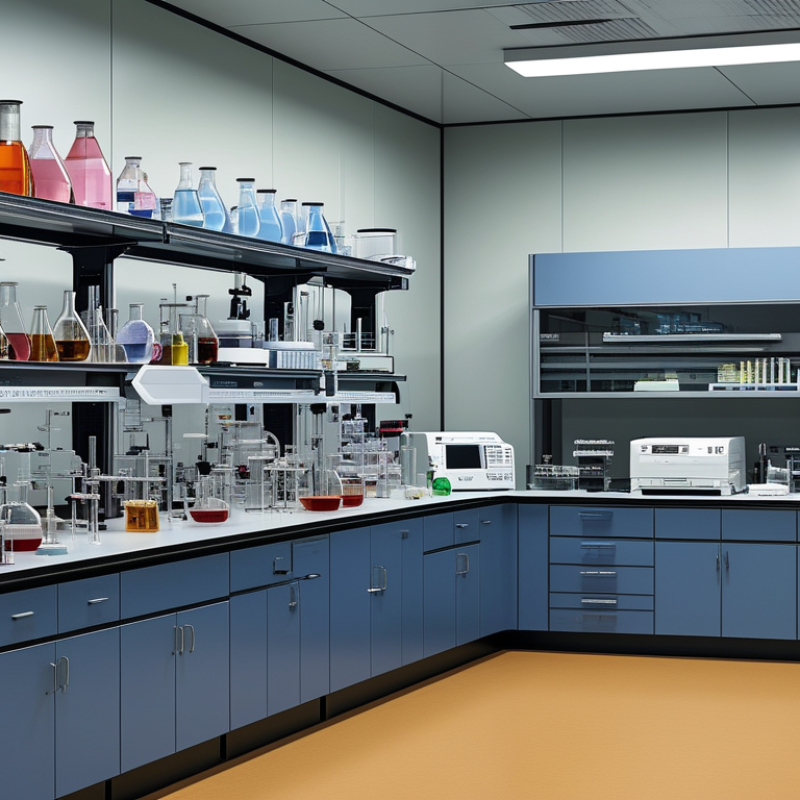
Precision is the cornerstone of scientific experiments. A small error in measurement can lead to significant misunderstandings. For instance, in chemical reactions, the exact concentration of a solution matters greatly. If a researcher mixes two compounds inaccurately, the result may not just be unrepeatable but may also produce incorrect conclusions.
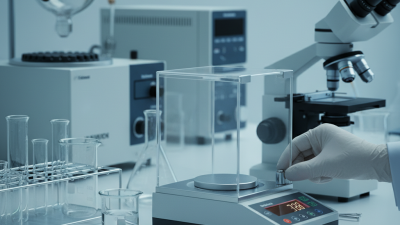
Lab equipment plays a vital role in achieving this precision. Instruments like pipettes and balances are not just tools; they require careful calibration. Even minor deviations can affect results. For example, imagine a scale that is off by a mere gram. This small discrepancy can disrupt an entire experiment. Researchers must constantly verify their equipment to avoid such mistakes.
Moreover, maintaining a consistent environment is crucial. Temperature fluctuations can impact certain experiments. Scientists need to be aware of how their surroundings affect their results. Awareness and attention to detail can make or break a research project. Precision is not just about accuracy; it's about understanding the bigger picture and ensuring every aspect is controlled effectively.
Importance of Lab Equipment in Scientific Research
Role of Lab Equipment in Data Collection and Analysis
Lab equipment plays a critical role in scientific research, particularly in data collection and analysis. Properly calibrated instruments ensure accuracy, which is vital for reliable results. According to a report by the National Institute of Standards and Technology, equipment errors can account for as much as 30% of discrepancies in experimental data. This emphasizes the need for meticulous equipment management to enhance the validity of conclusions drawn from research.
The complexity of modern experiments often requires sophisticated tools. For instance, spectrometers and chromatographs allow scientists to measure chemical compositions with precision. A study published in the Journal of Experimental Science revealed that utilizing high-quality lab instruments can increase efficiency by 40%. Yet, researchers sometimes overlook regular maintenance. Neglected equipment can lead to flawed findings, showcasing the balance between innovation and diligence.
Additionally, the integration of digital technologies in lab settings has transformed data analysis. Employing software tools for data visualization improves the interpretation of complex datasets. Researchers reported a 50% reduction in analysis time when using automated systems, as stated in the Science and Technology Review. However, reliance on technology can create a disconnect. It is crucial for researchers to remain engaged with their methods and the data's underlying principles to avoid overdependence on algorithms.
Why is Lab Equipment Essential for Scientific Research? - Role of Lab Equipment in Data Collection and Analysis
| Equipment Type |
Purpose |
Data Collected |
Analysis Techniques |
| Microscope |
Observation of samples at cellular level |
Cell structure images |
Image analysis, morphology assessment |
| Spectrophotometer |
Measure light absorption of samples |
Absorbance/Transmittance readings |
Calibration curve, concentration analysis |
| Pipette |
Accurate liquid handling |
Volume measurements |
Statistical analysis, reagent preparation |
| Centrifuge |
Separation of substances based on density |
Phase separation data |
Sedimentation analysis, component identification |
| PCR Machine |
Amplification of DNA sequences |
DNA concentration data |
Quantitative analysis, genetic profiling |
Safety Standards and Compliance in Laboratory Settings
In laboratory settings, safety standards and compliance are crucial elements. Proper safety protocols protect researchers and the environment. Labs that adhere to these standards minimize risks associated with hazardous materials. For example, appropriate ventilation systems prevent the accumulation of toxic fumes. This is a basic yet often overlooked aspect of lab safety.
Compliance extends beyond equipment to include personnel training. All lab staff must understand emergency procedures and the proper use of personal protective equipment. Regular training sessions are essential for maintaining a safety-conscious culture. Even with rigorous standards, accidents can still occur, underscoring the need for continual reflection and improvement in safety practices.
Effective safety measures must adapt to evolving research methods and materials. New substances enter laboratories frequently, and each presents unique challenges. It is vital to regularly review protocols and standards. Labs must not only comply with regulations but also strive for a culture of safety that emphasizes vigilance and proactive behavior. Engaging in open discussions on safety can promote an atmosphere where everyone feels responsible for maintaining safe practices.
Advancements in Lab Equipment Technology
Advancements in lab equipment technology have dramatically transformed scientific research. Sophisticated tools now allow for higher precision and accuracy. Instruments such as automated pipettes reduce human error and enhance repeatability in experiments. This shift not only improves the reliability of results but also accelerates the pace of discovery.
In recent years, the integration of digital technology has also refined data collection methods. Researchers can now access real-time data analysis, facilitating faster decision-making. This advancement helps in identifying patterns and anomalies promptly. However, reliance on technology brings up concerns about data security and integrity. Constant vigilance is necessary to ensure that manual oversight is not completely eliminated.
In a rapidly evolving research environment, staying updated with the latest lab innovations is crucial. Regular training on new equipment can enhance both efficiency and safety. It's worth evaluating whether the latest tools genuinely meet specific research needs or if traditional methods still hold value. Balancing technology with critical thinking is essential in today's scientific landscape.
The Interdependence of Research and Laboratory Tools
Laboratory tools and research are deeply interconnected. High-quality lab equipment is vital for conducting accurate experiments and deriving reliable results. According to a report by the Global Laboratory Equipment Market, the industry is projected to reach $45 billion by 2025. This growth reflects the increasing reliance on advanced instruments in scientific fields. Researchers require precision tools like spectrophotometers, centrifuges, and chromatographs to ensure their experiments produce valid outcomes.
Moreover, the evolution of lab technology is crucial for advancing scientific knowledge. A study published in the Journal of Laboratory Automation indicates that 85% of researchers believe that robust lab equipment significantly accelerates the pace of discovery. However, the accessibility of these tools remains a challenge. Budget constraints limit smaller labs, hindering innovation. Researchers often find themselves balancing the need for cutting-edge equipment with the realities of funding.
Mistakes can arise even with the best tools. Equipment calibration issues and operator errors may lead to misleading data. Continuous training and support are essential for maximizing equipment reliability. The interaction between researchers and lab instruments is a complex dance of creativity and precision. Each experiment carries the potential for breakthroughs or setbacks, highlighting the intrinsic value of both research and laboratory tools in the quest for knowledge.