



Compact vs. Advanced Gel Imaging Systems: Which Is Best for Your Lab?
- December 23, 2025
- Last Updated: December 23, 2025
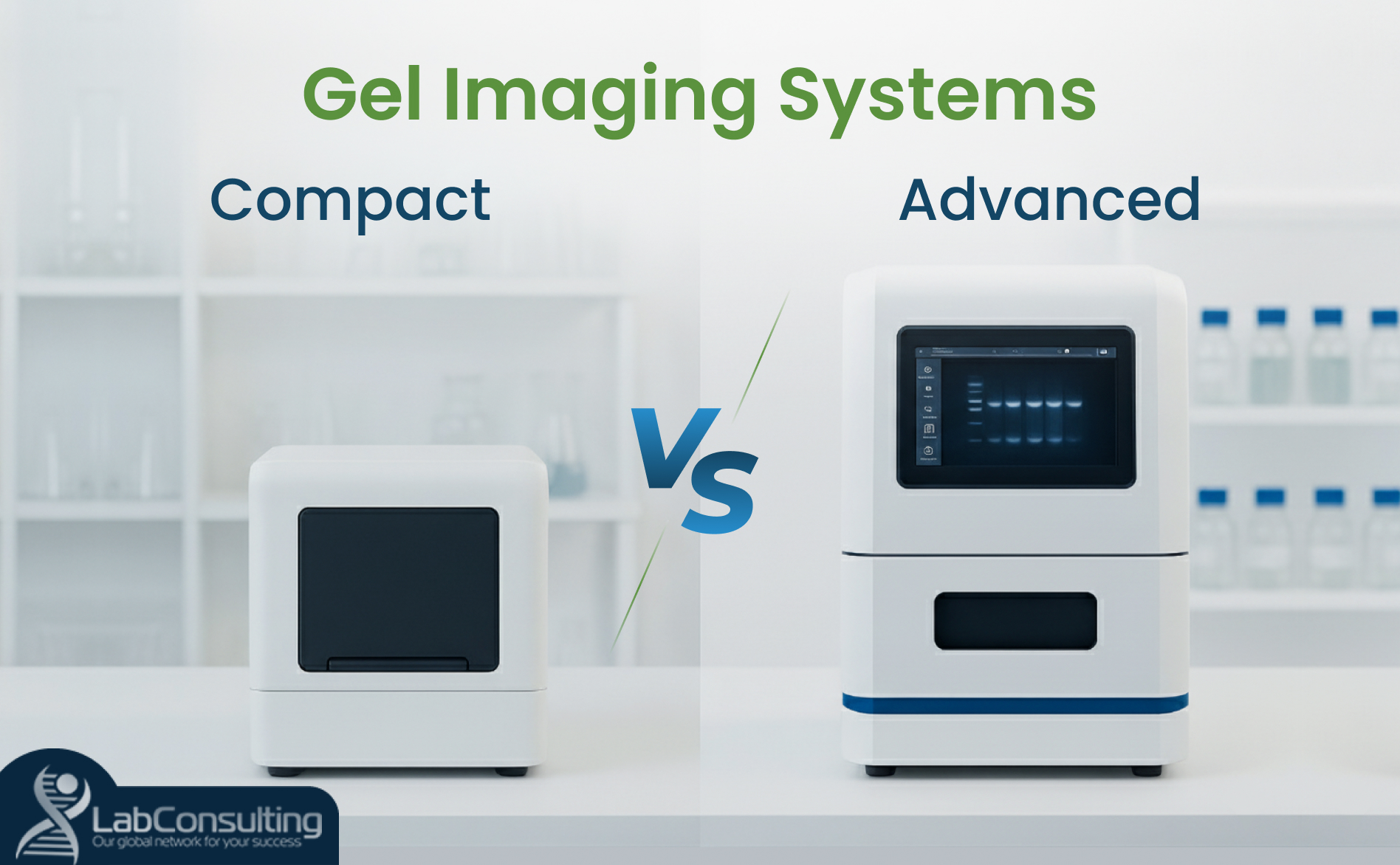
A gel imaging system is one of the most important tools in any molecular biology or biochemistry laboratory. It allows researchers to capture and analyze images of DNA, RNA, or protein gels after electrophoresis. Choosing the right type of system is not always simple.
Labs often face a choice between a compact gel imaging system and a more advanced gel imaging system. Both have clear benefits, but the best option depends on your lab’s size, applications, and budget.
In this guide, we explain the differences, compare their features, and help you decide which system is right for your needs.
What Is a Compact Gel Imaging System?
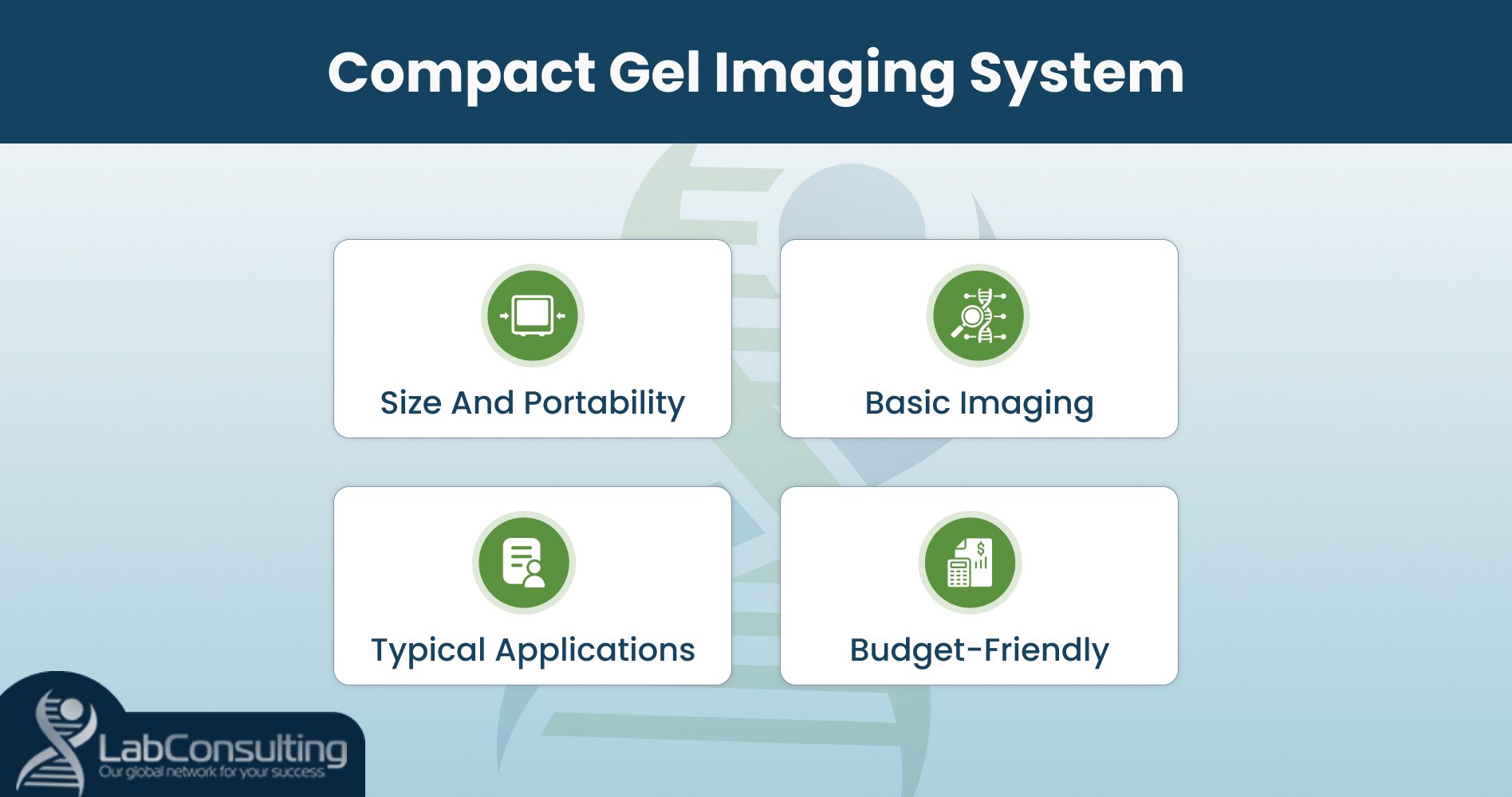
A compact gel imaging system is designed to be simple, space-saving, and user-friendly.
Size and portability
These systems are small enough to fit on a bench and can easily be moved between rooms if needed.
Basic imaging
Typically equipped with a UV or blue-light transilluminator and a basic camera, they are perfect for routine gel documentation.
Typical applications
Teaching labs, student projects, and small research groups often use compact systems for checking PCR products or DNA quality.
Budget-friendly
Compact systems are generally the most affordable choice, making them attractive for labs with limited funding.
In short, compact systems are ideal for everyday gel checks but not built for complex or high-sensitivity applications.
What Is an Advanced Gel Imaging System?
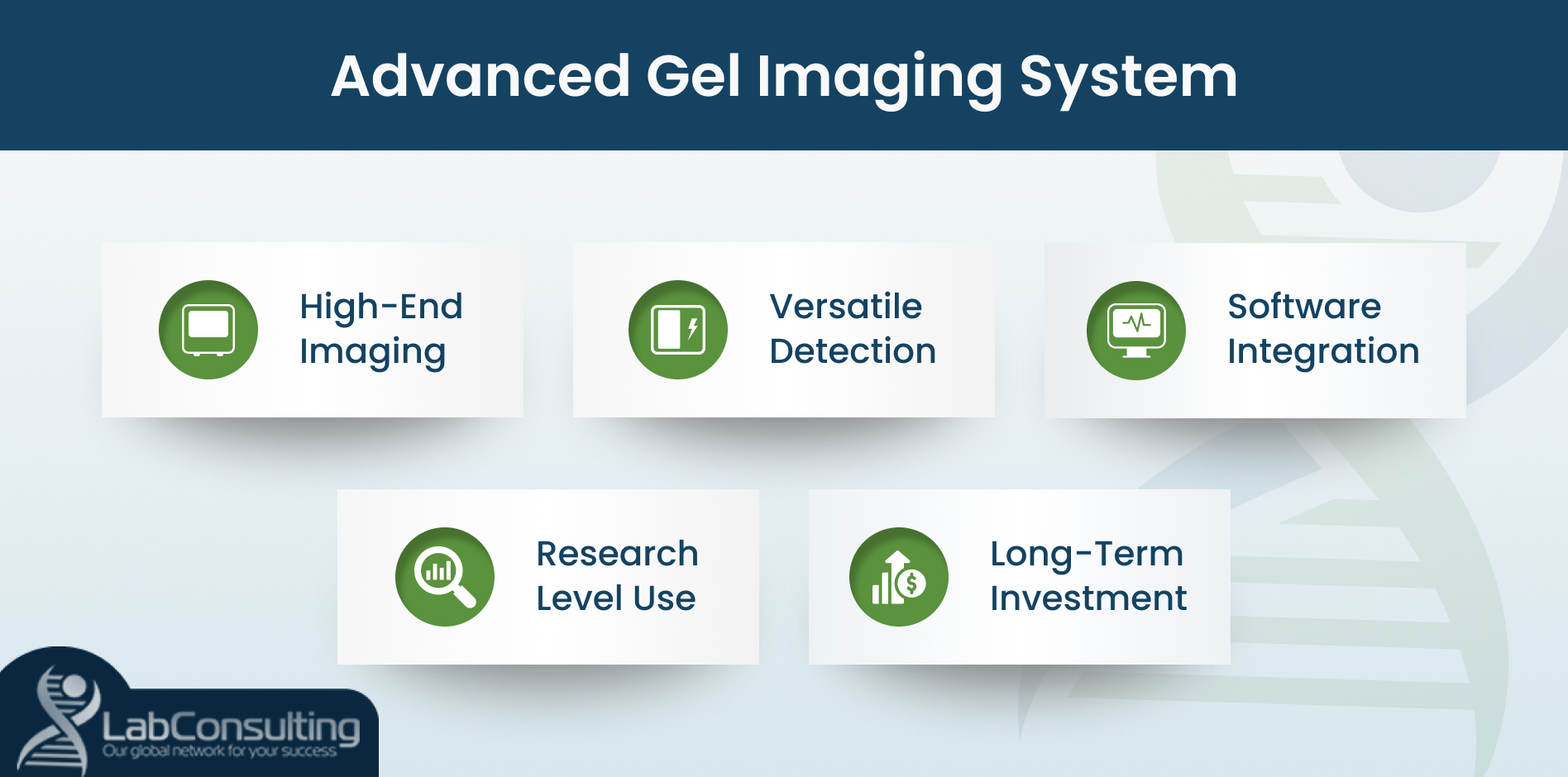
An advanced gel imaging system offers greater flexibility, sensitivity, and analytical power.
High-end imaging
Equipped with multiple light sources (UV, blue, white), high-resolution cameras, and stronger optics.
Versatile detection
Capable of capturing fluorescence, chemiluminescence, and multiplex imaging in addition to standard gels.
Software integration
Comes with advanced analysis tools such as densitometry, automatic band detection, and precise quantification.
Research-level use
Designed for genomics, proteomics, and publication-quality results.
Long-term investment
Although more expensive, advanced systems provide better return on investment for labs doing high-throughput or sensitive research.
In short, advanced systems are the go-to choice for professional research labs where precision and versatility are critical.
Compact vs. Advanced: A Side-by-Side Comparison
Here is a clear comparison to help you evaluate both options:
| Feature | Compact Gel Imaging System | Advanced Gel Imaging System |
|---|---|---|
| Size & Portability | Small, lightweight, easy to move | Larger, fixed setup |
| Imaging Capabilities | Basic DNA/RNA/protein gels | Fluorescence, chemiluminescence, multiplex |
| Software & Analysis | Limited band quantification | Advanced densitometry, automatic analysis |
| Cost | Budget-friendly | Higher cost, higher ROI |
| Best For | Teaching labs, small groups, routine work | Research labs, high-throughput, publication-quality results |
Which One Is Right for Your Lab?
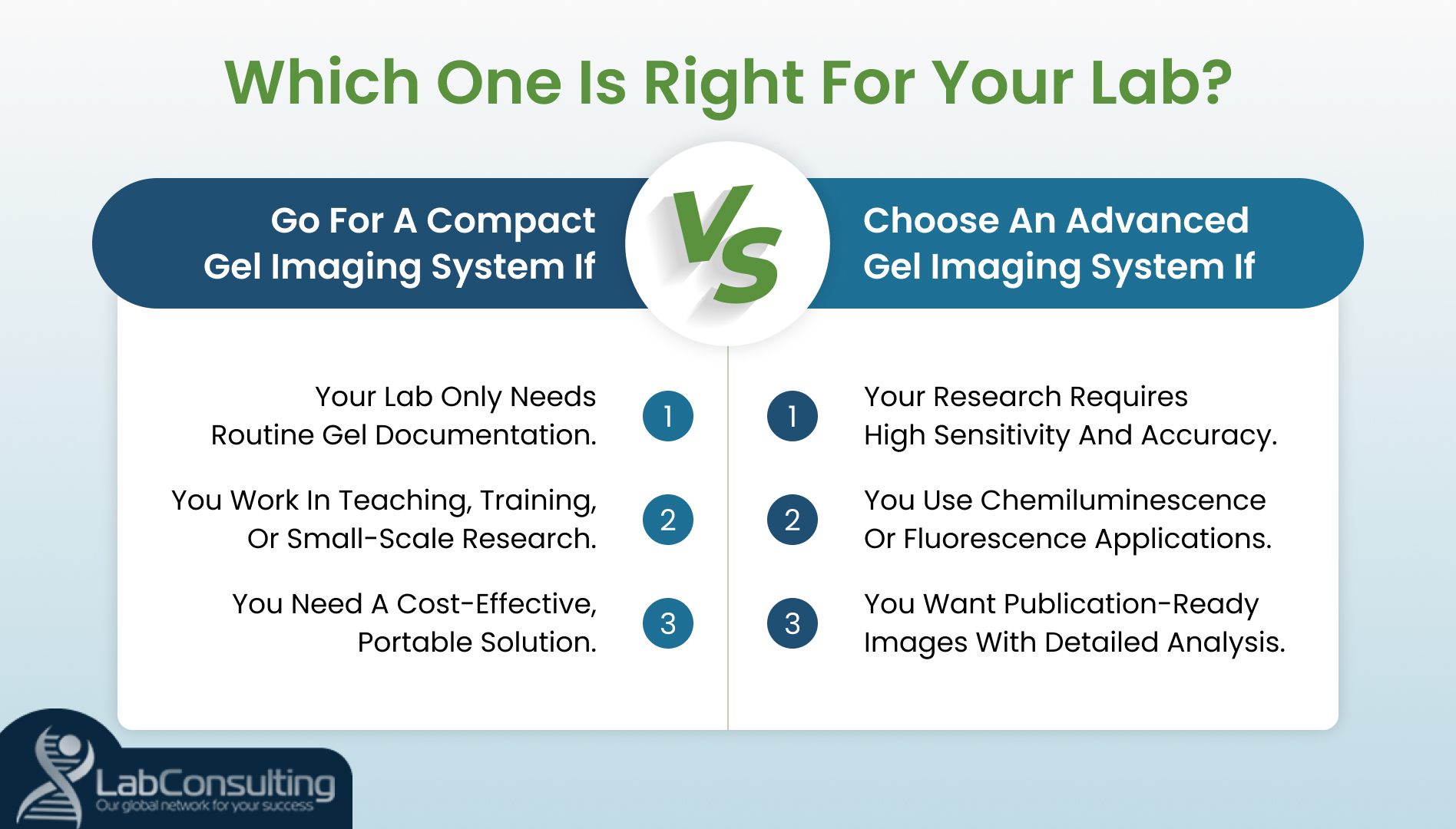
Choosing between compact and advanced depends on your goals, applications, and budget:
- Go for a Compact Gel Imaging System if:
- Your lab only needs routine gel documentation.
- You work in teaching, training, or small-scale research.
- You need a cost-effective, portable solution.
- Choose an Advanced Gel Imaging System if:
- Your research requires high sensitivity and accuracy.
- You use chemiluminescence or fluorescence applications.
- You want publication-ready images with detailed analysis.
- You expect your lab’s research output to grow in the future.
There is no one-size-fits-all solution. The best choice depends on your lab’s current needs and long-term vision.
How LabConsulting Can Help
At LabConsulting Austria, we specialize in guiding research institutions, teaching labs, and private laboratories to make the right equipment decisions.
Here’s how our trusted laboratory consulting services provider can support you:
Personalized consultation
We analyze your lab’s workflow and recommend the gel imaging system that truly fits.
Access to trusted brands
We work with leading manufacturers of compact and advanced systems.
Installation & training
Our team ensures a smooth setup and provides hands-on training for your staff.
Ongoing support
From maintenance to troubleshooting, we stay by your side long after purchase.
Looking for expert guidance? Contact LabConsulting today and let us help you choose the gel imaging system that delivers the best results for your lab.
FAQs About Gel Imaging Systems
1. What is a gel imaging system used for?
A gel imaging system is used to capture and analyze images of DNA, RNA, or protein gels after electrophoresis. It helps researchers check band size, measure intensity, and document results for teaching, diagnostics, or advanced molecular biology research.
2. What is the difference between a compact and an advanced gel imaging system?
A compact gel imaging system is small, affordable, and best for routine gel documentation, while an advanced system offers high-resolution imaging, fluorescence, chemiluminescence, and advanced software for research labs needing publication-quality results.
3. Which gel imaging system is best for teaching labs?
Teaching labs usually benefit from compact gel imaging systems because they are easy to use, portable, and cost-effective. They are ideal for student experiments, routine PCR checks, and basic DNA analysis without the complexity of advanced features.
4. Which gel imaging system should research labs choose?
Research labs should invest in advanced gel imaging systems because they provide sensitive detection methods like fluorescence and chemiluminescence, advanced analysis software, and publication-quality imaging. These features are essential for genomics, proteomics, and high-throughput research.
5. How much does a gel imaging system cost?
The cost of a gel imaging system depends on size and features. Compact systems are generally budget-friendly, while advanced systems cost more but deliver higher accuracy, sensitivity, and long-term value for professional research labs.
6. Can a compact gel imaging system be upgraded later?
Some compact gel imaging systems can be expanded with software or accessories, but they have limitations. Labs with long-term research plans may save more by starting with an advanced system designed for scalability and complex applications.
7. What features should I look for in a gel imaging system?
Key features include light sources (UV, blue, or white), camera resolution, software analysis tools, compatibility with fluorescence or chemiluminescence, and ease of use. The right choice depends on whether your lab needs basic documentation or advanced imaging.
8. Is an advanced gel imaging system worth the investment?
Yes, for labs doing sensitive or high-volume research. Advanced gel imaging systems offer precise quantification, multiple imaging modes, and automation that save time, improve accuracy, and support high-quality publications, making them a strong long-term investment.
9. Can a gel imaging system improve our research efficiency?
Yes. A gel imaging system reduces manual errors, provides clear digital documentation, and speeds up band analysis. Advanced systems with automated software allow faster, more reliable results, improving overall lab productivity.
10. How can I choose the right gel imaging system?
LabConsulting provides expert advice, compares compact and advanced options, and tailors recommendations based on your lab’s needs and budget. We also handle installation, staff training, and ongoing support so your lab gets maximum value from its gel imaging system.
Conclusion
Both compact and advanced gel imaging systems play an important role in laboratory research. Compact systems are budget-friendly and ideal for everyday gel checks, while advanced systems provide high sensitivity and advanced analysis for serious research.
The right choice depends on your lab’s goals, applications, and future plans. With expert advice and support from LabConsulting, you can be confident that your investment will improve efficiency, accuracy, and research outcomes.
About The Author
Contact Us
RECENT POSTS
-

- December 23, 2025
How Innovation Labs Are Shaping Austria’s Scientific Landscape
Innovation labs in Austria are transforming the scientific landscape. In the past five years, their number has doubled, boosting research...
Read More -

- December 23, 2025
Premier Laboratory Technical Services in Austria
Maintaining your equipment’s precision and efficiency is crucial in the rapid-fire environment of scientific research and laboratory operations. A famous...
Read More -

- December 23, 2025
Professional Laboratory Outsourcing Services for all Labs Operation in Austria
Running successful laboratory operations in Austria and Germany requires more than just advanced technology and skilled manpower. Efficient lab outsourcing...
Read More


