

Explore cutting-edge articles on laboratory products, industry innovations, and research trends with Lab Consulting.
In 2026, Water Cooled Condenser technology is becoming more selective, efficient, and system-focused. Engineers are no longer choosing equipment by cooling capacity alone. They examine refrigerant compatibility, water quality, footprint, maintenance access, and seasonal performance. A condenser may look impressive on paper. It can still underperform in a poorly designed system.
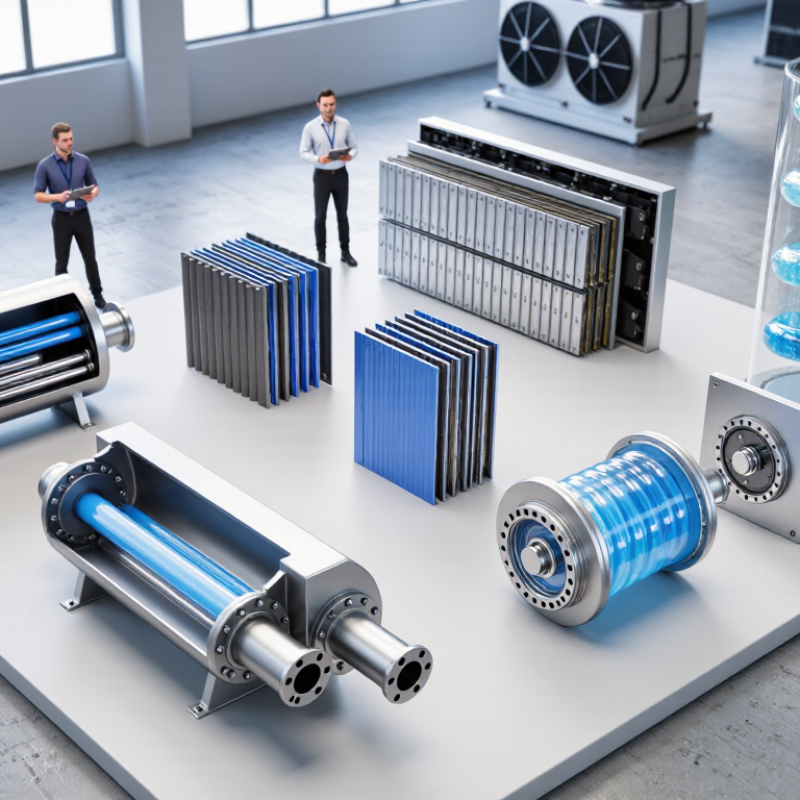
The leading options include shell-and-tube, brazed plate, plate-and-frame, double-pipe, and spiral condensers. Each design creates different benefits. Shell-and-tube models remain dependable for large chillers and industrial refrigeration. Brazed plate units offer compact dimensions and strong heat transfer. Plate-and-frame condensers allow easier cleaning, but gasket wear requires attention. Microchannel concepts may appear attractive, yet water-side fouling can quickly change the result.
Professor Reinhard Radermacher, a respected refrigeration engineering authority, has stated, “A condenser should be evaluated as part of the complete system, not as an isolated component.” This principle remains highly relevant for 2026 selection decisions. Modern projects increasingly combine variable-speed pumps, digital sensors, automated tube cleaning, and predictive maintenance. Small details matter. A clogged strainer can raise condensing pressure, increase compressor energy, and shorten equipment life.
Still, no single condenser type wins every application. That is the uncomfortable truth. Local water chemistry can defeat an efficient design. Installation quality can matter more than brochure efficiency. This guide examines the top types of Water Cooled Condenser systems expected to shape 2026, while recognizing one practical limitation: field performance often differs from laboratory promises.
Water-cooled condensers transfer refrigerant heat into a circulating water loop. Refrigerant vapor enters the condenser at high pressure. It releases heat, then becomes liquid. The water absorbs this energy across a heat-transfer surface.
The main types include shell-and-tube, brazed-plate, and double-pipe condensers. Shell-and-tube designs tolerate industrial water conditions well. Brazed-plate units are compact and transfer heat efficiently. Double-pipe models suit smaller systems, although their footprint can become inconvenient.
ASHRAE Handbook—Fundamentals reports water’s specific heat near 4.18 kJ/kg·K at room temperature. That value explains why modest water flow can carry substantial heat. In operation, the condenser water temperature rises several degrees before reaching a cooling tower or dry cooler.
A stable system depends on water flow, approach temperature, refrigerant pressure, and tube cleanliness. A fouled surface creates a larger temperature difference. Energy use then increases.
The International Energy Agency’s The Future of Cooling reports that global cooling energy demand could more than triple by 2050, reaching about 6,200 TWh annually. Better condenser control will therefore matter.
Yet efficiency claims can mislead. Lower condensing temperature is not always practical in humid weather or with poor water quality. Field measurements should confirm performance. I would check entering water temperature, leaving water temperature, flow rate, and pressure together. One reading alone is weak evidence.
In 2026, shell-and-tube condensers remain an established industrial standard for water-cooled systems. Their design is familiar, serviceable, and adaptable. Refrigerant vapor condenses around or inside tubes while cooling water removes heat. This arrangement supports stable performance across large commercial and industrial loads.
In field maintenance, technicians value visible tube sheets and straightforward cleaning access. Copper, stainless steel, and corrosion-resistant alloys serve different water conditions. Tube diameter, water velocity, and flow direction affect heat transfer and pressure loss. Counterflow operation can improve efficiency, but it is not always the best choice. A design may perform well in testing and struggle with dirty water. That detail deserves more attention.
Tips: Check water quality before selecting materials. Keep water velocity high enough to reduce deposits, but avoid excessive erosion. Inspect strainers, tube surfaces, and refrigerant-side pressure regularly. Allow space for mechanical cleaning. Small access limitations can create expensive maintenance problems later. Do not judge efficiency from capacity alone. Seasonal temperatures, fouling, pump energy, and operating control also matter. Shell-and-tube condensers are reliable, yet they still need thoughtful sizing and honest performance checks.
Plate condensers are among the leading water-cooled condenser types in 2026. Their compact design suits equipment rooms with limited floor space. Thin metal plates create alternating channels for refrigerant and cooling water. This arrangement increases contact area without requiring a large shell.
In practical installations, technicians often notice faster heat transfer and easier access during inspection. A plate pack can deliver strong thermal performance with relatively little water volume. Gaskets or brazed joints separate the fluids and help prevent cross-contamination. However, water quality remains critical. Sediment can narrow the channels, while mineral deposits reduce efficiency and increase pressure loss. Small details matter.
Plate condensers also offer flexible capacity control through additional plates or adjusted flow rates. Engineers must still check operating pressure, water temperature, flow velocity, and material compatibility. Stainless steel plates resist many common water conditions, but they are not universally suitable. Aggressive chemistry can cause damage. That part is sometimes underestimated.
From field experience, a compact condenser may appear ideal during design reviews, yet maintenance access can become awkward after installation. Leave enough clearance for plate inspection and gasket replacement. Real performance depends on clean water, balanced flow, and accurate sizing—not appearance alone.
This comparison uses representative water-to-water heat-transfer coefficients commonly applied in preliminary condenser design. Plate-based condensers generally provide higher heat-transfer performance and a more compact footprint than conventional shell-and-tube designs, although the final value depends on water quality, flow velocity, fouling, pressure drop, and operating temperature.
What Are the 2026 Top Types of Water Cooled Condensers?
Evaporative and hybrid condensers are gaining attention as water-saving alternatives in 2026. Evaporative condensers use sprayed water and airflow to remove heat efficiently. They can lower condensing temperatures during hot periods. However, they still consume water through evaporation, drift, and blowdown. Hybrid condensers combine dry cooling coils with evaporative sections. The dry mode can operate during cool weather or water restrictions. That flexibility matters in facilities with seasonal water stress.
The U.S. Department of Energy’s Federal Energy Management Program reports that increasing cooling-tower cycles from three to six can reduce makeup water by about 20%, when chemistry allows. Practical results depend on conductivity, filtration, and maintenance. Better control, not simply more equipment, creates the saving. Small details matter. A poorly adjusted bleed valve can waste water continuously.
ASHRAE guidance recommends reviewing climate, load profile, water quality, and maintenance access before selecting condenser types. Hybrid systems usually require higher capital investment and more controls. They may also consume additional electricity in dry operation. I would not call every hybrid condenser automatically efficient. Its value depends on operating hours, local water prices, and seasonal conditions. In a dry region, a hybrid design may protect water supplies. In a cool region, an air-cooled or mostly dry strategy may perform better. These trade-offs should be verified through site measurements, not optimistic brochures.
| Condenser Type | Operating Principle | Typical Water Use | Typical Heat-Rejection Capability | Main Advantages | Main Limitations | Best-Fit Applications |
|---|---|---|---|---|---|---|
| Evaporative Condenser | Refrigerant or process fluid rejects heat directly to a wetted coil. Fans move air across recirculated spray water, and evaporation removes most of the heat. | Approximately 1.5–2.5 L of evaporated water per hour for each 1 kW of heat rejection, plus blowdown and drift losses. Actual use depends on climate, cycles of concentration, and load. | Often suitable for medium- to large-capacity refrigeration and industrial heat-rejection systems; leaving condensing temperatures can approach ambient wet-bulb temperature plus a design approach. | Lower condensing temperature than many dry systems; generally lower fan energy and smaller footprint than comparable air-cooled equipment; reduced water demand compared with open once-through cooling. | Requires water treatment, basin cleaning, drift control, freeze protection in cold climates, and controls for biological fouling and scale. | Cold storage, food processing, industrial refrigeration, data-center heat rejection, and facilities with limited site area but reliable make-up water. |
| Hybrid Wet/Dry Condenser | Combines dry heat exchange with evaporative sections or spray assistance. The controller selects dry, adiabatic, or wet operation according to outdoor temperature, load, and water availability. | Typically uses little or no water during cool or moderate conditions. Annual water savings can commonly reach 30–80% versus continuously wet operation, depending on climate, control strategy, and load profile. | Suited to variable-load systems where dry operation is acceptable for part of the year and evaporative assistance is needed during peak wet-bulb conditions. | Strong water-saving potential; flexible operation; improved peak-summer performance compared with dry-only systems; can reduce plume formation when operated in dry mode. | Higher controls and equipment complexity; larger capital cost than a basic dry or wet unit; dry-mode fan energy and sound levels may increase during hot weather. | Water-stressed regions, commercial buildings, data centers, manufacturing plants, and sites with seasonal or variable cooling loads. |
| Closed-Circuit Evaporative Cooler | The process fluid remains inside a closed coil while external spray water evaporates over the coil and air removes the heat. The process loop is isolated from the basin water. | Water is consumed mainly through evaporation, drift, and blowdown. It is generally lower in contamination risk for the process loop than an open cooling-water arrangement. | Suitable for process cooling, condenser-water circuits, and applications requiring a clean or protected closed fluid loop. | Reduces process-side fouling and corrosion exposure; supports stable fluid quality; can provide evaporative performance with a closed process circuit. | Coil-side pressure drop and pump energy must be considered; spray-water treatment and regular inspection remain necessary. | Industrial process cooling, HVAC condenser-water loops, power-related auxiliary cooling, and systems where fluid contamination must be minimized. |
| Open Evaporative Cooling Tower with Surface Condenser | An open cooling tower cools circulating condenser water by evaporation. The cooled water then flows through a separate surface condenser to reject heat from the refrigerant or process fluid. | Water consumption consists of evaporation, blowdown, and drift. With effective water treatment and higher cycles of concentration, blowdown can be reduced, but evaporation remains unavoidable. | Well suited to large central plants and continuous industrial loads; performance is strongly influenced by entering wet-bulb temperature and tower approach. | Scalable; efficient for large heat loads; allows condenser and tower equipment to be selected and maintained separately; commonly used for central chilled-water systems. | More pumps and components than an integrated evaporative condenser; open water circuit requires ongoing treatment, filtration, cleaning, and drift management. | Large commercial HVAC plants, district cooling, industrial facilities, and installations with sufficient space for cooling towers and water-treatment equipment. |
| Water-Cooled Shell-and-Tube Condenser | Refrigerant condenses on one side of a tube bundle while cooling water flows through the tubes. The water must be cooled separately by a cooling tower, dry cooler, or other heat sink. | The condenser itself does not consume water, but the connected cooling system may consume water if an open evaporative tower is used. A closed or dry heat sink can substantially reduce direct water use. | Common for medium- to large-capacity chillers, refrigeration systems, and industrial duties where stable water-side heat transfer is available. | Compact heat-transfer surface; predictable operation; accessible mechanical design; can achieve low condensing temperatures with properly designed cooling water. | Tube scaling, corrosion, biological fouling, pressure drop, and water-treatment requirements can reduce performance; water use depends on the upstream heat-rejection system. | Central chilled-water plants, industrial refrigeration, process cooling, and facilities with an existing treated condenser-water loop. |
| Water-Cooled Plate-and-Frame Condenser | Thin corrugated plates create alternating refrigerant and water channels. Turbulent flow across the plates provides high heat-transfer efficiency in a compact package. | No direct consumption inside the condenser; water demand is determined by the connected cooling-water source, such as a cooling tower, closed loop, or reclaimed-water system. | Effective for compact, low- to medium-capacity systems and selected larger systems when pressure drop, refrigerant compatibility, and service requirements are properly evaluated. | Small footprint; high heat-transfer coefficient; relatively low refrigerant charge in many designs; capacity can be adjusted by adding or removing plates in serviceable configurations. | Narrow channels are sensitive to dirt and scale; gasketed designs require compatible materials and correct assembly; pressure drop can be higher than in some shell-and-tube designs. | Compact HVAC equipment, process skids, heat pumps, refrigeration packages, and installations with clean, well-filtered cooling water. |
Note: Water-use figures and performance ranges are representative engineering values. Actual results vary with climate, entering wet-bulb temperature, heat load, design approach, water quality, control settings, and maintenance practices.
What Are the 2026 Top Types of Water Cooled Condensers?
Selecting a water-cooled condenser requires more than comparing rated capacity. The shell-and-tube design remains a strong choice for large chillers, industrial processes, and variable operating conditions. It tolerates moderate fouling and supports mechanical tube cleaning. Plate-and-frame condensers offer a smaller footprint and high heat-transfer efficiency. However, narrow passages demand better filtration and stricter water treatment. Brazed plate units are compact and economical for smaller systems. They are less forgiving when fouling develops.
The International Energy Agency reported in The Future of Cooling that cooling consumed about 10% of global electricity in 2018. Its analysis also projected cooling demand could more than triple by 2050. These figures make lifecycle efficiency more important in 2026. Compare approach temperature, pressure drop, water flow, materials, and maintenance access. A lower first cost may become expensive when pumps run harder or tubes require frequent cleaning. The U.S. Department of Energy also emphasizes commissioning, controls, and system-level efficiency, not isolated equipment ratings.
Water quality can change the decision. Fast. For open-loop cooling towers, examine scaling potential, corrosion risk, and seasonal concentration cycles. For closed-loop systems, plate designs may deliver excellent performance with less space. Still, I would not choose solely from a catalog table. Field measurements often reveal unstable flow, fouled strainers, or oversized pumps. That is the uncomfortable part. The best condenser is usually the one matched to real operating hours, maintenance skill, and local water conditions.
Subscribe to our newsletter and receive the latest news and exclusive insights every month. No spam.
LabConsulting GmbH and LC LabService GmbH are Austrian companies which cooperate with over 600 manufacturers and offers a selection of more than 180,000 products and various laboratory product and service solutions for our Labcustomers.
Die LabConsulting GmbH und die LC LabService GmbH sind österreichische Unternehmen, die mit über 600 global verteilten Herstellern zusammenarbeiten und mit einer Auswahl von mehr als 180.000 Produkten und verschiedenen Laborprodukt- und Servicelösungen unseren Parnern im Labor anbieten.
INSTOCK CATALOGOur services
Our services