2026 Top Types of Shearing Machine Blades for Global Buyers?
Global buyers are reassessing cutting performance, service life, and sourcing risk in 2026. The right Shearing Machine Blade can reduce burrs, downtime, and material waste across steel service centers, fabrication plants, and recycling facilities. Yet blade selection is rarely universal. Mild steel, stainless steel, aluminum, and high-strength alloys demand different hardness, geometry, and coating decisions.
Industry forecasts support this growing attention. Grand View Research identifies expanding metal fabrication and machinery demand as important drivers for cutting-tool markets. MarketsandMarkets also highlights automation, advanced materials, and manufacturing efficiency as major influences on industrial tooling. These reports do not measure every shearing blade segment identically, so their figures should be compared carefully. Market data is useful, but workshop evidence matters more.
In practice, buyers usually compare carbon tool steel, alloy tool steel, high-speed steel, and tungsten-carbide solutions. Cr12MoV and D2-type grades remain common for balanced wear resistance and cost. H13 can suit applications requiring stronger impact resistance and thermal stability. Carbide-tipped designs may extend edge life in demanding production, although their higher price needs a clear return-on-investment case.
Small details matter. A 0.02-millimeter clearance error can create rough edges, vibration, and accelerated wear. Incorrect heat treatment can ruin an otherwise suitable blade. That happens.
This guide evaluates the top Shearing Machine Blade types for global buyers, considering hardness, cutting material, machine compatibility, maintenance, and total operating cost. Supplier certificates, dimensional inspection, and trial cutting should support every final decision. No single blade wins everywhere. That is the part many purchasing guides overlook.
Shearing Blade Taxonomy: Guillotine, Rotary, Slitter, and Nibbling Types
2026 Top Types of Shearing Machine Blades for Global Buyers?
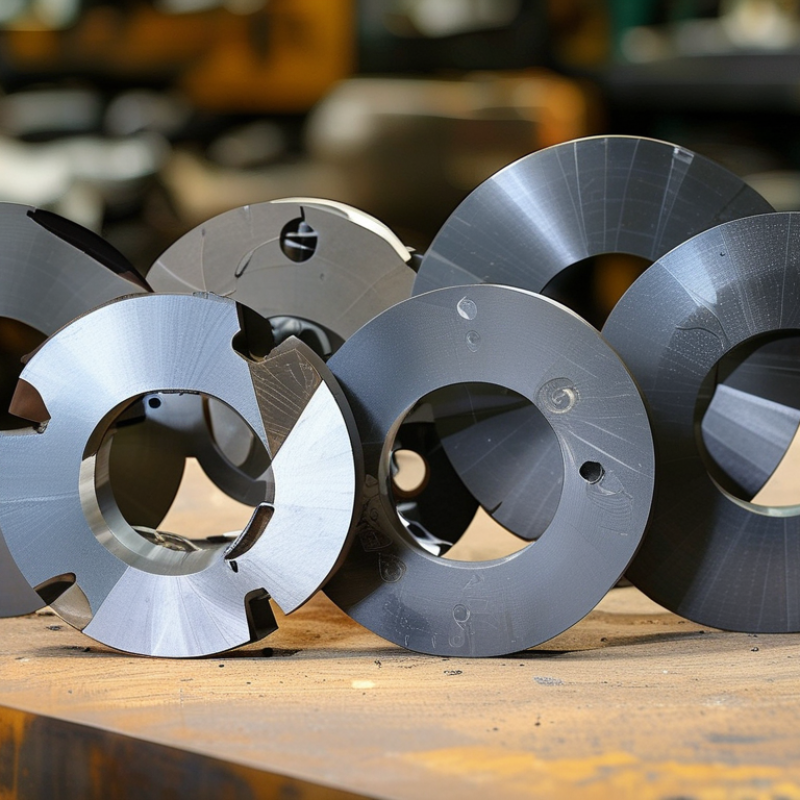
Shearing blades are selected by cutting motion, material thickness, and production speed. Guillotine blades move vertically across a fixed cutting line. They suit sheet metal, plate cutting, and workshop production. A sharp, correctly aligned edge leaves a clean, straight cut. Blade clearance matters greatly. Too much clearance can create burrs and edge distortion.
Rotary blades use circular knives that rotate against a counter-knife or another blade. They support continuous cutting for coils, films, foils, paper, and thin metal strips. Slitter blades are a specialized rotary group. They divide wide materials into narrower rolls with consistent widths. Operators should check blade runout, hardness, and mounting stability. Small errors become visible after hundreds of meters.
Nibbling blades remove small overlapping sections instead of making one continuous shear. This design handles curved profiles, openings, and irregular sheet shapes. It is useful where a guillotine cannot reach. However, the cut edge may need secondary finishing. That detail is often underestimated. A practical selection also considers material grade, thickness range, machine load, and replacement access. Taxonomy helps, but it does not replace testing. Real production samples reveal weaknesses that catalog measurements may hide.
2026 Top Types of Shearing Machine Blades for Global Buyers
Shearing Blade Taxonomy: Guillotine, Rotary, Slitter, and Nibbling Types
The chart shows indicative working-thickness ranges commonly associated with each blade type. Guillotine blades cover heavier sheet cutting, while rotary and slitter blades are generally used for continuous, thinner materials. Nibbling blades are suited to localized sheet cutting and contour work. Actual capacity depends on machine design, blade geometry, clearance, material grade, and cutting length.
Blade Materials and Hardness: HSS, Tool Steel, Carbide, and 56–62 HRC Ranges
Material and Hardness Guide for Shearing Machine Blades
Blade material directly affects cutting life, edge stability, and maintenance frequency. High-speed steel, or HSS, keeps its hardness during repeated cutting and moderate heat. It suits stainless steel, coated sheets, and production lines requiring consistent edges. However, HSS costs more and may need careful grinding.
Tool steel offers a practical balance between toughness, hardness, and price. Many industrial blades perform reliably between 56 and 62 HRC after proper heat treatment. Lower hardness can reduce cracking, but the edge may wear sooner. Higher hardness improves wear resistance, yet excessive hardness can make the blade brittle. A 60 HRC blade is not automatically better.
Carbide provides exceptional wear resistance when cutting abrasive materials or high-strength sheet. Its hardness is usually specified through carbide grades, HV, or HRA, rather than directly through HRC. Carbide edges can chip under impact, poor alignment, or excessive cutting clearance. Inspectors should check burr height, edge chipping, and cut-surface distortion after installation. Small burrs matter.
In field inspections, uneven wear often comes from setup errors, not poor steel. Blade gap, clamping pressure, and machine vibration deserve equal attention. Buyers should request material certificates, heat-treatment records, and hardness test locations. Portable hardness readings can vary near thin edges. That detail is easy to miss. A thoughtful supplier should explain the test method, tolerance, and recommended application instead of offering one hardness number for every job.
Machine Compatibility: Hydraulic, Mechanical, CNC, and Rotary Shear Systems
2026 Top Types of Shearing Machine Blades for Global Buyers
Blade selection begins with the shear system, not the material alone. Hydraulic shears need long, rigid blades with stable edge support. Their cutting force suits thick carbon steel and stainless steel sheets. Mechanical shears deliver fast strokes, but impact loads can damage brittle edges. Shorter tool-steel blades often perform better here.
CNC shears demand consistent blade geometry and accurate clearance settings. Precision-ground blades reduce burrs during repeated production runs. Segmented blades also simplify replacement when only one section wears.
Rotary shear systems require circular blades with balanced thickness and controlled runout. Small alignment errors can create uneven strips.
The International Federation of Robotics reported 541,302 industrial robot installations worldwide in 2023. This growth increases demand for repeatable cutting and automated tool changes. A 2024 Grand View Research analysis also forecasts continued expansion in the global metal-cutting machine market through 2030. These figures support investment in measurable blade performance, not just initial price.
Check hardness, edge angle, blade length, and mounting holes before ordering. Ask for test certificates and actual clearance recommendations.
Carbide-tipped options can extend life on abrasive alloys, but they may fail under severe impact. That trade-off is easy to underestimate.
Field experience still matters, especially when machine frames are worn or poorly aligned.
Global Buyer Standards: ISO 9001, DIN 1.2379, AISI D2, and Custom Specifications
2026 Top Types of Shearing Machine Blades for Global Buyers
For global buyers, shearing machine blades should be selected by documented standards, not appearance alone. ISO 9001 should support controlled purchasing, heat treatment records, inspection, and corrective action. It does not define blade steel. That distinction matters. Ask for material certificates, batch traceability, and dimensional inspection reports. A clean certificate helps. It cannot replace practical testing.
DIN 1.2379 and AISI D2 are widely specified for blades requiring wear resistance and stable edges. They are often treated as comparable grades, but national standards may differ in chemistry and delivery condition. Confirm the exact standard, hardness range, heat-treatment cycle, and working thickness. A blade for 6 mm mild steel is not automatically suitable for 6 mm stainless steel. Edge angle, clearance, and surface finish also affect performance. In procurement reviews, small tolerance errors have caused uneven cuts and premature chipping. This is easy to underestimate.
Custom specifications should state length, width, thickness, hole pattern, corner radius, burr limits, and packaging protection. Include the machine model only as a reference. Drawings and measured samples are safer. For dependable supply, request pre-shipment inspection and a clear nonconformance process. I would question unusually low hardness claims. They may improve toughness, yet reduce wear life. The opposite can chip under shock loading. There is no perfect setting. Trial cutting remains valuable, especially when material batches vary. A reliable supplier explains these trade-offs plainly and records the final approved configuration.