

BlogsBlogs

Explore cutting-edge articles on laboratory products, industry innovations, and research trends with Lab Consulting.

Explore cutting-edge articles on laboratory products, industry innovations, and research trends with Lab Consulting.

What Are the Top Metal Bellow Mechanical Seals in China?

Choosing the right Metal Bellow Mechanical Seals in China requires more than comparing prices or catalog photographs. It requires attention to temperature, pressure, shaft speed, media compatibility, and installation quality. A seal that performs well on a refinery pump may fail quickly on a chemical mixer.

Robert Flitney, a respected sealing specialist and author of Seals and Sealing Handbook, offers a useful principle: “A seal succeeds only when its operating conditions are understood.” This idea matters when evaluating Chinese manufacturers. Their product ranges may include welded metal bellows, formed bellows, balanced designs, and customized cartridge seals. Each design responds differently to corrosion, thermal movement, dry running, and vibration.

This guide examines leading Chinese suppliers through practical performance, engineering capability, material selection, quality control, and after-sales support. It also considers stainless steel grades, nickel alloys, silicon carbide faces, graphite components, and elastomer choices. Small details matter. A rough shaft finish can damage a precision seal. Incorrect spring settings can create leakage before commissioning.

No ranking is perfect. Buyer requirements differ. Some companies offer strong customization but limited global service. Others provide reliable standard models but fewer options for unusual fluids. Factory testing also deserves careful review. Certificates alone cannot replace field experience, traceable inspection, and clear technical communication.

The following overview aims to help engineers, maintenance teams, and purchasing managers make a more informed decision. It focuses on evidence rather than advertising claims. That approach may take longer, but it usually prevents expensive replacement work later.
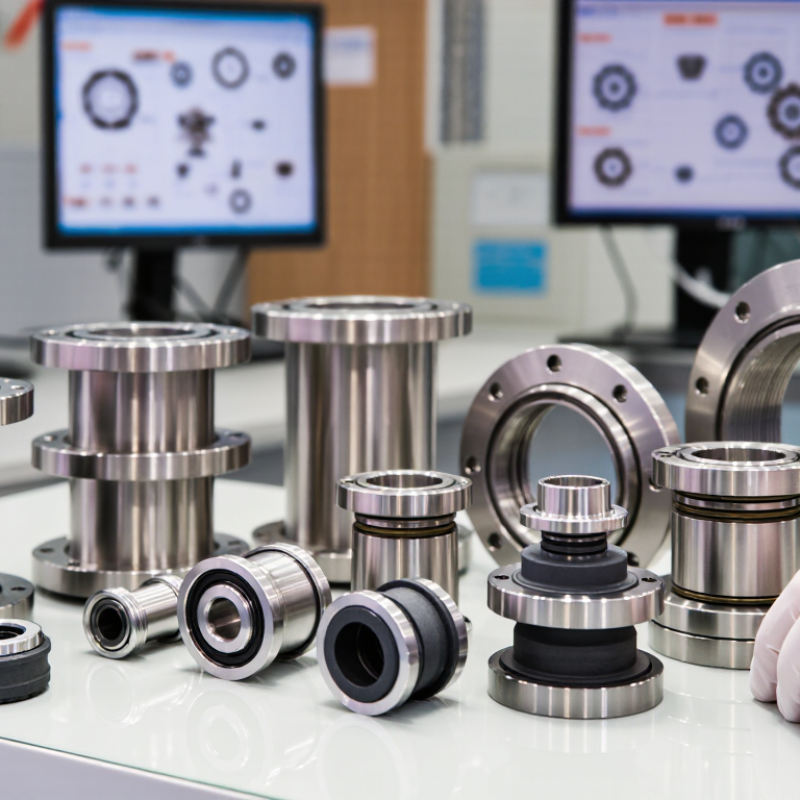
What Are the Top Metal Bellow Mechanical Seals in China?

Metal Bellow Mechanical Seals: Design Principles and ISO 3069 Dimensions

When evaluating top metal bellow mechanical seals in China, engineers should begin with the installation envelope, not a sales ranking. A metal bellow replaces conventional springs and provides axial movement through welded or formed flexure. This design reduces exposed moving parts. It also demands careful control of stress, weld quality, and face alignment. A practical review checks fluid chemistry, temperature, pressure, speed, and shaft runout before selecting a seal. Small details matter.

ISO 3069 is a valuable reference for mechanical seal cavity dimensions and mounting arrangements. Its guidance helps coordinate shaft diameter, housing bore, seal cavity, and working length. However, ISO 3069 does not make every seal interchangeable. Face width, stationary-seat geometry, drive features, and gland details still require verification. Compare certified drawings with the pump chamber, especially around the shoulder and O-ring position. A one-millimeter mismatch can cause leakage or assembly damage. That is not theoretical.

Reliable selection also requires material certificates, weld inspection records, pressure-test data, and a clear tolerance table. Stainless steel or nickel-based alloys should match the fluid and operating temperature. The bellows must balance fatigue life with stable face loading. Top products are not defined by origin alone. One weakness in many comparisons is excessive trust in catalog dimensions. Even experienced teams can overlook thermal growth or installation distortion. Fit comes first.

Operating Limits: Pressures up to 25 bar and Temperatures to 400°C

What Are the Top Metal Bellow Mechanical Seals in China?

For high-temperature Chinese process equipment, metal bellow seals should be judged by operating evidence, not catalog rankings. The stated limit is demanding: pressures up to 25 bar and temperatures reaching 400°C. At this temperature, thermal expansion, face distortion, and lubricant breakdown become critical design risks. API 682 and ISO 21049 emphasize qualification through pressure, temperature, leakage, and endurance testing.

A reliable selection should specify bellows alloy, seal-face pairing, secondary sealing materials, and cooling conditions. Nickel-based alloys or heat-resistant stainless steels are common choices for severe service. Tungsten carbide and silicon carbide faces can reduce wear in abrasive fluids. However, 400°C is not automatically safe at 25 bar. The actual limit depends on speed, fluid volatility, shaft movement, and heat removal.

Energy performance also matters. U.S. Department of Energy pumping-system guidance indicates that pumping systems may consume about 25% of industrial electricity. A poorly adjusted seal can increase friction, leakage, and maintenance demand. In practice, I would request factory test records, pressure-hold results, and temperature-cycle data before approval. Small details matter.

China’s strongest metal bellow seal suppliers often provide customized dimensions for reactors, pumps, and thermal-oil systems. Yet selection can still become too price-focused. That is a weakness. A better review compares leakage stability after repeated thermal cycles, not only the initial purchase cost. Field data should confirm whether the seal survives start-ups, shutdowns, vibration, and occasional dry running. No single design fits every 25-bar application.

Top Chinese Seal Types: Cartridge, Balanced, and Split Designs

China’s leading metal bellow mechanical seals fall into three practical groups: cartridge, balanced, and split designs. Cartridge seals arrive preassembled, reducing installation errors around a pump shaft. Balanced seals lower face loading and suit higher pressures, temperatures, and speed. Split seals allow maintenance without removing the coupling or motor. That detail matters in paper mills, water plants, and chemical processing lines.

Grand View Research estimated the global mechanical seals market at about USD 4.2 billion in 2023, with steady growth expected through 2030. Its data reflects broader seal demand, not metal bellows alone. Still, the trend supports stronger interest in durable, low-leakage designs. API 682 and ISO 21049 remain useful references for process-pump selection. In field inspections, I would check bellows fatigue, face material, shaft runout, and installation cleanliness before comparing prices. Small scratches can become large leakage paths.

There is no universal winner. A cartridge design may be the safest choice for routine replacement, while a balanced seal handles demanding pressure conditions better. Split seals save downtime, but their joint areas require careful alignment. Reports often simplify these trade-offs. Real operating data can disagree. Temperature cycling, dry running, and poor flushing may defeat an otherwise excellent design. Buyers should request pressure, speed, medium, and service-life evidence from qualified Chinese manufacturers. Do not rely on catalog claims alone.

Material Selection: Carbon, SiC, Tungsten Carbide, and FKM Options

What Are the Top Metal Bellow Mechanical Seals in China?

Material Selection: Carbon, SiC, Tungsten Carbide, and FKM Options

China’s process, chemical, and power industries increasingly require dependable metal bellow mechanical seals. A 2024 MarketsandMarkets assessment valued the global mechanical seals market at about USD 4.2 billion in 2023. It forecasts approximately 5.5% growth annually through 2028. This expansion reflects stricter leakage control and higher pump reliability demands.

Carbon offers low friction and supports stable dry-running during brief startup events. It suits clean water, mild chemicals, and moderate pressure. Silicon carbide, or SiC, provides excellent hardness and corrosion resistance. It performs strongly in abrasive slurries and acidic services, but poor alignment can cause brittle face damage. Tungsten carbide handles impact and heavy solids effectively. Its weight and chemical compatibility require careful review. These materials are not interchangeable.

FKM is commonly selected for secondary sealing. Many grades tolerate temperatures near 200°C, but steam, hot water, amines, and certain solvents can attack it. Actual limits depend on compound formulation and pressure. ISO 21049 and API 682 emphasize application-based seal selection, testing, and leakage control.

A practical inspection should record fluid temperature, solids concentration, shaft speed, and startup conditions. Small details matter. In field work, engineers sometimes over-specify hard faces while overlooking elastomer swelling. That is an expensive lesson.

Testing the complete seal assembly remains more reliable than choosing materials from a catalogue alone.

Supplier Evaluation: API 682 Compliance, Testing, and Leakage Control

What Are the Top Metal Bellow Mechanical Seals in China?

Evaluating a metal bellows seal supplier requires more than comparing prices. API 682 compliance should begin with documented design procedures, material traceability, and controlled manufacturing records. Ask whether the supplier can provide bellows forming data, weld inspection results, and dimensional reports for each batch. Small deviations can affect face loading and service life.

Testing must reflect the actual equipment. A credible supplier should test pressure, temperature, rotational speed, and shaft movement within defined limits. Witness testing can include hydrostatic checks, running tests, and measured leakage under stable conditions. Check the calibration dates of pressure gauges and flow meters. The report should identify test duration, seal arrangement, fluid, and failure criteria.

Leakage control depends on more than polished seal faces. Correct secondary seals, balanced loading, clean assembly, and accurate installation all matter. In practical evaluations, inspect the assembly area for dust, oil residue, and uncontrolled handling. Request failure records, not only successful test certificates. No responsible supplier should promise zero leakage in every application. Test results can also differ from field performance, especially with vibration or poor flushing. That limitation deserves honest discussion. A useful supplier supports root-cause analysis and adjusts the design when evidence exposes a weakness.

Newsletter

Subscribe to our newsletter and receive the latest news and exclusive insights every month. No spam.