

Explore cutting-edge articles on laboratory products, industry innovations, and research trends with Lab Consulting.
Choosing the right Glass Chamfering Machine can shape production quality, operating costs, and delivery reliability. Global buyers often compare spindle speed, diamond-wheel quality, coolant control, automation, and frame strength. However, specifications alone can mislead. A machine may look powerful on paper but struggle with thin glass, laminated panels, or continuous factory workloads.
According to glass-processing consultant Elena Marquez, “The best edge is not merely polished; it is repeatable under pressure.” That principle guides this review of the Top 10 Glass Chamfering Machines for Global Buyers. Each model deserves attention for practical reasons, including edge consistency, adjustment accuracy, maintenance access, and operator safety. A clean chamfer should catch the light evenly, without chips, cloudy marks, or sharp corners.
This is not a perfect ranking. Supplier data can vary, and factory results depend on glass type, wheel selection, water quality, and operator skill. Some buyers may prefer a compact machine for custom fabrication. Others may need an automated line beside a tempering furnace. The “best” option is therefore conditional.
Look closely. Ask for sample edges. Check service response times. Confirm voltage, spare-part availability, training, and installation support before ordering. A reliable Glass Chamfering Machine should reduce rework, protect production schedules, and perform consistently after the showroom demonstration ends. That final test matters most.
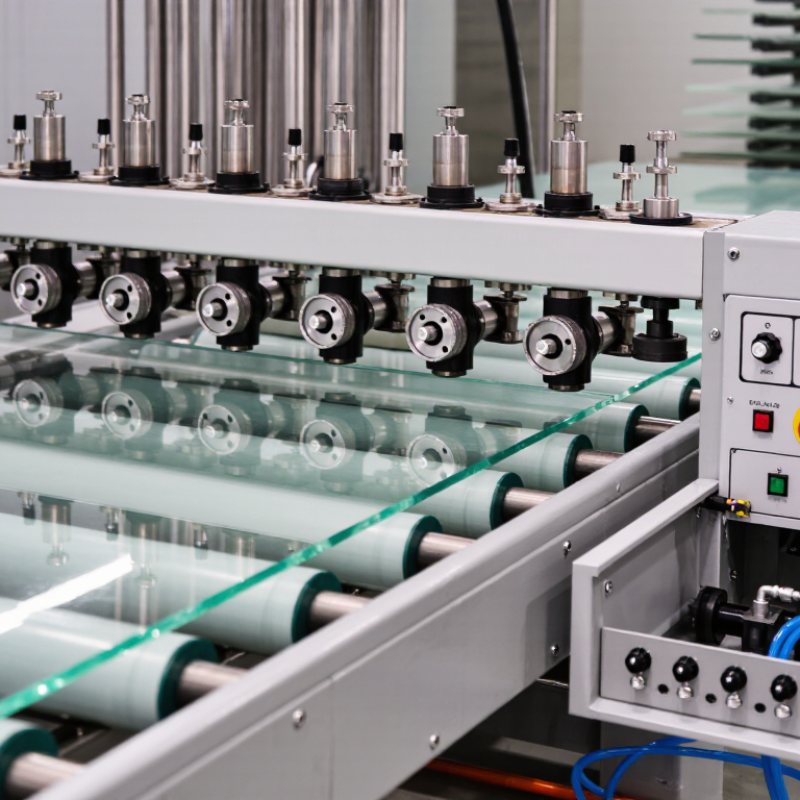
Glass chamfering machines shape and smooth the edges of flat glass panels. They create a slanted surface, called a chamfer, instead of leaving a sharp ninety-degree corner. Global buyers often compare these machines by accuracy, processing speed, glass thickness range, and maintenance access.
The working principle is straightforward but highly controlled. An operator places the glass on conveyor belts or a stable support table. Guide rollers keep the panel aligned as diamond grinding wheels remove material from the edge. The machine controls wheel pressure, feed speed, and chamfer angle. Water usually flows across the grinding area to reduce heat and carry away glass particles. Without proper cooling, the edge may develop small cracks or uneven reflections.
A reliable setup also depends on calibration. Operators check wheel wear, belt tension, and panel alignment before production. Sensors can detect glass position and adjust movement, but they cannot replace skilled inspection. Different glass thicknesses may require different speeds and pressure settings. Laminated or coated glass can behave differently during grinding. Results are not always perfect. A faint line, chipped corner, or inconsistent angle may appear when settings change too quickly. Experienced technicians inspect the first pieces under bright, angled light and adjust the machine before continuing. Clean water, regular wheel replacement, and careful handling directly affect edge quality.
Glass chamfering machines remove material from the edge of a glass sheet to create a beveled surface. Depending on the configuration, diamond wheels or abrasive tools shape and polish the edge while water cooling controls heat and dust. The chart compares typical upper glass-thickness limits for ten commonly used machine configurations.
Thickness values are indicative industry ranges derived from commonly published technical specifications. Actual capacity depends on glass type, edge profile, chamfer width, wheel configuration, automation level, and manufacturer design.
Top 10 Glass Chamfering Machines for Global Buyers
Key Specifications for Comparing Glass Chamfering Machines
A glass chamfering machine should be judged by measurable output, not brochure language. Check maximum glass thickness, minimum sheet size, bevel angle range, and edge tolerance. For architectural work, a stable 45-degree bevel may matter more than extreme spindle speed. Typical production models process glass from 3 to 25 millimeters, but capacity varies by configuration.
Feed speed also deserves close attention. Faster is not always better. Excessive speed can increase chips, rework, and coolant consumption. Review spindle power, wheel diameter, motor control, and cooling flow together. The International Energy Agency reported that buildings and construction consumed about 30% of global final energy in 2022. Efficient motors and adjustable feed systems can reduce waste across long production runs. Noise levels, water filtration, and operator access should be recorded during a real trial.
Tips: Request samples using your actual glass thickness and coating. Measure edge roughness, angle accuracy, cycle time, and reject rate. Ask for maintenance intervals and spare-part lead times. A machine may look efficient on paper, yet perform poorly with laminated or low-emissivity glass. This is where comparisons become less perfect. Human setup skill still changes results. Check electrical standards, guarding, emergency controls, and documentation for the destination market. Independent testing is worth the extra day.
| Configuration | Typical Application | Glass Thickness | Chamfer / Bevel Width | Bevel Angle | Typical Processing Speed | Workpiece Handling | Key Comparison Point |
|---|---|---|---|---|---|---|---|
| 1. Straight-line pencil-edge chamfering machine | Flat glass panels requiring a small, polished arris along straight edges | 3–25 mm | Approximately 1–3 mm arris | Edge arris; no wide face bevel | About 1–5 m/min | Conveyor-fed; straight edges | Check edge consistency, corner quality, and compatibility with the required glass thickness. |
| 2. Straight-line beveling machine | Decorative flat-glass bevels for furniture, mirrors, and interior panels | 3–25 mm | Approximately 5–50 mm | Commonly adjustable within 3°–45° | About 0.5–3 m/min | Conveyor-fed; straight edges | Compare bevel-width capacity, angle adjustment, polishing quality, and feed stability. |
| 3. Variable-angle straight-line beveling machine | Production requiring different bevel angles or widths | 4–19 mm | Approximately 5–40 mm | Typically adjustable within 3°–45° | About 0.5–3 m/min | Conveyor-fed; straight edges | Confirm whether angle changes are manual or powered and how repeatable the settings are. |
| 4. Double-edging chamfering line | High-volume processing of parallel edges on rectangular glass | 3–25 mm | Edge arris typically around 1–3 mm | Edge chamfer; generally not a wide bevel | About 2–10 m/min, depending on glass and finish | Opposing heads process parallel edges | Compare minimum and maximum panel dimensions, line speed, and setup time for width changes. |
| 5. CNC multi-axis glass chamfering machine | Complex profiles, programmed edge work, and varied job batches | Typically 4–19 mm | Depends on tooling and programmed profile | Depends on machine axes and tooling | Job-dependent | CNC-controlled table or workholding system | Check software, available axes, tool-change options, and programming support. |
| 6. Vertical glass chamfering machine | Space-conscious processing of larger flat panels | Typically 3–19 mm | Depends on edge or bevel configuration | Depends on installed grinding heads | About 1–5 m/min for many straight-edge operations | Panel supported and conveyed vertically | Review panel support, loading access, footprint, and safe handling requirements. |
| 7. Horizontal glass chamfering machine | General-purpose straight-edge and bevel processing | Typically 3–25 mm | Depends on machine configuration | Fixed or adjustable, depending on model | About 0.5–5 m/min | Panel conveyed horizontally on rollers or belts | Compare bed length, conveying stability, water management, and ease of loading. |
| 8. Small-format precision chamfering machine | Small glass components, samples, and short production runs | Typically 2–12 mm | Usually a narrow chamfer or arris | Fixed or limited adjustment | Job-dependent; generally suited to controlled batch work | Compact table or fixture-based handling | Check fixture range, positioning accuracy, and suitability for the smallest workpieces. |
| 9. Heavy-duty large-panel chamfering machine | Large architectural, furniture, or interior glass panels | Typically 4–25 mm | Depends on bevel-head configuration | Fixed or adjustable, depending on design | About 0.5–3 m/min | Extended conveyor and panel-support system | Verify maximum panel dimensions, load capacity, support spacing, and required floor space. |
| 10. Automated chamfering and polishing line | Continuous production where edge finishing and repeatability are priorities | Typically 3–25 mm | Configured for the required arris or bevel | Depends on the installed processing heads | About 1–8 m/min, depending on process and finish | Integrated conveyor, processing, and polishing stages | Compare automation level, changeover time, total line footprint, and maintenance access. |
Specifications shown are representative ranges for machine configurations, not guaranteed ratings for a particular machine. Actual capacity and output depend on the machine design, glass dimensions, tooling, finish requirements, and production conditions.
Glass chamfering machines range from compact straight-line units to multi-head CNC systems. Straight-line machines suit repeatable edge finishing on window panes, doors, and furniture glass. Double-edging lines process both sides in one pass, helping high-volume plants maintain consistent dimensions. CNC models handle curved panels, small batches, and changing profiles. They are useful for mirrors, shower enclosures, and custom interior work. Not every factory needs automation; a complex line can sit underused when orders are irregular.
Applications reflect the scale of the glass market. Glass for Europe’s industry reporting describes European flat-glass production at roughly 11 million tonnes annually, serving construction and transport markets. Those sectors require different edge quality: façade panels need reliable, uniform arrises, while automotive components often demand precise geometry and repeatability. For buyers comparing the top 10 machine types, check glass thickness range, minimum workpiece size, water-cooling capacity, and changeover time—not just advertised speed.
For international buyers, choosing among the top 10 glass chamfering machines starts with the work, not the catalogue. Define the glass thickness, edge shape, and daily production volume your shop actually needs. A machine built for steady architectural-glass orders may not suit a small workshop handling varied, short runs. Check sample edges under good lighting; tiny chips can be easy to miss.
Compare more than advertised speed. Ask about spindle configuration, abrasive availability, water circulation, and the time needed for routine maintenance. Confirm the machine’s footprint, power requirements, and control interface before arranging shipment. These details affect installation far more than a polished product image. Request a test on glass similar to yours. A demonstration using different material proves little.
For international delivery, clarify packing, commissioning support, operator training, and access to replacement parts. Get these points in writing, including expected response times and the documents supplied with the equipment. Check that measurements and electrical specifications match your site. Not glamorous, but important. Price comparisons can also mislead when freight, installation, and tooling are excluded. No ranking fits every buyer; the best shortlist reflects local service access and the edges your customers expect. I would still leave room for a supervised production trial—paper specifications cannot reveal every vibration or handling issue.
Choosing a chamfering machine starts with the glass you actually process.
Record thickness, edge profile, daily batch size, and the smallest workpiece before comparing specifications. A machine that handles thick panels may still struggle with narrow strips. Ask suppliers for sample runs using your own glass, and inspect corner consistency, edge smoothness, and chip rate under normal production conditions. Small differences matter.
For purchasing decisions, compare total operating needs, not just the quoted price.
Check wheel availability, water filtration, changeover time, guarding, and operator training. The International Energy Agency’s 2023 Global Status Report for Buildings and Construction reports that buildings and construction accounted for 34% of global energy demand in 2022. This does not measure chamfering-machine use directly, but it underlines why efficient glazing production matters.
Ask for measured power consumption per processed meter; marketing claims alone are weak evidence.
During operation, keep a simple log of wheel changes, defects, and downtime.
Confirm that the machine’s safety controls and maintenance instructions fit your workshop procedures. Inspect finished edges under bright, angled light; tiny chips can disappear under overhead lamps. Be honest about your own production forecast. Buyers sometimes overestimate growth, and an oversized machine can sit idle.
A practical trial is worth the extra day.
Subscribe to our newsletter and receive the latest news and exclusive insights every month. No spam.
LabConsulting GmbH and LC LabService GmbH are Austrian companies which cooperate with over 600 manufacturers and offers a selection of more than 180,000 products and various laboratory product and service solutions for our Labcustomers.
Die LabConsulting GmbH und die LC LabService GmbH sind österreichische Unternehmen, die mit über 600 global verteilten Herstellern zusammenarbeiten und mit einer Auswahl von mehr als 180.000 Produkten und verschiedenen Laborprodukt- und Servicelösungen unseren Parnern im Labor anbieten.
INSTOCK CATALOGOur services
Our services