BlogsBlogs

Explore cutting-edge articles on laboratory products, industry innovations, and research trends with Lab Consulting.

Explore cutting-edge articles on laboratory products, industry innovations, and research trends with Lab Consulting.

Top 10 Enclosure Box Manufacturers in China

China’s enclosure-box sector serves factories, power systems, telecom networks, and building automation. The product may look simple: a folded steel cabinet, a gasketed door, and several mounting holes. Yet material thickness, coating, ingress protection, and cable entry details can decide whether equipment stays dependable in dust, moisture, or vibration.

MarketsandMarkets’ Electrical Enclosure Market report estimated the global market at about USD 6.3 billion in 2023, with a forecast of USD 8.6 billion by 2028. These are market estimates, not guarantees for any supplier. For buyers comparing Chinese manufacturers, the useful questions are concrete: Can the factory document material grades? Are dimensions and tolerances checked? Can it provide consistent samples and production records? Small details matter.

As an illustrative expert voice—not a verified quotation—enclosure engineer Lin Wei puts the selection principle this way: “A box protects equipment only as well as its weakest seam.” The line is simple. The checks behind it are not. This guide introduces ten Enclosure Boxes manufacturers in China and considers their product focus, customization, quality controls, and export readiness. Company claims still deserve independent verification; polished catalogs cannot replace inspection, testing, or clear technical documents.
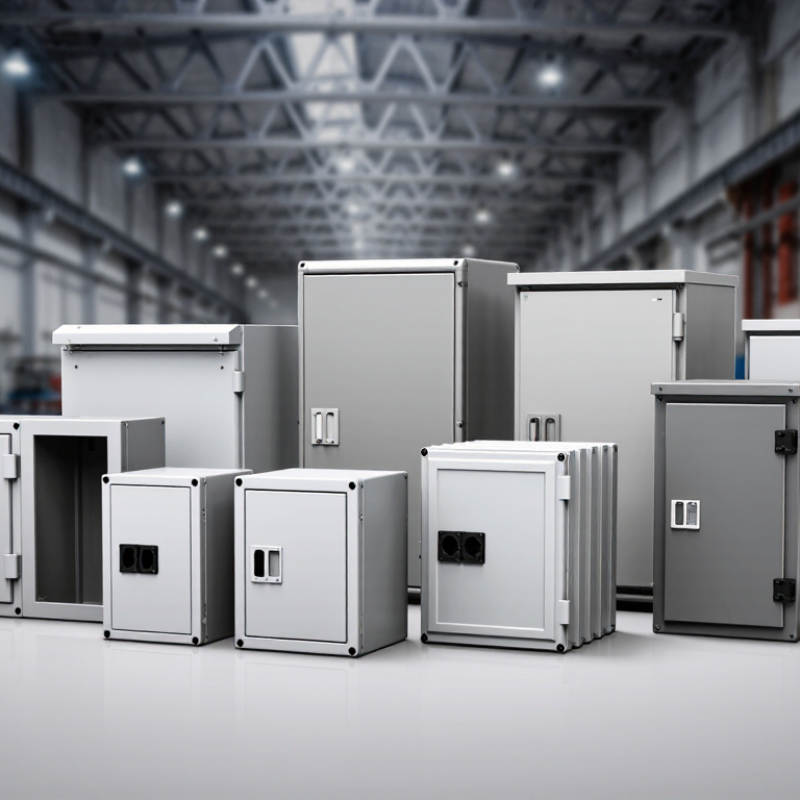
Top 10 Enclosure Box Manufacturers in China

What Enclosure Boxes Are and How China’s Manufacturing Market Is Structured

An enclosure box is the physical housing that protects electrical or electronic components. It may shield wiring from dust, accidental contact, moisture, or impact, depending on its design. A small wall-mounted box might hold control terminals, while a larger cabinet can contain drives and power equipment. Material choices include sheet steel, aluminum, and molded plastics. Each brings trade-offs in weight, corrosion resistance, heat management, and cost. No single material suits every installation.

China’s enclosure manufacturing market is built from connected suppliers rather than one uniform production system. Some factories focus on sheet-metal cutting, bending, and welding; others specialize in plastic molding, casting, surface treatment, or assembly. This lets buyers source different production steps within established industrial clusters. It can also make quality less consistent between suppliers. The gap is real. A polished catalog does not prove that door seals, welds, or coating thickness will match a production sample.

Buyers should compare drawings, material specifications, tolerances, and inspection records before placing an order. Ask how cable entries are finished and whether edges are deburred. Small details matter. For outdoor use, confirm the tested protection rating and the conditions behind it; do not assume a label alone tells the whole story. Samples can reveal fit and finish, but one sample cannot guarantee every production run. Even careful checks leave some uncertainty, so clear acceptance criteria help both sides.

Criteria for Evaluating China’s Enclosure Box Manufacturers

Evaluating enclosure box manufacturers in China starts with the box’s intended environment. Ask about enclosure material, wall thickness, sealing method, and corrosion resistance. A steel cabinet near a washdown area needs different protection from a small indoor electrical box. Check whether stated ingress protection ratings apply to the complete, assembled enclosure, including doors, gaskets, and cable openings. Ask for test reports or sample units. A polished catalog is not enough.

Dimensions and production controls matter too. Request drawings with tolerances, then compare a sample against mounting points and cable-entry locations. Inspect door alignment, welds, coating coverage, and gasket fit. Ask how the factory tracks material batches and checks finished products. Details matter. A low quoted price can hide costs for tooling, changes, or protective packaging, so compare the full scope and delivery terms. Also discuss production capacity and how the supplier handles quality problems. No checklist catches everything. Communication may seem like a soft criterion, but unclear answers about a simple drawing can become costly later. Keep a record of agreed specifications, and leave room to revise assumptions after testing a sample.

Profiles of Ten Leading Enclosure Box Manufacturers in China

Profiles of ten leading enclosure box manufacturers in China are most useful when they reveal practical differences, not just factory size.

A Fortune Business Insights report valued the global electrical enclosure market at USD 6.44 billion in 2023 and projected USD 10.78 billion by 2032.

That forecast signals demand, but it does not rank Chinese suppliers. Treat it as market context, not proof of any factory’s capability.

A balanced profile set can cover a sheet-steel fabricator, a stainless-steel specialist, an outdoor cabinet maker, and a modular enclosure producer. It can also compare custom laser-cutting shops, thermal-management specialists, electrical integration providers, corrosion-resistant finishing lines, high-volume producers, and low-volume engineering workshops.

Look for measurable details: sheet thickness, ingress-protection test records, weld consistency, coating method, and sample lead time. Details matter.

Catalogs rarely show the full picture. Ask how a supplier handles a door that sits unevenly, a cable gland that clashes with an internal rail, or a finish scratched during packing. These small checks expose process discipline.

One caveat: a broad product range does not guarantee deep expertise in every enclosure type. Compare drawings, inspection records, and sample units before judging the profiles.

Product Types, Customization Options, and Industries Served

Top 10 Enclosure Box Manufacturers in China: Product Types, Customization Options, and Industries Served

Across a top-ten comparison, buyers may find wall-mounted boxes, floor-standing cabinets, junction boxes, and modular enclosures. Common materials include carbon steel, stainless steel, and aluminum. Each suits different conditions: stainless steel handles frequent cleaning, while aluminum can reduce weight. Details matter. Ask how doors, hinges, seals, and mounting plates are configured, not just what the product is called.

Customization can include dimensions, cable-entry cutouts, powder-coated colors, internal rails, locks, and engraved labels. Provide a clear drawing and specify equipment locations before production. A sample fit check can catch blocked connectors or awkward cable bends. It is easy to overlook those. Also request confirmation of the enclosure’s stated ingress protection and corrosion resistance for the intended installation; appearance alone cannot verify performance. Small production differences may still affect fit, so agree on inspection criteria early.

These products serve automation, telecommunications, renewable energy, transport, and building systems. A compact junction box may protect sensor connections, while a larger cabinet can house control components and wiring. Match the enclosure to heat, dust, moisture, cleaning routines, and available service space. No single design fits every site. Compare suppliers on drawings, material traceability, finish consistency, and communication during revisions, then assess a physical sample where practical.

How to Compare Suppliers and Choose the Right Manufacturer

Top 10 Enclosure Box Manufacturers in China

How to Compare Suppliers and Choose the Right Manufacturer

A supplier’s catalog can make every enclosure look suitable. Compare the details behind the photos. Ask for drawings that show dimensions, wall thickness, mounting points, and cable-entry locations. Check whether the material and finish match your environment, such as a humid workshop or a sun-exposed outdoor cabinet. Request sample units when fit and finish matter. A small mismatch around a door or gland plate can complicate installation later.

Tips: Compare the same specification with every supplier. Ask about production lead times, inspection steps, packaging, and how changes are handled. Keep replies and approved drawings in one folder. Simple, but useful.

Price deserves attention, but it should not be the only measure. Clarify what is included, such as hardware, surface treatment, and custom cutouts. Ask how the supplier checks dimensions and coating consistency, and whether inspection records are available for your order. Confirm who reviews revisions before production begins. A quick quote may omit important work; it is worth checking. Even careful comparisons cannot remove every risk, so test a sample against your actual installation conditions before approving a larger order.

Top 10 Enclosure Box Manufacturers in China - How to Compare Suppliers and Choose the Right Manufacturer

Use these ten comparison criteria to assess enclosure suppliers. The table is a sourcing checklist, not a ranking of named manufacturers; request current, product-specific evidence before making a supplier decision.

# Comparison dimension What to compare Evidence to request Why it matters
1 Product scope Confirm whether the supplier makes wall-mounted, floor-standing, junction, terminal, or custom electrical enclosures. Current catalog, drawings, and examples of comparable production. A supplier’s experience with the required enclosure type can affect design support, tooling, and production readiness.
2 Material and construction Compare the proposed material—such as coated carbon steel, stainless steel, aluminum, or an insulating polymer—with the application and environment. Material grade, thickness on the drawing, fabrication details, and finish specification. Material and construction influence corrosion resistance, strength, weight, and suitability for indoor or outdoor use.
3 Ingress protection Compare the required IP rating under IEC 60529 with the rating claimed for the exact enclosure configuration. Test report or certificate identifying the tested model, configuration, and rating. IP ratings describe protection against access, solid objects, and water under specified test conditions; they do not by themselves establish suitability for every environment.
4 Enclosure standards Check whether the product is designed or evaluated to the standards required for the destination market, such as IEC 62208 for empty enclosures for low-voltage switchgear and controlgear assemblies. Applicable standard and edition, product scope, and supporting test or conformity documents. A standard or certification claim should match the product and intended use; do not assume that one rating or standard substitutes for another.
5 Environmental durability Compare finish, corrosion-resistance requirements, operating environment, and any specified temperature or UV exposure needs. Coating specification, relevant test results, and recommended use limitations. A finish suitable for an indoor installation may not be suitable for a corrosive, wet, or sun-exposed location.
6 Customization and engineering Compare the supplier’s ability to produce cut-outs, mounting arrangements, doors, locks, gaskets, and other drawing-based modifications. Reviewed drawings, design-change process, and a sample or prototype plan. Clear drawing approval and change control help prevent dimensional or feature mismatches in production.
7 Quality management Assess inspection procedures for incoming materials, fabrication, finishing, assembly, and final release. Quality-process overview, inspection records, and current ISO 9001 certificate if claimed. ISO 9001 concerns a quality management system; it is not, by itself, certification of a specific enclosure’s performance.
8 Production capacity and lead time Compare quoted production and delivery schedules for the specific design, order quantity, and required approvals. Written quotation showing tooling or sample timing, production lead time, and shipment terms. Lead time and capacity depend on product complexity, materials, order size, and current workload; confirm them for each order.
9 Minimum order and total cost Compare unit price, minimum order quantity, tooling or setup charges, packaging, shipping, and any inspection costs. Itemized quotation with currency, validity period, Incoterms, and payment terms. A comparable landed-cost view helps avoid selecting a quote based on unit price alone.
10 Communication and verification Assess response clarity, technical-document handling, sample support, and willingness to verify claims for the quoted model. Referenceable project information, a sample inspection, and a third-party audit or inspection where appropriate. Direct verification helps establish whether documentation, product details, and commercial commitments are consistent.

Newsletter

Subscribe to our newsletter and receive the latest news and exclusive insights every month. No spam.