



China Top Aluminum Products DDP Customs Clearance to USA?
China remains a major source of aluminum sheets, profiles, foil, tubes, and fabricated components for American buyers. The USGS Mineral Commodity Summaries 2025 reported that the United States relied on imports for about 54% of its aluminum supply in 2024. This dependence creates opportunities for Chinese suppliers, but delivery promises require careful verification. Aluminum is not a simple parcel commodity.
The phrase US Aluminum Products DDP Customs Clearance suggests a door-to-door service. Under Incoterms 2020, DDP generally places export, transport, import clearance, duties, and delivery responsibilities on the seller. However, the shipment still needs accurate classification, origin records, commercial invoices, and admissibility checks. U.S. Customs and Border Protection guidance emphasizes that the importer of record remains responsible for entry accuracy, valuation, and compliance. That detail is often underestimated.
Product selection also matters. A 6063-T5 extrusion, a 5052 aluminum sheet, and a coated architectural profile may face different documentation or trade-remedy considerations. The U.S. International Trade Commission’s DataWeb and the Department of Commerce’s aluminum trade-remedy resources should be checked before quotation. Even a small mismatch in alloy, thickness, country of origin, or Harmonized Tariff Schedule code can delay release. Delays are expensive.
A dependable DDP plan should show duty assumptions, broker identity, delivery address, inspection terms, and exception handling. Real experience also exposes weaknesses: a low landed price may exclude applicable measures or port charges. Buyers should request mill certificates, packing photographs, test reports, and a written customs responsibility matrix. The process is practical, not automatic.
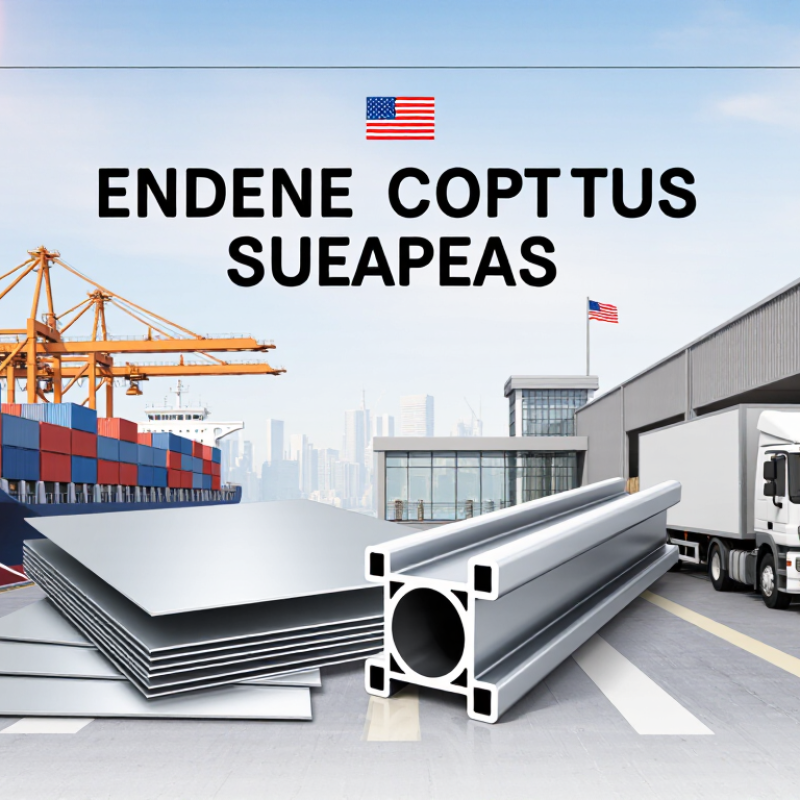
Aluminum Product Categories and Export Specifications from China to the USA
China Top Aluminum Products DDP Customs Clearance to USA
Chinese aluminum exports to the USA cover several practical categories. Common products include sheets, coils, foil, plates, extruded profiles, tubes, bars, and fabricated components. Each category needs different specifications. Buyers should confirm alloy, temper, thickness, width, length, and dimensional tolerance before production. Surface finish also matters. Mill finish, anodized, painted, or polished surfaces can affect both price and performance.
In real export work, small specification gaps create expensive delays. A coil may arrive with the correct alloy but the wrong temper. That is not a minor issue. Export documents should match the cargo precisely. Useful records include a commercial invoice, packing list, certificate of origin, mill test certificate, and accurate tariff classification. Packaging should protect edges and surfaces from moisture. Wooden supports may require compliant treatment and clear shipping marks.
DDP delivery can include transport, import customs handling, duties, and final delivery in the USA. However, responsibilities must be written clearly in the sales contract. The seller may arrange customs clearance through a qualified broker, but product compliance and importer information still require careful review. Check applicable aluminum measures, labeling rules, and entry requirements before shipment. Estimates can be wrong. Exchange rates, port charges, and classification decisions may change the landed cost. A pre-shipment document review, sample inspection, and photos of the loaded container provide useful control points.
| Aluminum Product Category | Common Alloys and Tempers | Typical Product Forms | Typical Export Specifications | Common ASTM / EN References | Typical U.S. HTS Heading* | Key Documents and Compliance Data | DDP Customs Clearance Considerations |
|---|---|---|---|---|---|---|---|
| Unwrought Aluminum | Primary aluminum; alloyed or non-alloyed ingot; commonly 99.5% or higher aluminum for non-alloyed grades | Standard ingots, sows, billets, and remelt ingots | Weight per piece, chemical composition, casting number, surface condition, bundled or strapped packing | ASTM B179; ASTM B233; EN 573-3 where applicable | 7601 | Commercial invoice, packing list, mill test certificate, chemical analysis, certificate of origin, bill of lading, and accurate net and gross weights | Confirm the exact alloy classification, country-of-origin rules, and any additional U.S. trade remedies before quoting a DDP price. |
| Aluminum Billets and Slabs | 6063, 6061, 6082, 7075; casting and extrusion-grade variants | Round billets, rectangular slabs, extrusion logs | Typical billet diameters from approximately 4 to 16 inches; length commonly specified by buyer; homogenized or as-cast condition | ASTM B221; ASTM B327; EN 573-3 | Generally 7601 or 7604, depending on condition and classification | Alloy and temper designation, diameter and length tolerance, billet weight, chemical composition, heat or lot number, and inspection report | HTS classification may depend on whether the material is unwrought or worked into an extrusion product. Obtain a binding classification decision when necessary. |
| Aluminum Bars, Rods, and Profiles | 6061-T6, 6063-T5/T6, 6082-T6, 7075-T6 | Round bars, square bars, rectangular bars, angles, channels, T-sections, custom extrusions | Common diameter or width from approximately 5 to 300 mm; cut lengths, straightness, dimensional tolerances, anodized or mill finish | ASTM B221; ASTM B211; EN 755; EN 755-9 | 7604 | Dimension drawing, alloy and temper, mechanical properties, surface-finish requirements, tolerance standard, packing list, and mill certificate | For DDP, clarify whether anodizing, cutting, machining, or other processing changes the customs classification or declared customs value. |
| Aluminum Sheets, Plates, and Strips | 5052-H32, 5083-H116, 6061-T6, 3003-H14, 1050-H24 | Flat sheets, plates, coils, slit strips, tread plates | Typical thickness from approximately 0.2 to 150 mm; widths up to about 2,600 mm depending on mill capability; cut-to-length or coil | ASTM B209; ASTM B928 for marine plate; EN 485 | 7606 for products over 0.2 mm thick; 7607 may apply to thinner foil products | Thickness, width, length, flatness, alloy, temper, surface finish, mechanical properties, coil weight, and packaging method | Confirm the 0.2 mm thickness threshold and whether the product is classifiable as sheet, plate, strip, or foil under the current HTSUS. |
| Aluminum Foil | 8011-O/H22, 1235-O, 3003-O/H18 | Jumbo rolls, slit coils, embossed foil, household or industrial foil | Common thickness from approximately 0.006 to 0.20 mm; specified width, pinhole limit, tensile strength, elongation, and surface treatment | ASTM B479; EN 546 | 7607 | Alloy, temper, thickness, width, core size, roll outside diameter, net weight, pinhole requirements, and food-contact documentation where relevant | Food-contact or pharmaceutical-use claims may require additional U.S. regulatory documentation. Do not assume general industrial documentation is sufficient. |
| Aluminum Tubes and Pipes | 6061-T6, 6063-T5/T6, 3003, 5052 | Seamless tubes, welded tubes, round tubes, rectangular tubes, precision tubing | Typical outside diameter from approximately 6 to 300 mm; wall thickness, length, straightness, pressure or leakage requirements specified by application | ASTM B210; ASTM B241; ASTM B429; EN 755 | 7608 | Outside diameter, wall thickness, alloy, temper, tube type, dimensional tolerance, hydrostatic or eddy-current testing when required | Pressure applications may require product-specific testing and engineering documentation. Verify whether fittings or assemblies are classified separately. |
| Aluminum Tube and Pipe Fittings | 6061, 6063, 5083, 5052; forged or machined variants | Elbows, tees, reducers, couplings, flanges, adapters | Nominal pipe size, outside diameter, wall thickness, connection type, pressure rating, machining tolerance, and surface finish | ASTM B361; ASME B16.9 where applicable; EN 10204 documentation | 7609 | Part drawing, alloy and temper, dimensions, pressure rating, inspection certificate, heat-treatment information, and country of origin | Accurate product descriptions are essential because fittings, tubes, valves, and finished assemblies may fall under different HTS provisions. |
| Aluminum Wire and Cable | 1350-H16/H26, 6101-T6, 6201-T81, 8000-series electrical alloys | Bare wire, stranded conductor, alloy wire, electrical conductor | Conductor diameter or cross-sectional area, temper, conductivity, strand construction, insulation type if applicable, and coil or reel dimensions | ASTM B230; ASTM B231; ASTM B398; ASTM B399 | 7605 for aluminum wire; electrical cable may classify elsewhere | Electrical conductivity, tensile strength, elongation, resistance, strand count, insulation specification, test report, and reel packing details | Classify bare wire separately from insulated cable. Electrical products may also require applicable U.S. safety or installation documentation. |
| Aluminum Castings and Forgings | A356-T6, A380, 6061-T6, 6082-T6, 7075-T6 | Sand castings, die castings, investment castings, open-die or closed-die forgings | Net part weight, casting or forging process, dimensional tolerances, heat treatment, machining allowance, and non-destructive testing requirements | ASTM B26; ASTM B108; ASTM B247; AMS specifications where contractually required | Classification varies by product and degree of processing | Engineering drawing, material specification, heat-treatment record, dimensional inspection report, chemical analysis, and NDT report where required | Finished or machined parts may not classify as basic aluminum articles. Review the complete product description and intended use before customs entry. |
| Aluminum Structures and Fabricated Articles | 6061, 6063, 5052, 5083, 5754 | Frames, platforms, railings, brackets, panels, prefabricated structural components | Assembly drawings, member dimensions, weld procedures, load requirements, surface treatment, fastener specifications, and corrosion protection | ASTM B209; ASTM B221; AWS D1.2; EN 1090 where applicable | 7610 for certain structures and parts of structures | Detailed commercial invoice description, bill of materials, drawings, weld and inspection records, packing list, and country-of-origin data for all major components | Do not use a generic “aluminum parts” description. Structural assemblies may require a different HTS classification and additional regulatory review. |
| Aluminum Household and Industrial Articles | 3003, 5052, 6061, 6063, 1050 | Cookware, containers, trays, ladders, racks, fabricated utility items | Product dimensions, wall thickness, capacity, load rating, forming method, coating or anodizing, and packaging configuration | ASTM B209; ASTM B221; applicable U.S. consumer-product standards | 7615 or another product-specific heading | Product drawings, material declaration, test reports, labeling information, packaging details, and applicable food-contact or consumer-safety records | Consumer, food-contact, and workplace products may be subject to requirements beyond customs clearance, including labeling and product-safety obligations. |
| General DDP Export Data Required for Shipments from China to the USA | |||||||
| Commercial and Customs Data | Seller and buyer details, precise product description, alloy, temper, dimensions, quantity, unit price, total value, currency, and country of origin | Use consistent values across the commercial invoice, packing list, bill of lading, purchase order, and customs entry | HTSUS code must be confirmed for the specific product | Include gross weight, net weight, package count, marks and numbers, port of loading, destination, and importer information | Under DDP, the seller generally bears delivery costs, import clearance responsibilities, duties, and taxes as agreed in the sales contract. Confirm the importer-of-record arrangement before shipment. | ||
| Packaging and Transport | Export-grade wooden crates, pallets, steel straps, moisture protection, edge protection, and coil supports as appropriate | Package dimensions and weights should match the booking and shipping documents | Not applicable | Wood packaging entering the United States should comply with ISPM 15 requirements; provide container loading photos when requested | Calculate DDP using the actual delivery address, inland freight, terminal charges, customs-broker fees, duties, taxes, and possible inspection costs. | ||
*HTS headings are general reference categories only. The final ten-digit HTSUS classification, duty rate, additional duties, quotas, trade remedies, and regulatory requirements must be verified for the specific aluminum product, alloy, dimensions, origin, and entry date.
Newsletter
Subscribe to our newsletter and receive the latest news and exclusive insights every month. No spam.

LabConsulting GmbH and LC LabService GmbH are Austrian companies which cooperate with over 600 manufacturers and offers a selection of more than 180,000 products and various laboratory product and service solutions for our Labcustomers.
Die LabConsulting GmbH und die LC LabService GmbH sind österreichische Unternehmen, die mit über 600 global verteilten Herstellern zusammenarbeiten und mit einer Auswahl von mehr als 180.000 Produkten und verschiedenen Laborprodukt- und Servicelösungen unseren Parnern im Labor anbieten.
INSTOCK CATALOG


Our services
Our services

