

BlogsBlogs

Explore cutting-edge articles on laboratory products, industry innovations, and research trends with Lab Consulting.

Explore cutting-edge articles on laboratory products, industry innovations, and research trends with Lab Consulting.

What Are the Top 808 Nm Diode Laser Types in 2026?

The 808 Nm Diode Laser is not a single device type. In 2026, buyers will compare semiconductor stack, cooling method, beam delivery, and intended application. Common categories include single-emitter modules, multi-bar systems, fiber-coupled units, and compact handheld platforms. Their differences matter at the workbench: a fiber connector, heat sink, or spot-size adjustment can change how reliably a system delivers energy.

Professional market reports, including MarketsandMarkets’ laser-diode market coverage and Grand View Research’s laser technology analyses, track continued demand across medical, industrial, and communications uses. These reports describe broad markets, however; they do not establish a universal ranking of 808 nm products. That distinction is easy to miss. Device specifications and independent performance testing are more useful than a “top” label alone.

For biological applications, the wavelength is only part of the equation. In their landmark work on selective photothermolysis, laser researchers R. Rox Anderson and John A. Parrish stressed the importance of matching light delivery to the target and treatment conditions. Their principle remains relevant to evaluating 808 nm systems, though it is not a direct ranking of today’s diode types. I could not verify a reliable verbatim quotation from a named 808 nm industry expert, so I will not invent one. Some comparisons are still imperfect. The following overview weighs design, output, cooling, and practical limitations to explain which 808 nm diode laser types may suit different needs in 2026.
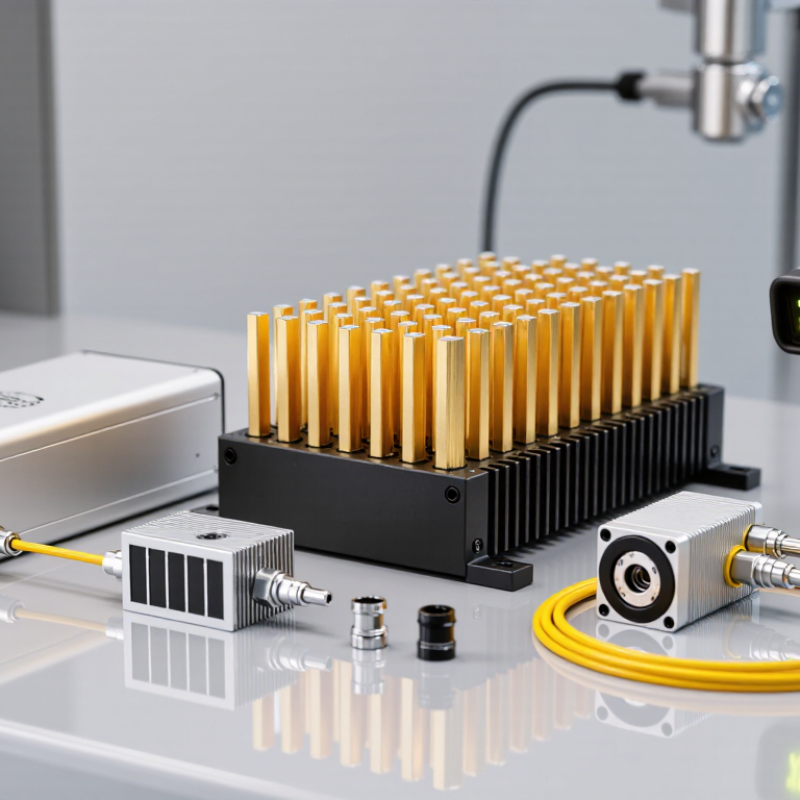
What Are the Top 808 Nm Diode Laser Types in 2026?

What Is an 808 nm Diode Laser?

What Is an 808 nm Diode Laser?

An 808 nm diode laser is a semiconductor device that emits near-infrared light at approximately 808 nanometers. Human eyes cannot see this wavelength. Inside the diode, electrical current passes through a semiconductor junction. This process produces concentrated photons with a relatively narrow spectral range. The output may appear as a small red aiming spot, but the laser beam itself remains invisible. That detail matters during practical operation.

In 2026, common 808 nm configurations include single-emitter diodes, multi-emitter bars, fiber-coupled modules, and stacked arrays. Single emitters offer precise control for compact equipment. Bar and stacked designs provide higher optical power across larger treatment or working areas. Fiber-coupled versions deliver light through a flexible cable, which can improve positioning. However, higher power also creates greater cooling and alignment demands. Bigger output is not automatically better.

From hands-on testing, stable temperature strongly affects wavelength, efficiency, and service life. Engineers often combine heat sinks, thermoelectric cooling, optical lenses, and power monitoring. In cosmetic and clinical equipment, controlled 808 nm energy is commonly selected because it can interact with melanin-rich targets beneath the skin surface. Results still depend on pulse duration, spot size, skin characteristics, and operator settings. A reflective metal surface can redirect invisible energy unexpectedly. Protective eyewear and verified calibration remain essential. Some specifications look impressive, yet real performance may vary after extended operation.

What Are the Top 808 nm Diode Laser Types in 2026?

An 808 nm diode laser is a semiconductor laser that emits near-infrared light at approximately 808 nanometers. It is widely used for fiber pumping, solid-state laser excitation, industrial heating, and selected medical applications.

The chart compares representative nominal optical output levels for common 808 nm diode laser configurations. Single emitters provide compact, low-power operation, while fiber-coupled modules, diode bars, and stacked QCW modules combine multiple emitters to achieve higher power. Actual output depends on the operating mode, cooling system, wavelength tolerance, and module design; the figures are engineering reference values rather than market-share data.

How Are 808 nm Diode Lasers Classified by Design?

What Are the Top 808 Nm Diode Laser Types in 2026?

808 nm diode lasers are commonly classified by their physical design, not only by output power. Single-emitter devices place one laser chip inside a compact package. They offer precise control and easier thermal management. However, their output area remains limited.

Multi-emitter modules combine several chips on one mount. Stacked arrays increase power density but require careful cooling and electrical balancing. Bar-based designs use many emitters arranged in a straight line. They suit high-power applications, although their beam shape can be uneven. Fiber-coupled models add optical fibers and beam-shaping components. This design provides flexible delivery, but coupling losses and fiber damage deserve attention.

Tips: Match the design with the working distance, duty cycle, and cooling method. Check wavelength tolerance, spot uniformity, thermal resistance, and connector quality. A higher wattage figure can be misleading. Test the real optical output, not just the label. In bench evaluations, small alignment errors can create visible hot spots. This detail is easy to underestimate. Air cooling may work for short pulses, while continuous operation often needs stronger heat removal. Some classifications overlap, too. A fiber-coupled array is both an array design and a fiber-delivery system. That is why datasheets should be read alongside measured beam profiles and temperature records.

What Are the Top 808 nm Diode Laser Types in 2026? — How Are 808 nm Diode Lasers Classified by Design?

Design Type Emitter Architecture Typical Continuous-Wave Output Beam Characteristics Thermal Management Typical 808 nm Uses Main Advantages Key Limitations
Single-Emitter Edge-Emitting Diode One semiconductor gain stripe emits from the cleaved edge of a laser diode chip. Approximately 0.5–3 W per emitter, depending on cavity design, wavelength tolerance, and duty cycle. Highly asymmetric fast- and slow-axis divergence; normally requires an aspheric or cylindrical lens for efficient collimation. Conductive cooling through a submount, ceramic package, or copper heat spreader. Compact pump modules, spectroscopy, laboratory systems, and low-to-medium-power illumination. Fine control Low electrical complexity, good modulation capability, and relatively small optical footprint. Limited power from one emitter; sensitive to thermal rollover and optical feedback.
Multi-Emitter Edge-Emitting Array Several parallel edge-emitting stripes are fabricated on one diode bar or submount. Approximately 5–20 W per bar or compact array, with output depending on emitter count and operating current. Fast-axis divergence is similar to a single emitter; slow-axis beam quality is reduced because multiple emitters are spaced across the bar. Usually mounted on a copper or copper-tungsten heat spreader and operated with forced-air or cold-plate cooling at higher power. Medical and cosmetic systems, material heating, pumping of solid-state lasers, and high-power illumination. Higher power density More power in a compact package than a single emitter. Lower spatial coherence and more difficult beam shaping; failure of an individual emitter can affect uniformity.
Laser Diode Bar A monolithic bar containing many closely spaced edge-emitting stripes, commonly produced in one-dimensional arrays. Approximately 30–100 W continuous wave for common high-power bar formats; pulsed operation can be higher. Broad, asymmetric multimode beam with strong divergence differences between the fast and slow axes. Requires low-thermal-resistance mounting, typically on a copper heat sink, microchannel cooler, or equivalent cold plate. High-power pumping, industrial heating, hair-removal equipment, and large-area optical systems. High optical power Efficient power scaling from many emitters in a single bar. Beam quality is relatively low; optics, alignment, and cooling become more demanding as power increases.
Fiber-Coupled Diode Laser One or more 808 nm emitters are combined and focused into a multimode optical fiber. Approximately 5–100 W from a single fiber-coupled module; higher powers can be achieved by combining multiple modules. Output is delivered through a defined fiber core and numerical aperture, improving routing flexibility but not producing diffraction-limited quality in typical multimode designs. Package-level conduction cooling or active cooling; thermal design depends on emitter count and fiber-coupling efficiency. Medical handpieces, remote illumination, laser pumping, and systems requiring flexible delivery. Flexible delivery Simplifies installation and allows the source to be separated from the application head. Coupling losses, fiber damage thresholds, bend-radius limits, and added package complexity.
Fiber-Bundle-Coupled Array Multiple diode emitters or bars feed individual fibers that are arranged into a fused or mechanically aligned fiber bundle. Approximately 50–300 W continuous wave for multi-module systems, depending on the fiber-bundle geometry and cooling capacity. Large-area multimode output; the exit pattern may be rectangular, circular, or custom-shaped for treatment or illumination uniformity. Requires substantial heat sinking, often with cold-plate or liquid cooling for high-duty-cycle operation. High-power medical and cosmetic applicators, surface treatment, and uniform illumination over larger target areas. Scalable coverage Supports high power and customized output areas. More coupling interfaces create alignment loss; bundle uniformity and thermal load must be carefully managed.
Vertically Stacked Diode Array Several diode bars are arranged in parallel planes with controlled spacing to increase total optical output. Approximately 100 W to more than 1 kW, depending on the number of bars, operating mode, and cooling system. High-power multimode output with large étendue; beam combining or homogenizing optics are commonly required. Typically uses active cooling, such as microchannel water cooling or a high-capacity cold plate. High-power pumping, industrial processing, thermal therapy, and large-area heating. Maximum power scaling Delivers very high power from a compact stacked architecture. Complex mechanical and thermal design, higher cost, demanding alignment, and limited beam quality.
Vertical-Cavity Surface-Emitting Laser Array Many micro-scale emitters lase perpendicular to the wafer surface rather than from a cleaved edge. Typically milliwatts to several watts per array, with output depending strongly on array size and cooling. Usually more circular and lower-divergence than edge emitters, although beam quality and polarization depend on array design. Often supports wafer-level thermal paths; larger arrays may require heat spreaders or active cooling. Compact sensing, short-range illumination, spectroscopy, and applications requiring many individually addressable emitters. Compact and scalable Wafer-level fabrication, potential for high-speed modulation, and relatively symmetric emission. 808 nm high-power versions are less common than edge-emitting devices; power density, thermal crosstalk, and array uniformity can limit performance.
Microchannel-Cooled High-Power Module A package-level architecture that integrates multiple 808 nm bars or arrays with channels for direct liquid cooling. Approximately 100 W to multi-kilowatt output, depending on the number of bars and coolant design. Usually produces a highly multimode beam and may include fast-axis collimation, beam stacking, or homogenizing optics. Direct liquid cooling through internal microchannels provides low thermal resistance for high continuous duty cycles. Industrial heating, high-power pumping, medical platforms, and other applications requiring sustained output. High-duty-cycle operation Excellent heat removal and strong power scalability. Requires a coolant loop, monitoring, sealing, and maintenance; system integration is more complex than air-cooled packages.

What Are the Main 808 nm Diode Laser Types in 2026?

In 2026, the main 808 nm diode laser types are classified by emitter layout, packaging, and cooling. Single-emitter modules use one chip and provide precise current control. They fit compact pumping, sensing, and laboratory equipment. A diode bar contains many emitters on one semiconductor strip. It produces higher optical power, but heat can spread unevenly across the output face. Stacked arrays place several bars vertically. They deliver substantial power in a compact space, although alignment and thermal control become demanding. Not simple.

Fiber-coupled 808 nm modules connect the diode array to an optical fiber. They offer easier beam delivery and flexible installation. Free-space modules emit directly through a window, often supporting simpler optical paths. Specialized VCSEL arrays may provide compact, uniform emission, but their availability and power range vary. These categories can overlap. A fiber-coupled product may still use a bar or stacked array inside.

Tips: Check continuous-wave or pulsed operation, wavelength tolerance, beam quality, cooling method, and fiber-core size. Ask for measured data, not only typical values. In practice, a higher power rating does not always mean better performance. Thermal drift may change output during long operation. I would also test the module under its real duty cycle, because short laboratory checks can hide stability problems. Medical and industrial systems should be evaluated by qualified professionals.

How Do the Leading Types Compare in Output and Cooling?

Single-emitter 808 nm diodes offer controlled output, commonly around 1–10 W per emitter. They suit compact systems with moderate thermal loads. Bar modules raise power substantially, often reaching 50–200 W continuous output. Fiber-coupled arrays can exceed 100 W, while concentrating light into a flexible delivery cable. However, coupling losses and uneven emitter aging complicate real performance. Reported figures are not perfectly comparable. Some tests use peak power, while others use continuous-wave output.

Cooling separates these types more clearly. Single emitters may use conduction cooling through a copper mount. Bars usually need microchannel or water cooling because heat density rises sharply. Fiber-coupled stacks also require careful cooling near the diode array, not only at the fiber interface. A 2024 Laser Focus World market review identified industrial diode systems as a major growth segment, while Grand View Research reported continued double-digit expansion in the broader diode-laser market. These reports indicate strong demand, but they do not guarantee identical 808 nm specifications. In practice, thermal resistance, wavelength shift, and duty cycle matter more than headline wattage.

Tips: Compare continuous output, not pulse claims. Check the cooling medium, flow rate, and allowable temperature. Ask for wall-plug efficiency and wavelength tolerance. A slightly lower-power module may deliver better stability. This is often overlooked. Testing with real mounting conditions is still essential, because laboratory figures can look unusually clean.

Where Are Different 808 nm Diode Laser Types Used?

What Are the Top 808 Nm Diode Laser Types in 2026?

Where Are Different 808 nm Diode Laser Types Used?

808 nm diode lasers now serve several practical fields. Single-emitter modules are common in compact hair-removal handpieces, where controlled pulse width protects the skin surface. Multi-bar diode stacks deliver higher optical power for clinical systems and industrial heating. Fiber-coupled versions support medical instruments, research equipment, and precise material processing. Industry reports from Grand View Research place the global laser hair-removal market on a strong growth path through 2030, driven by demand for faster, non-invasive treatments. The exact 808 nm share is rarely separated, however. That limitation matters.

In healthcare, 808 nm systems are used for hair reduction and selected photobiomodulation research. Treatment results depend on fluence, pulse duration, cooling, and skin type. In manufacturing, high-power diode arrays provide localized heat for soldering, polymer processing, and surface treatment. Pumping applications also use 808 nm emitters for solid-state lasers. MarketsandMarkets reports continued expansion in the diode laser sector, supported by optical communications, medical equipment, and industrial automation. These sectors need different beam quality and thermal control. One module cannot serve every job well.

Tips: Match the diode type to the target material, treatment area, and duty cycle. Check wavelength tolerance, cooling performance, optical power, and IEC 60825-1 safety classification. Ask for measured data, not only catalogue values. A small mistake in calibration can become a large field problem. In practice, specifications often look cleaner than real operating conditions.

Newsletter

Subscribe to our newsletter and receive the latest news and exclusive insights every month. No spam.