



Top 10 Quality Herbs Suppliers for Global Buyers?
Global buyers are paying closer attention to Quality Herbs as demand for botanical products expands across food, wellness, and regulated healthcare markets. Grand View Research valued the global herbal medicine market at approximately USD 216.4 billion in 2023. Its report also projects continued growth through 2030. These figures show opportunity, but they do not prove supplier reliability.
The details matter. A dried chamomile shipment may look clean while carrying excessive moisture, pesticide residues, or weak botanical identity. Buyers need traceability, validated testing, stable packaging, and documented harvest practices. The World Health Organization’s WHO Global Report on Traditional and Complementary Medicine 2019 emphasizes quality assurance, safety, and evidence-based use. Those principles should guide every supplier comparison.
Pharmacognosy expert Professor Michael Heinrich has warned, “Herbal medicines are not harmless medicines.” His statement remains important for international procurement. Quality Herbs suppliers should therefore provide certificates of analysis, allergen information, contaminant screening, and clear origin records. Independent laboratory verification adds confidence, especially when purchasing bulk ingredients across borders.
However, supplier rankings are never perfect. Public data can be incomplete. Testing standards may differ between countries. Some companies also communicate sustainability claims more clearly than they document them. This guide examines ten suppliers through practical criteria, including product consistency, certifications, production capacity, communication, and export experience. It does not treat company size as proof of quality.
A reliable supplier should make verification easier, not harder. That means answering technical questions before payment, sharing current documents, and explaining how each batch is controlled. Small details often reveal the real standard. Fresh seals. Legible labels. Prompt laboratory replies. Those signals deserve careful attention.
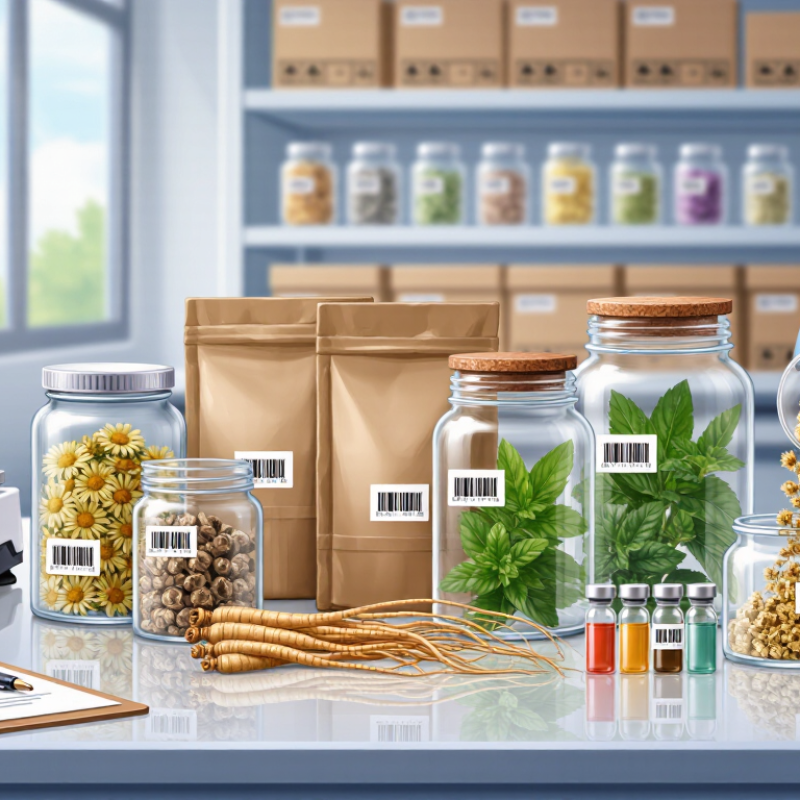
Understanding Quality Standards for Global Herb Suppliers
Top 10 Quality Herbs Suppliers for Global Buyers?
Quality starts before a herb reaches the warehouse. Buyers should verify botanical identity, plant part, origin, harvest date, and storage conditions. The WHO Global Report on Traditional and Complementary Medicine 2019 states that 170 of 194 member states reported using traditional medicine. That scale increases the need for reliable testing and traceability.
A credible supplier should provide batch-specific certificates of analysis, not recycled documents. Tests should cover microbial counts, pesticides, heavy metals, aflatoxins, moisture, and active compounds. ISO 22000-based food safety systems can strengthen process control, but certification alone does not prove every batch is suitable. Audit the facility when possible. Inspect stainless-steel surfaces, sealed bags, pest controls, and temperature records.
Small details matter.
The Codex Alimentarius General Principles of Food Hygiene supports risk-based controls across the supply chain. However, legal limits differ between importing markets, so buyers must compare destination requirements carefully. Request retention samples and confirm laboratory accreditation before signing a long-term contract. I have seen polished paperwork hide inconsistent particle sizes and weak traceability. That is an uncomfortable reminder: supplier evaluation should test physical evidence, not presentation quality. Reliable partners welcome questions, disclose corrective actions, and explain what they cannot guarantee.
Top 10 Quality Herbs Suppliers for Global Buyers? - Understanding Quality Standards for Global Herb Suppliers
Anonymous supplier-quality benchmark based on internationally recognized food-safety, organic, testing, and traceability requirements
| Rank | Anonymous Supplier Profile | Typical Sourcing Region | Common Herb Categories | Recognized Quality Frameworks | Routine Laboratory Controls | Batch Traceability | Export Readiness | Quality Readiness Score |
|---|---|---|---|---|---|---|---|---|
| 1 | Profile A — Certified dried-herb processor | Mediterranean and Southern Europe | Oregano, thyme, rosemary, sage, mint | HACCP; ISO 22000 or equivalent; organic certification where applicable | Identity, moisture, microbiology, pesticide residues, heavy metals, foreign matter | Full farm-to-lot records | Very strong | 95/100 |
| 2 | Profile B — Organic-focused botanical supplier | Central and Eastern Europe | Chamomile, nettle, lemon balm, peppermint | Organic certification; HACCP; documented allergen and contamination controls | Moisture, microbial pathogens, pesticide residues, foreign matter, authenticity checks | Full lot traceability | Very strong | 94/100 |
| 3 | Profile C — Large-volume Asian herb exporter | China and East Asia | Green tea, ginger, goji, licorice, chrysanthemum | HACCP; ISO 22000; GMP controls for processed botanical ingredients | Pesticide residues, heavy metals, sulphur dioxide where relevant, microbial testing, species identity | Lot-level records | Very strong | 93/100 |
| 4 | Profile D — Botanical extract and whole-herb processor | India and South Asia | Turmeric, ashwagandha, tulsi, fenugreek, moringa | HACCP; GMP; ISO 22000 or equivalent food-safety system | Curcuminoid or marker compounds, microbial limits, pesticides, heavy metals, aflatoxins | Full batch documentation | Very strong | 92/100 |
| 5 | Profile E — North American culinary herb supplier | United States, Canada, and Mexico | Basil, parsley, cilantro, dill, sage | Preventive controls; HACCP; organic certification where applicable | Salmonella and other pathogens, moisture, pesticides, foreign material, authenticity | Full lot traceability | Strong | 91/100 |
| 6 | Profile F — Middle Eastern spice and herb exporter | Turkey, Iran, and the Levant | Saffron, sumac, mint, cumin, dried rose | HACCP; ISO 22000; supplier approval and authenticity programs | Adulteration screening, pesticides, aflatoxins, heavy metals, microbiology | Lot-level records | Strong | 90/100 |
| 7 | Profile G — Latin American medicinal-herb processor | Mexico, Central America, and the Andes | Hibiscus, stevia, yerba mate, boldo, lemongrass | HACCP; good agricultural and collection practices; organic certification where applicable | Microbiology, pesticides, heavy metals, moisture, botanical identity | Documented by production lot | Strong | 88/100 |
| 8 | Profile H — African indigenous-herb supplier | East and Southern Africa | Rooibos, hibiscus, baobab, moringa, honeybush | HACCP or equivalent; ethical sourcing; organic certification where applicable | Microbiology, moisture, pesticides, heavy metals, mycotoxins where relevant | Improving; lot documentation expected | Strong | 87/100 |
| 9 | Profile I — Southeast Asian tropical-herb supplier | Vietnam, Thailand, Indonesia, and Malaysia | Lemongrass, galangal, pandan, ginger, turmeric | HACCP; good agricultural practices; food-safety management system preferred | Pesticides, microbiology, moisture, heavy metals, sulphur dioxide where relevant | Lot-level documentation | Good | 85/100 |
| 10 | Profile J — Wild-collected botanical supplier | Central Asia and Eastern Europe | Valerian, rosehip, elderflower, nettle, dandelion | Good agricultural and collection practices; HACCP preferred; sustainability records | Botanical identity, microbiology, pesticides, heavy metals, foreign matter | Collection-area and lot records | Good | 83/100 |
Newsletter
Subscribe to our newsletter and receive the latest news and exclusive insights every month. No spam.

LabConsulting GmbH and LC LabService GmbH are Austrian companies which cooperate with over 600 manufacturers and offers a selection of more than 180,000 products and various laboratory product and service solutions for our Labcustomers.
Die LabConsulting GmbH und die LC LabService GmbH sind österreichische Unternehmen, die mit über 600 global verteilten Herstellern zusammenarbeiten und mit einer Auswahl von mehr als 180.000 Produkten und verschiedenen Laborprodukt- und Servicelösungen unseren Parnern im Labor anbieten.
INSTOCK CATALOG


Our services
Our services

