


China Top 10 Custom Sewer Jetter Manufacturers
Selecting a reliable supplier from the China Top 10 Custom Sewer Jetter Manufacturers can shape a project’s daily performance, maintenance costs, and service life. A Custom Sewer Jetter may look straightforward, but its pump, hose, tank, and vehicle layout must work together. A mismatch can mean slower cleaning, difficult access, or unnecessary downtime.
This guide introduces manufacturers through practical considerations rather than rankings alone. It looks at customization options, production experience, quality controls, technical support, and the ability to match equipment to specific operating conditions. For example, a contractor clearing narrow urban lines may need a different hose length and water capacity than a municipal team maintaining larger networks. Details matter. Buyers should also ask for clear specifications, documented testing, warranty terms, and references for comparable machines. These checks help distinguish useful engineering support from sales claims.
No single manufacturer is right for every buyer. Some suppliers may offer broad customization, while others may be better suited to standard configurations or particular budgets. That is not always simple. Product descriptions can leave important questions unanswered, and stated performance should be confirmed against the intended workload. Consider access to replacement parts, operator training, and service response before making a decision. The manufacturers discussed here provide a starting point for comparison, not a substitute for due diligence. With careful evaluation, buyers can identify equipment that fits their routes, water supply, maintenance resources, and long-term plans.
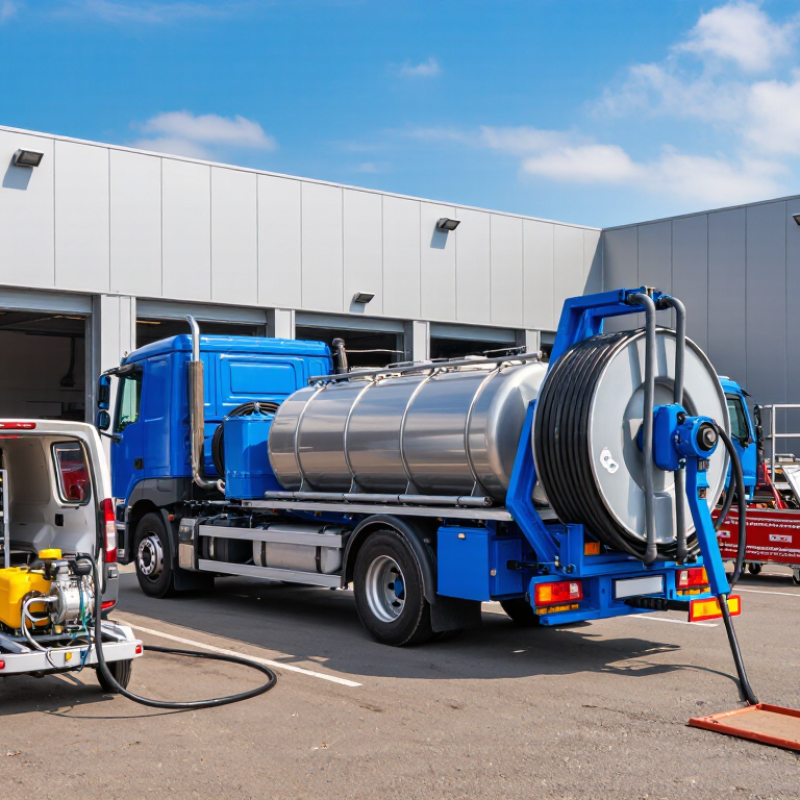
How Custom Sewer Jetters Work and Which Configurations They Support
A custom sewer jetter clears pipes by sending pressurized water through a flexible hose and nozzle. Rear-facing jets help move the hose forward while washing debris toward the access point. A forward-facing jet can help break through a blockage. Pressure and flow rate work together: pressure loosens deposits, while water volume helps carry them away.
Configurations vary by job. Buyers can specify a truck, trailer, or skid-mounted unit, then match tank capacity, hose length, reel layout, and nozzle type to pipe size and site access. The U.S. EPA’s 2022 Clean Watersheds Needs Survey estimated $630.1 billion in wastewater infrastructure needs over 20 years. That figure is not a jetter-market forecast, but it shows the scale of maintenance demand. A high-pressure rating alone can look impressive; it may still be a poor fit if flow, water supply, or hose reach falls short.
Tips: Match the nozzle to the blockage and pipe diameter. Check the manufacturer’s operating limits, and confirm access points before choosing hose length. Small details matter. A neat specification sheet cannot replace a site check.
China Top 10 Custom Sewer Jetter Manufacturers - How Custom Sewer Jetters Work and Which Configurations They Support
Configuration guide: ten common custom sewer jetter build types, not a ranking of companies. Features and operating specifications vary by manufacturer and model.
| Configuration | Typical platform | How the jetter works | Common custom options | Typical application |
|---|---|---|---|---|
| 1. Compact portable jetter | Portable frame or small cart | A high-pressure pump sends water through a small-diameter hose; a rear-facing nozzle jets help pull the hose into the line and flush loosened debris back toward the access point. | Hose length and diameter, reel, nozzle set, water-tank connection, and control layout | Small branch drains and indoor plumbing work |
| 2. Trailer-mounted general-purpose jetter | Road trailer with tank, pump, engine, and hose reel | The onboard pump draws from the tank and supplies a jetting hose. Nozzle selection and the balance of pressure and flow are matched to the pipe and blockage. | Tank capacity, reel arrangement, engine choice, hose package, lighting, and tool storage | Routine municipal and contractor drain cleaning |
| 3. Skid-mounted jetter | Equipment skid fitted to a truck or service vehicle | A vehicle-mounted power source drives the pump; the hose reel feeds the nozzle through a manhole or cleanout to scour the pipe wall and move material downstream or back toward the entry point. | Skid footprint, tank integration, pump drive, reel position, service access, and remote controls | Fleet vehicles and operators needing a removable or vehicle-integrated unit |
| 4. Van-mounted jetter | Enclosed service van | The pump supplies water from a tank or approved supply to a hose reel. The nozzle uses directed jets to penetrate, scour, and flush deposits from the drain. | Interior reel layout, tank size, ventilation, spill containment, hose routing, and winter protection | Urban service work where enclosed equipment and compact parking are useful |
| 5. Truck-mounted high-capacity jetter | Heavy-duty truck chassis with larger water and hose systems | A higher-capacity pumping system delivers water through a larger hose and selected nozzle. Flow, pressure, and nozzle design determine cleaning action; the removed material is carried toward an access point or downstream. | Tank configuration, hose reel capacity, pump controls, boom or reel position, and optional vacuum-system integration | Larger sewer lines and demanding municipal maintenance tasks |
| 6. Hot-water jetter | Trailer, skid, van, or truck platform with a compatible heating system | Water is pressurized and heated before delivery to the hose. The nozzle directs the heated water into the drain; heat can assist with certain greasy deposits, subject to pipe and site constraints. | Heater type, fuel supply, temperature controls, insulation, and cold-weather package | Drain cleaning where grease or temperature-sensitive deposits are a concern |
| 7. Electric-powered jetter | Portable frame, cart, van, or site-powered system | An electric motor drives the water pump, which feeds the jetting hose. The nozzle's forward and rear jets help advance and clean the line. | Voltage and phase, motor controls, power-cable setup, enclosure, and compatible hose and nozzle sets | Sites with suitable electrical power or a preference for electric equipment |
| 8. Remote-control jetter | Trailer, skid, or truck-mounted system | The water-jetting process is the same as a standard unit, while remote controls let the operator manage selected functions from a position near the work area. | Remote start and stop, pressure adjustment, emergency shutdown, and control-system compatibility | Jobs where the operator benefits from controlling the unit near the hose entry point |
| 9. Compact-reel jetter | Small trailer, van, or compact service vehicle | A compact reel stores the jetting hose and feeds it into the line. The pump supplies the nozzle, which uses directed water jets to loosen and flush obstructions. | Reel orientation, hose guide, hose length, tank layout, and quick-connect fittings | Work in confined service vehicles or locations with limited equipment space |
| 10. Jetter with vacuum-system integration | Combined sewer-cleaning truck or coordinated jetter and vacuum equipment | The jetter loosens deposits with pressurized water; a compatible vacuum system can collect wastewater and solids at the access point or from a designated collection area. | Tank arrangement, hose and boom layout, debris handling, interlocks, and coordinated operator controls | Projects where flushing and collection of removed material are both required |
Operating note: A sewer jetter uses a pump to pressurize water, a hose to deliver it into the pipe, and a selected nozzle to direct the jets. Correct pressure, flow, hose, and nozzle depend on pipe size, material, condition, and the blockage. Follow equipment instructions and applicable safety requirements.
Newsletter
Subscribe to our newsletter and receive the latest news and exclusive insights every month. No spam.

LabConsulting GmbH and LC LabService GmbH are Austrian companies which cooperate with over 600 manufacturers and offers a selection of more than 180,000 products and various laboratory product and service solutions for our Labcustomers.
Die LabConsulting GmbH und die LC LabService GmbH sind österreichische Unternehmen, die mit über 600 global verteilten Herstellern zusammenarbeiten und mit einer Auswahl von mehr als 180.000 Produkten und verschiedenen Laborprodukt- und Servicelösungen unseren Parnern im Labor anbieten.
INSTOCK CATALOG


Our services
Our services

