

Explore cutting-edge articles on laboratory products, industry innovations, and research trends with Lab Consulting.
Printed Decorative Paper is a specialized surface material used to create realistic wood, stone, textile, and abstract patterns. It is commonly printed by gravure technology, then impregnated with resin for furniture panels, flooring, doors, and interior fixtures. A printed roll may appear thin, yet it controls the visual identity of a finished board. Small registration errors can make a wood grain look unnatural.
The market is growing steadily. Grand View Research valued the global decorative laminates market at approximately USD 7.9 billion in 2023. Its report projects continued growth through 2030, supported by furniture production, renovation, and commercial interiors. Smithers’ The Future of Decorative Papers to 2028 also highlights demand for higher-quality finishes, digital printing, and more efficient material use. These reports describe related markets, not Printed Decorative Paper alone. That distinction matters.
In practice, manufacturers evaluate paper weight, ink adhesion, color consistency, resin absorption, and surface wear. Designers also consider how lighting changes a printed pattern across a large wall or cabinet door. A sample may look perfect under showroom lighting but appear too warm in daylight. This is where technical testing becomes essential. FSC-certified fiber, water-based inks, and lower-emission resins are receiving greater attention. However, sustainability claims still require evidence, not attractive labels. The industry has progress to show, but its data is not always comparable. A careful buyer should examine test methods, certification scope, and product performance before choosing a decorative paper system.
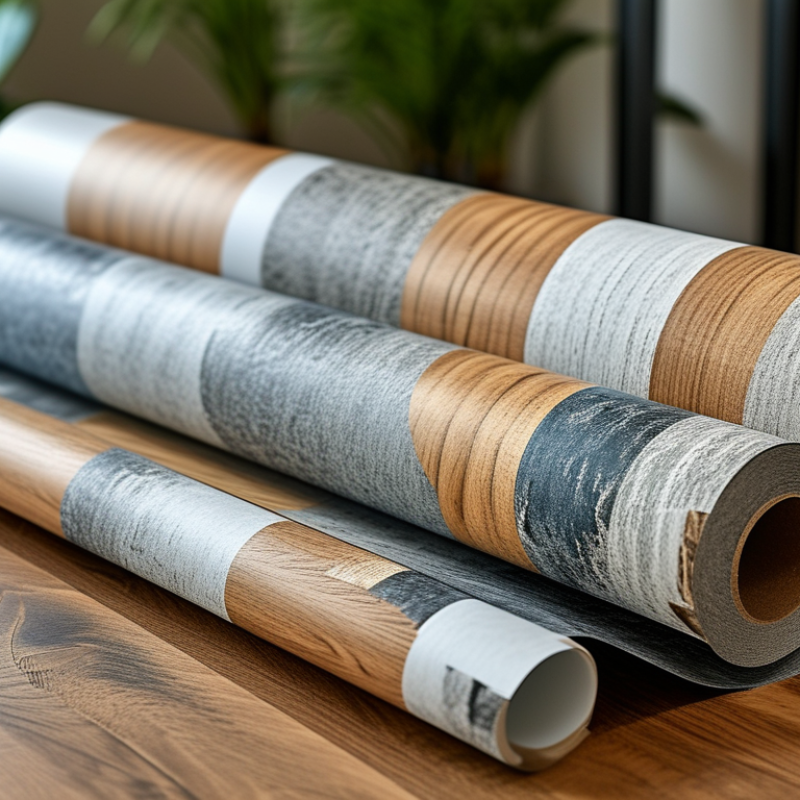
Printed decorative paper is a specially designed paper used to add color, texture, and visual character to interior surfaces. It usually carries printed wood grains, stone patterns, solid colors, or textile-like effects. Manufacturers may coat or impregnate it to improve strength and surface performance.
Its basic characteristics include a lightweight structure, flexible handling, and good ink absorption. However, these features vary by paper grade and production method. After treatment, the paper can become more resistant to moisture, abrasion, fading, and heat. It is commonly applied to furniture panels, flooring surfaces, wall panels, doors, and other laminated products. The final appearance depends on print clarity, color consistency, paper smoothness, and accurate pattern alignment. A small alignment error can make a large panel look unnatural.
Tips:Check the paper under natural and artificial light. Compare several sheets for shade differences. Feel the surface for wrinkles, loose fibers, or uneven coating. Storage also matters; excessive humidity may affect flatness and printing quality. In practice, visual inspection is useful, but it is not enough for every project. Performance should also be confirmed through suitable tests and installation conditions. That balance is sometimes overlooked.
Printed decorative paper is a thin paper layer carrying woodgrain, stone, textile, or abstract patterns. It commonly uses cellulose fibers, mineral fillers, pigments, and water-based or solvent-based inks. The paper’s weight affects opacity, flexibility, and printing stability. Porosity matters too. A rough sheet can absorb ink unevenly.
Gravure printing remains useful for long production runs and detailed repeat patterns. Digital printing suits shorter runs, variable designs, and faster sampling. Flexographic printing can work well with simpler graphics and efficient ink coverage. In production, operators check color density, registration, drying, and roll tension. Even small alignment errors can appear clearly on wide panels.
Surface treatments decide how the paper performs after printing. Resin impregnation strengthens the sheet and helps it bond with wood-based boards. Protective coatings can improve stain resistance, scratch resistance, and light stability. Embossing adds texture that follows the printed grain. A matte finish hides some fingerprints, while gloss can make colors appear deeper. The first sample is rarely perfect. I would test it under daylight, warm indoor light, moisture, and repeated rubbing. Some coatings look attractive but reduce flexibility. That trade-off deserves a second review.
Printed decorative paper is a thin, patterned sheet used to finish furniture, flooring, doors, cabinets, and wall panels. Common types include woodgrain, stone, textile, solid-color, and geometric designs. Woodgrain remains popular because it adds warmth without using natural timber. Stone patterns create a heavier visual effect. Textile designs feel softer and more residential.
Manufacturers usually print these patterns by gravure or digital processes. Gravure supports consistent, high-volume production. Digital printing allows shorter runs and customized images. According to Smithers’ 2024 decorative paper review, digital production is growing at a mid-single-digit annual rate through 2028. That change matters for smaller design collections. Still, digital printing may show slight color differences between batches. It is not perfectly predictable.
Printed paper is often treated with melamine resin before pressing onto medium-density fiberboard or particleboard. This improves surface hardness, moisture resistance, and cleanability. Grand View Research reported that the global decorative laminates market was valued at over US$8 billion in 2023, with furniture and interior applications supporting demand. The figures vary by report scope. Designers should check basis weight, opacity, abrasion resistance, and lightfastness before approval. A beautiful pattern can fail quickly under strong sunlight or repeated cleaning. Surface texture matters, too. It changes how the design looks and feels.
Printed decorative paper is a thin, highly engineered surface layer used to give interior products color, texture, and repeatable design. It is commonly impregnated with resin, then pressed onto medium-density fiberboard, particleboard, plywood, or compact laminate. In furniture, it forms woodgrain doors, cabinet sides, shelves, and office panels. In flooring, it carries the visual pattern beneath a transparent wear layer. Wall panels and interior doors use similar constructions.
A 2024 Grand View Research report estimates the global decorative laminates market will grow at about 5.7% annually through 2030. This growth reflects demand for affordable, durable interior finishes. Printed paper also reduces the need for natural timber faces. Smithers’ decorative papers outlook identifies furniture, flooring, and building interiors as major application areas. The paper can reproduce oak pores, stone veins, textile effects, or muted solid colors with consistent detail. It is practical.
Still, printed texture is not real wood. Close inspection may reveal repeating patterns or shallow-looking grain. Designers should rotate the print and vary panel placement. Poor matching can make a large wall feel artificial. Pressing temperature, resin absorption, and surface protection also affect color stability. Small production errors remain visible under strong showroom lighting. Industry experience suggests that good design depends on both image quality and substrate preparation. The paper is only one layer.
Printed decorative paper is a thin, patterned material used to create wood, stone, textile, or solid-color appearances. It is commonly applied to furniture panels, flooring surfaces, doors, and interior wall products. After impregnation with resin and pressing, it can provide a consistent finish with fewer natural variations than real timber or stone. This consistency supports efficient manufacturing and coordinated interior designs.
Its main benefits include visual flexibility, low material weight, and relatively simple production. A properly finished surface may resist everyday stains, light scratches, and moderate wear. However, the paper alone is delicate. It is not waterproof. Poor edge sealing can allow moisture to enter, causing swelling or lifting. Strong sunlight may also fade some colors, while excessive heat can damage the surface or soften adhesives. Performance depends heavily on the substrate, resin system, pressing quality, and installation conditions.
Care should remain gentle and regular. Wipe dust with a soft, dry cloth, then use a slightly damp cloth for ordinary marks. Dry the surface afterward. Keep it dry. Avoid abrasive pads, bleach, harsh solvents, and standing water. Hot cookware should rest on a protective mat, not directly on the finish. A practical inspection should include edges, joints, and high-touch areas, because damage often begins there. Some care advice sounds too confident; no decorative paper can compensate for poor sealing or careless use. Even a premium-looking surface needs reasonable expectations.
| Data Dimension | Verified Characteristics | Typical Uses | Benefits, Limitations, and Care Considerations |
|---|---|---|---|
| Definition | Printed decorative paper is a specially manufactured paper printed with colors, patterns, textures, or wood-grain effects. It is commonly used as a visible decorative surface or as a printed layer in a composite panel. | Furniture surfaces, interior wall panels, shelving, doors, flooring components, cabinetry, and other interior products. | It provides visual decoration without requiring natural solid wood or stone. Its final performance depends strongly on the coating, resin treatment, overlay, and substrate used with the paper. |
| Typical Material Structure |
| Directly laminated panels, impregnated decorative sheets, and finished surfaces with additional protective layers. | A printed sheet by itself is not necessarily moisture-resistant, scratch-resistant, or suitable for heavy-use surfaces. Protection is normally provided by resin, lacquer, film, or another surface finish. |
| Common Substrates | Particleboard MDF Plywood Fiberboard | Ready-to-assemble furniture, work surfaces, cabinets, interior doors, wall panels, and decorative flooring products. | The substrate affects dimensional stability, screw-holding ability, moisture behavior, weight, and overall panel strength. A decorative paper surface does not replace the structural function of the core panel. |
| Pattern and Appearance | Patterns may imitate timber, stone, fabric, concrete, metal, solid colors, or abstract designs. Printing allows repeated and carefully controlled visual effects. | Coordinated furniture collections, interior design schemes, retail fixtures, office interiors, and residential cabinetry. | Printed designs offer consistency and broad design choice. However, color and texture can vary between production batches, especially when panels are produced at different times or under different lighting conditions. |
| Main Manufacturing Process |
| Industrial production of decorative boards, laminated panels, and pre-finished interior components. | Pressing temperature, pressure, adhesive compatibility, surface cleanliness, and curing conditions influence bond quality and appearance. Improper processing may cause blistering, delamination, or visible defects. |
| Key Benefits |
| Cost-conscious furniture, modular interiors, commercial fit-outs, and applications requiring repeatable decoration. | The benefits are greatest when the paper is correctly matched with a durable coating and a stable substrate. Surface performance should be evaluated as a complete panel system rather than by the paper alone. |
| Durability Factors | Durability is influenced by paper quality, ink adhesion, resin or coating type, surface texture, edge sealing, substrate stability, and intended use. | Moderate-use furniture, vertical wall surfaces, cabinet fronts, shelving, and selected horizontal surfaces with appropriate protective finishes. | High-use areas may require enhanced resistance to abrasion, impact, heat, stains, and moisture. Unprotected printed paper is generally less durable than a fully laminated or coated decorative surface. |
| Moisture and Heat Limitations | Paper fibers can absorb moisture, swell, or lose strength. Heat and steam may affect adhesives, coatings, and resin-treated surfaces. | Primarily dry interior environments unless the complete product has been specifically engineered and tested for humid or wet conditions. | Avoid prolonged contact with water, standing liquids, steam, and very hot objects. Seal exposed edges and joints where moisture could reach the paper or substrate. |
| Environmental Performance | Printed decorative paper can reduce the need for large solid decorative pieces, but its environmental profile depends on fiber sourcing, inks, coatings, resins, adhesives, manufacturing energy, and end-of-life options. | Interior products designed around wood-based panels and efficient material use. | Recycling may be more difficult when paper is bonded to resin, plastic film, coatings, or composite substrates. Select products with documented fiber sourcing and emissions information when environmental performance is important. |
| Routine Cleaning | Use a soft, clean, slightly damp cloth for ordinary dust and light surface marks. Dry the surface afterward, particularly around edges and joints. | Finished furniture, cabinet panels, wall panels, shelving, and other interior decorative surfaces. | Test any cleaner on an inconspicuous area first. Avoid abrasive pads, scouring powders, excessive water, and solvents unless the surface manufacturer specifically approves them. |
| Stain and Scratch Prevention | Wipe spills promptly, use coasters or protective mats, and avoid dragging rough or sharp objects across the surface. | Tables, desks, counters, cabinet fronts, shelves, and frequently handled furniture components. | Fine scratches, cuts, and deep stains may not be repairable without replacing or refinishing the affected panel. Do not place hot cookware directly on the surface unless it is designed and rated for that exposure. |
| Installation and Storage | Store sheets or panels flat in a clean, dry, covered location. Allow materials to adjust to the interior environment before installation when required by the product specifications. | Interior construction, furniture assembly, panel fabrication, and renovation projects. | Protect decorative faces from dust, abrasion, sunlight, and moisture during transport and installation. Use compatible adhesives, maintain even pressure, and avoid damaging corners and edges. |
| Best-Suited Conditions | Clean, dry, temperature-controlled interior spaces with normal residential, office, retail, or hospitality use. | Bedrooms, living areas, offices, stores, hotel interiors, classrooms, and general cabinetry. | For bathrooms, kitchens, laboratories, healthcare areas, exterior locations, or heavy commercial use, select a complete product that has documented resistance ratings for the expected exposure. |
Subscribe to our newsletter and receive the latest news and exclusive insights every month. No spam.
LabConsulting GmbH and LC LabService GmbH are Austrian companies which cooperate with over 600 manufacturers and offers a selection of more than 180,000 products and various laboratory product and service solutions for our Labcustomers.
Die LabConsulting GmbH und die LC LabService GmbH sind österreichische Unternehmen, die mit über 600 global verteilten Herstellern zusammenarbeiten und mit einer Auswahl von mehr als 180.000 Produkten und verschiedenen Laborprodukt- und Servicelösungen unseren Parnern im Labor anbieten.
INSTOCK CATALOGOur services
Our services