Explore cutting-edge articles on laboratory products, industry innovations, and research trends with Lab Consulting.
Choosing the right Pipeline Strainer is not simply a matter of selecting the finest screen available. The right choice depends on flow rate, fluid viscosity, particle size, operating pressure, and the system’s allowable pressure drop. A strainer that is too small can restrict flow; one with an unsuitable opening may let damaging debris pass through. Small details matter.
The U.S. Department of Energy’s Improving Pumping System Performance: A Sourcebook for Industry reports that pumping systems account for nearly 20% of global electricity demand. That figure is not a strainer-specific saving estimate, but it shows why avoidable flow resistance deserves attention. A clean, correctly sized strainer can help protect pumps, valves, and meters without creating unnecessary pressure loss. The practical choice also depends on what the line carries: coarse rust flakes in cooling water call for different protection than fine solids in a process stream. Basket, Y-type, and temporary strainers each suit different layouts, debris loads, and maintenance routines. Check the manufacturer’s pressure-drop data at the expected flow, and confirm the screen material suits the fluid and temperature. Then consider how an operator will isolate, open, and clean the unit. A calculation may look sound on paper, yet overlook the cramped space beside a pipe rack. That is worth checking before purchase. Proper selection is a balance between filtration, flow, durability, and service access—not a guess based on mesh size alone.
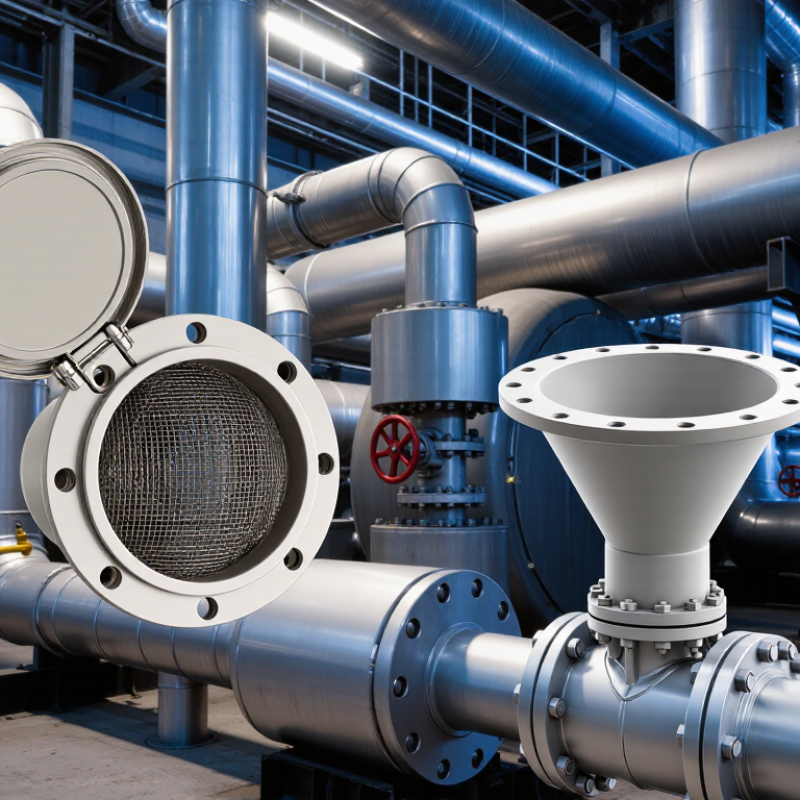
Choosing a pipeline strainer starts with the fluid, not the catalog. Water, oil, and viscous process liquids carry debris differently. Note the expected particle size, concentration, and whether solids are soft fibers or hard grit. These details affect screen opening and cleaning frequency. A fine screen may capture more particles, but it can also clog quickly. Small details matter.
Operating conditions narrow the choice. Record normal and peak flow, pressure, temperature, and any startup surges. Check that the strainer body and screen materials suit the fluid and temperature range. Estimate the pressure drop at the intended flow; a clean screen and a loaded screen behave differently. Leave room for inspection and screen removal. Not always easy in a crowded pipe rack.
The system’s purpose matters just as much. A strainer protecting a pump from weld scale may need a different opening than one guarding a control valve from recurring process debris. Consider how often operators can isolate and clean the unit, and whether a temporary startup screen is appropriate. A tidy sizing calculation can still miss an awkward maintenance routine. I would revisit the choice after reviewing actual debris samples and operating records, because assumptions about “typical” solids are often the weakest part of selection.
How to Choose the Right Pipeline Strainer?
Define the Required Filtration Level and Debris Load
Start with the smallest particle that could damage a pump, valve, or downstream instrument. A strainer’s mesh opening is not the same as its micron rating; compare the stated opening with the equipment maker’s tolerance. Then estimate debris by type, size, and quantity. Rust flakes, weld slag, and scale behave differently. A clean-water test may not predict a dirty startup. That matters.
For a useful reference, ISO 4406:2021 assigns hydraulic-fluid cleanliness codes using particle counts. Code 18/16/13 corresponds to roughly 1,300–2,500 particles per millilitre above 4 μm, 320–640 above 6 μm, and 40–80 above 14 μm. These figures describe hydraulic-fluid cleanliness, not a universal strainer target. ISO 16889:2022 also defines a multipass test for filter elements; its beta ratio can help compare tested filtration performance, but does not replace strainer-specific flow and debris testing. Avoid selecting an extremely fine screen without checking pressure drop and cleaning frequency.
Tips: Ask for the strainer’s open area, clean differential pressure, and debris-holding capacity at your actual flow rate. If the debris load is uncertain, inspect a startup sample and allow for frequent cleaning at first. That extra check is often overlooked.
| Service example | Typical debris to capture | Example opening range | Likely debris load | Potential strainer arrangement | Selection considerations |
|---|---|---|---|---|---|
| Cooling-water intake | Leaves, scale flakes, and other coarse solids | About 1–3 mm (1,000–3,000 μm) | Often high or seasonal | Basket strainer with a coarse perforated screen; consider duplex service where uninterrupted flow is required | Allow room for accumulated material and plan for frequent inspection during debris events. |
| General utility-water line | Rust flakes, pipe scale, and installation debris | About 0.5–1.5 mm (500–1,500 μm) | Low to moderate after commissioning; potentially high during flushing | Y-strainer or basket strainer with a perforated screen | Consider temporary finer protection during startup, then select the operating screen for expected service debris. |
| Pump or control-valve protection | Particles that could foul small clearances or damage equipment | About 250–1,000 μm, subject to equipment requirements | Moderate; can rise after maintenance or line work | Basket strainer or Y-strainer with a perforated or mesh screen | Confirm the maximum permitted particle size with the protected equipment supplier; finer screens may increase cleaning frequency. |
| Clean process liquid | Fine suspended solids or residual manufacturing particles | About 75–250 μm, if required by the process | Usually low, but depends on upstream treatment and process conditions | Basket strainer with fine mesh; evaluate a dedicated filter if finer filtration is needed | Check screen strength, cleanability, and the allowable differential pressure at the required flow. |
| Viscous liquid or a line with frequent solids | Fibers, soft debris, or a sustained solids load | Set from process needs; a coarse opening may be more practical | Moderate to high | Large-capacity basket strainer or duplex arrangement; assess automated cleaning if appropriate | Prioritize screen area and maintenance access. A very fine screen can blind quickly and restrict flow. |
Opening ranges are illustrative selection starting points, not universal specifications. Confirm the required particle size, flow rate, fluid properties, pressure and temperature ratings, screen open area, and allowable clean and dirty differential pressure for the actual system. Mesh count and opening size vary by screen construction and supplier; verify the stated aperture before selection.
Choosing a pipeline strainer starts with the debris, not the catalogue. A Y-strainer suits many liquid lines with moderate solids and limited space. Its angled body can collect grit, though cleaning may require line access. Basket strainers offer more screen area and suit higher flow or frequent cleaning. Duplex designs allow one chamber to operate while the other is serviced. They add valves and operating steps, so they are not automatically the better choice.
Screen configuration depends on particle size, shape, and concentration. A perforated plate handles coarse debris and is usually easier to clean. Wire mesh captures finer particles, but finer openings can raise pressure drop and clog sooner. Check the screen’s open area, not only its nominal opening. A small screen can choke flow. Very small particles may pass through irregular openings, even when the stated mesh looks suitable.
Compare the required opening with the smallest particles that must be retained, then check the allowable pressure drop at normal and peak flow. For sticky, fibrous, or irregular debris, a simple mesh rating may not predict performance well. Ask how the screen will be removed, rinsed, and inspected in the actual installation. Leave room for the cover and lifting. Field conditions can be messier than the specification; a short trial or operating review may reveal a choice that looked right on paper but needs adjustment.
Choosing a pipeline strainer starts with the fluid, not the catalog. Stainless steel often suits water or mildly corrosive service, while carbon steel may be appropriate for compatible, noncorrosive fluids. Check chemical compatibility at the actual operating temperature. A material that works at room temperature may not last in hot, acidic service. Be cautious with mixed-metal connections; corrosion can begin at the joint.
Pressure ratings need equal care. ASME B16.5 lists Class 150 carbon-steel flange ratings up to 285 psi at ambient conditions, but that figure describes flanges, not a complete strainer. Temperature, body material, cover design, and connection type can lower the allowable working pressure. Compare the strainer’s published rating with the system’s maximum pressure, including startup surges. I would recheck this point before ordering; “Class 150” does not mean 150 psi.
Match the strainer’s nominal size to the pipe, then confirm its connection standard and face-to-face dimensions. A mismatch can create installation headaches. Also check screen open area and perforation size: a finer screen catches smaller debris but may clog sooner. For example, a line carrying scale flakes may need a coarser screen and room for maintenance. Small detail. Leave enough clearance to remove the screen without dismantling nearby piping.
How to Choose the Right Pipeline Strainer?
Check Installation, Cleaning, and Maintenance Requirements
A strainer that fits the pipe may still be difficult to service. Check the flow-direction arrow, operating pressure, temperature, and available clearance before selecting a model. A basket strainer needs enough space for its cover and basket to be removed. A drawing can look perfect; the basket still needs room to slide out. Small details matter. Place pressure gauges or differential-pressure indicators where operators can read them safely. Confirm whether isolation valves and a drain connection are needed for cleaning. Follow the manufacturer’s installation instructions, especially for orientation and support, so the strainer does not carry unintended pipe loads.
Plan maintenance around the process, not a guessed calendar interval. Track differential pressure during normal operation, then clean the element when it approaches the process limit. Record readings after cleaning; a rising baseline may signal a damaged screen or unusual contamination. McKinsey’s 2018 report, “The Future of Maintenance Is Now,” estimates predictive maintenance can reduce maintenance costs by 10–40% in industrial settings. That is not a strainer-specific guarantee, but it supports using condition data rather than routine guesswork. Keep records. Include safe isolation, depressurization, and the correct replacement element in the maintenance procedure. I would still question any schedule that ignores changing debris loads; real service rarely stays perfectly consistent.
Subscribe to our newsletter and receive the latest news and exclusive insights every month. No spam.
LabConsulting GmbH and LC LabService GmbH are Austrian companies which cooperate with over 600 manufacturers and offers a selection of more than 180,000 products and various laboratory product and service solutions for our Labcustomers.
Die LabConsulting GmbH und die LC LabService GmbH sind österreichische Unternehmen, die mit über 600 global verteilten Herstellern zusammenarbeiten und mit einer Auswahl von mehr als 180.000 Produkten und verschiedenen Laborprodukt- und Servicelösungen unseren Parnern im Labor anbieten.
INSTOCK CATALOGOur services
Our services