
Explore cutting-edge articles on laboratory products, industry innovations, and research trends with Lab Consulting.
Choosing the right medical lab equipment is crucial for any healthcare facility. The equipment impacts patient care and laboratory efficiency. A wrong choice can lead to delays or even errors. It is important to understand the specific needs of your lab. Each facility has unique requirements based on the tests performed and the volume of work.
Medical lab equipment comes in various forms, from diagnostic machines to safety gear. Prioritizing quality is vital. Selecting reliable brands can ensure longevity and consistent performance. However, balancing cost and quality requires careful consideration. Overspending on unnecessary features is a common pitfall. Facilities must reflect on their actual needs before making purchases.
Investing in the right medical lab equipment can enhance workflow and accuracy. It shapes the overall success of laboratory operations. Yet, it is not a one-size-fits-all situation. Facilities should regularly assess their equipment to adapt to changing needs. This reflective practice is essential in maintaining effective healthcare environments.

Identifying your facility's specific medical lab needs is crucial for optimal workflow and patient care. Key considerations include the types of tests performed, volume, and the expertise of your staff. According to a report by the Clinical Laboratory Standards Institute (CLSI), around 70% of medical decisions depend on laboratory test results. Therefore, careful analysis of what equipment is essential forms the backbone of effective laboratory operations.
Equipment selection should align with both immediate capabilities and future demands. For instance, facilities that anticipate growth may prioritize versatile equipment capable of handling a variety of tests. A study from the American Association for Clinical Chemistry (AACC) shows that labs with adaptable tools can increase efficiency by up to 30%. Investing in specialized instruments might be necessary but could lead to operational bottlenecks if not matched with lab capacity.
Moreover, considering regulatory standards and safety is vital. Labs must comply with the Clinical Laboratory Improvement Amendments (CLIA) guidelines. Equipment that supports compliance not only enhances safety but also builds trust in test results. Reflection on past equipment choices can highlight areas for improvement. Too often, labs find themselves with underutilized machines or, conversely, insufficient capacity for high-demand tests. This mismatch can be detrimental in a fast-paced medical environment.
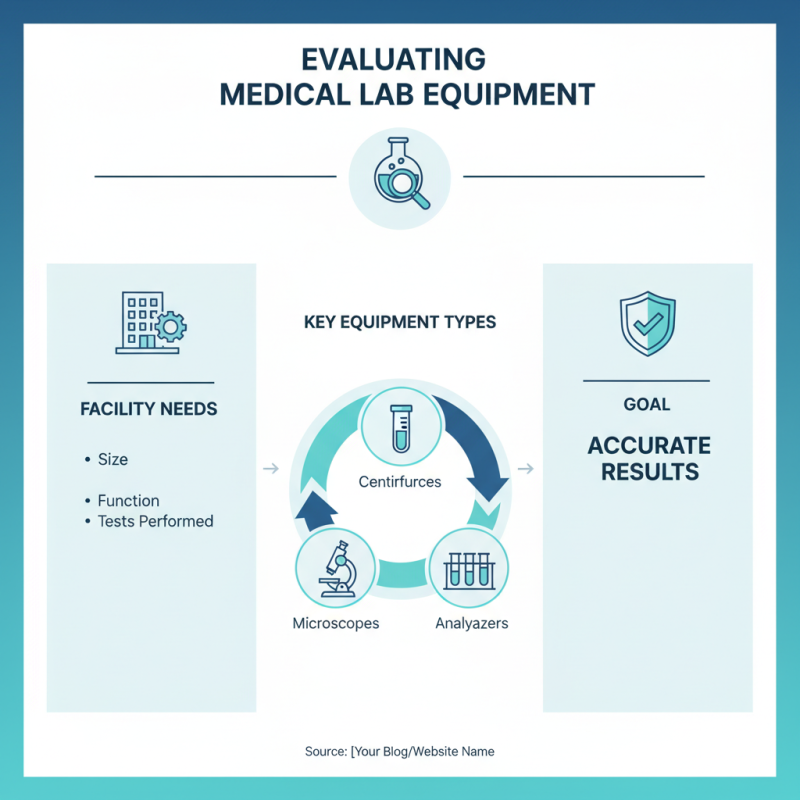
When selecting medical lab equipment, it’s essential to evaluate your facility’s specific needs. Different labs require different tools based on size, function, and types of tests performed. Consider equipment like centrifuges, microscopes, and analyzers. Each of these plays a vital role in achieving accurate results.
Think about the complexity of the tests you will conduct. A small clinic may need only basic analyzers, while a research facility might require advanced machines with higher throughput. It's crucial to weigh the benefits against the cost. Investing in high-quality equipment often translates to reliability and longer life. However, budget constraints can lead to tough choices.
Training and support are another aspect to ponder. Not all equipment comes with sufficient guidance. New staff may struggle without proper training resources. Regular maintenance is also necessary. Neglecting this can disrupt operations. Reflecting on these factors ensures that the chosen equipment enhances efficiency and quality in your lab.
When selecting medical lab equipment, several factors come into play. Understanding your facility's needs is crucial. Consider the specific tests or procedures that will be performed. This knowledge drives your choices. Space availability matters as well. Ensure equipment fits comfortably in your lab. Crowded workspaces can lead to safety issues.
Budget constraints are another key factor. High-quality equipment often comes with a significant price tag. However, cutting corners can affect diagnostic accuracy. Research options thoroughly. Investigate the service and support offered by suppliers. Reliable customer service can save time and money later.
Lastly, think about future advancements. Technology in the medical field evolves rapidly. Equipment may become outdated quickly. Opt for versatile equipment that can be upgraded or scaled. Encourage staff input regarding their needs and challenges. Their firsthand experience can provide valuable insights. Balancing all these elements is a complex task. Regularly reassess your equipment choices as your lab's needs change.
Investing in medical lab equipment requires careful budgeting. Facilities must evaluate their financial resources thoroughly. This involves understanding both upfront costs and ongoing maintenance expenses. Neglecting these details can lead to future financial strain.
Tip: Create a detailed budget plan. List each item you need and its estimated cost. This gives clarity on total expenses. Regularly review this plan to adjust for new technologies or changes in facility needs.
Unexpected costs can arise. Ensure to account for shipping and installation fees in your budget. These can significantly affect your overall expenditure. Ignoring them may result in overspending. It's essential to engage with experts who can help refine your budget.
Tip: Consider used equipment alternatives. While they might seem less reliable, many refurbished options perform well. Always assess their condition carefully. This can save a substantial amount, helping allocate funds for other crucial areas in your lab. Planning with foresight helps safeguard against unanticipated costs and supports sustainable operation.
Ensuring compliance with industry standards is vital when selecting medical lab equipment. Regulatory bodies, such as the FDA and ISO, set stringent guidelines. These help maintain safety and effectiveness. According to a recent report, over 30% of labs face issues with non-compliance. This can lead to significant financial penalties and reputational damage.
When evaluating equipment, it's essential to assess how well it meets these standards. Many facilities overlook the importance of regular equipment validation. Up to 25% of labs fail to perform necessary checks, risking data integrity. Staff training on compliance protocols is equally crucial. If employees are not well-informed, even compliant equipment may be misused.
Transitioning to updated technologies can enhance compliance. Many laboratories have begun embracing automation to ensure consistent adherence to guidelines. Yet, around 40% of facilities still rely on outdated methods. This creates gaps in data tracking and increases the risk of errors. Identifying these shortcomings is the first step toward fostering a culture of compliance in the laboratory environment.
Subscribe to our newsletter and receive the latest news and exclusive insights every month. No spam.
LabConsulting GmbH and LC LabService GmbH are Austrian companies which cooperate with over 600 manufacturers and offers a selection of more than 180,000 products and various laboratory product and service solutions for our Labcustomers.
Die LabConsulting GmbH und die LC LabService GmbH sind österreichische Unternehmen, die mit über 600 global verteilten Herstellern zusammenarbeiten und mit einer Auswahl von mehr als 180.000 Produkten und verschiedenen Laborprodukt- und Servicelösungen unseren Parnern im Labor anbieten.
INSTOCK CATALOGOur services
Our services