BlogsBlogs

Explore cutting-edge articles on laboratory products, industry innovations, and research trends with Lab Consulting.

Explore cutting-edge articles on laboratory products, industry innovations, and research trends with Lab Consulting.

2026 How to Choose an Automatic Bag Feeding Machine

Choosing an Automatic Bag Feeding Machine in 2026 requires more than comparing prices and production speeds. Packaging lines vary widely, even when they handle similar bags. A reliable machine must match bag dimensions, material, opening style, filling process, and expected output. It should feed bags smoothly without frequent jams, product contamination, or unnecessary operator adjustments. Yet brochures rarely show every practical challenge. Real decisions come from observing machines under working conditions. Watch the bag transfer closely. Does the gripper hold thin film securely? Can operators correct a misaligned bag quickly? How does the system behave after several hours of continuous operation? These details reveal performance that specifications may overlook. Experience matters.

A dependable evaluation also examines machine construction, control systems, cleaning access, safety features, spare parts, and technical support. Ask suppliers for verified case data, service records, testing procedures, and realistic capacity figures. This matters greatly. Energy consumption and compressed-air requirements can affect operating costs over many years. A machine may appear efficient, but poorly matched bags can reduce its actual performance. Good documentation helps, although it should not replace an onsite trial. Even careful buyers can miss small issues, such as difficult sensor adjustments or awkward access to feeding components. No single model suits every factory. This guide compares the key selection factors, practical questions, and common trade-offs behind a confident purchase. Expect useful answers, but leave room for review. Machines improve, and your production needs may change.
2026 How to Choose an Automatic Bag Feeding Machine

Understanding Automatic Bag Feeding Machines and Their Main Functions

How to Choose an Automatic Bag Feeding Machine in 2026

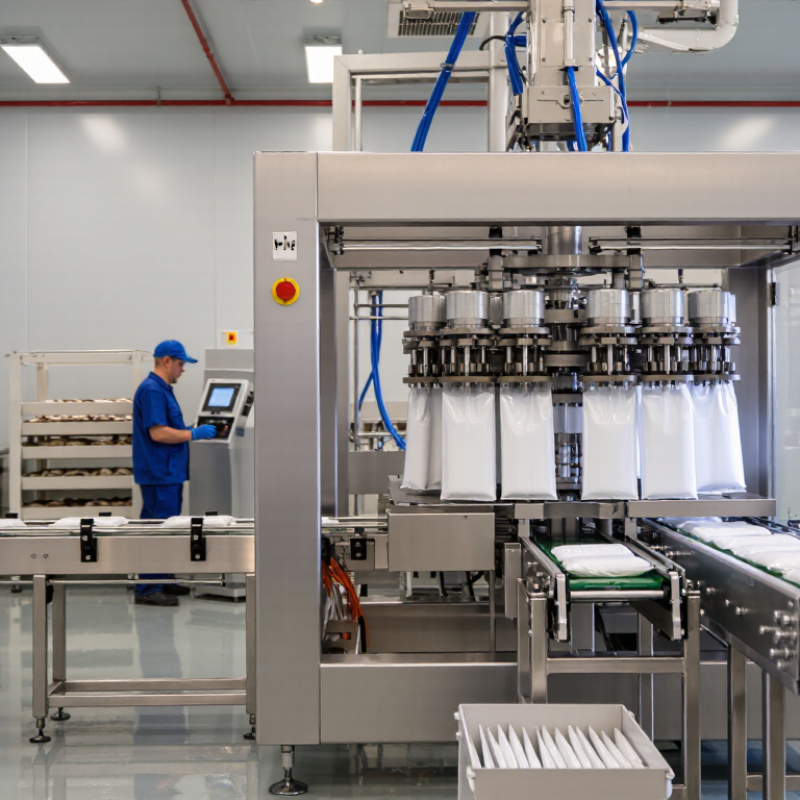
An automatic bag feeding machine stores, picks, opens, and presents empty bags for filling. Its main function is controlled, repeatable bag handling. A typical system uses a magazine, vacuum cups, opening jaws, sensors, and a transfer conveyor. It may also coordinate filling, sealing, coding, and reject handling. The correct machine should match bag material, dimensions, thickness, and opening style. Small differences matter. A soft pouch can wrinkle under excessive vacuum, while a rigid bag may need stronger gripping force. PMMI’s 2024 packaging industry reports identify labor availability and production efficiency as major reasons for adopting automation. These pressures make stable feeding increasingly valuable.

Speed alone can mislead. Grand View Research estimates the global automatic packaging machine market will continue expanding through 2030, supported by demand for consistent output and reduced manual handling. During factory trials, evaluate actual bags, not only empty samples. Check feed accuracy, changeover time, sensor response, dust control, and access for cleaning. Ask for sustained performance, not a brief peak-speed demonstration. A practical test should run several bag sizes and include minor wrinkles or uneven stacks. That is where weaknesses appear. Integration also deserves attention. The feeder should communicate reliably with the filling machine and line controls. Operators need clear alarms and simple adjustments. Some specifications remain uncertain until installation. Plan for that gap. A slightly slower machine with dependable feeding may outperform a faster model that frequently stops.

2026 How to Choose an Automatic Bag Feeding Machine

Typical Throughput Ranges by Bag Type

Automatic bag feeding machines are designed to store, separate, open, and present bags to a filling or packaging line. When choosing a machine, compare the required bag style, feed rate, bag dimensions, changeover time, and compatibility with the downstream equipment. The ranges below are common planning values and vary with bag material, size, product, and machine configuration.

Identifying the Right Bag Type, Size, and Production Requirements

2026 How to Choose an Automatic Bag Feeding Machine

Identifying the Right Bag Type, Size, and Production Requirements

Choosing an automatic bag feeding machine starts with the bag, not the machine. Confirm whether your line uses flat pouches, stand-up pouches, gusseted bags, or irregular shapes. Each style needs different gripping, opening, and transfer methods. A flat pouch may travel smoothly, while a flexible gusseted bag can collapse during feeding. Check the material too. Laminated film, paper, and recyclable structures behave differently under suction and mechanical contact. I once tested an attractive package that wrinkled near the pickup area. The machine was not the only problem. The bag design needed revision.

Measure each bag’s length, width, thickness, and empty weight. Include realistic manufacturing tolerances. A few millimeters can affect alignment and feeding stability. Small details matter. Then define the production requirement. Record target speed, operating hours, changeover frequency, and available floor space. Consider whether operators must handle several bag sizes daily. Fast equipment may be unsuitable if adjustments take too long. That assumption is easy to miss.

Tips: Send actual bag samples for testing, including the smallest and largest sizes. Ask for trial results, feeding accuracy, rejected-bag rates, and cleaning procedures. Confirm connection requirements with the existing filling or packaging line. Do not rely only on catalog speed. Real performance can change with dust, static, humidity, and bag flexibility. A short production trial often reveals more than a long specification sheet.

Comparing Feeding Systems, Speed, Accuracy, and Automation Features

Choosing an automatic bag feeding machine starts with the feeding system, not the advertised cycle rate. Magazine feeders suit pre-opened bags and stable production runs. Friction feeders handle varied bag sizes, but dusty surfaces can reduce grip. Vacuum pick-up systems offer gentle handling, although porous films may create missed picks. Test your actual bags, not sample material.

Speed must match the complete packaging line. A feeder rated at 80 bags per minute may slow near the sealer. Measure sustained output, changeover time, and rejected bags. The International Federation of Robotics reported 541,302 industrial robots installed worldwide in 2023, a 10% annual increase. This growth shows stronger automation demand, but it does not guarantee better feeding accuracy. Ask suppliers for repeatable results across at least several thousand cycles. Small errors become expensive quickly.

Accuracy depends on sensors, bag separation, and alignment control. A practical acceptance test should record misfeedsdouble picksempty pocketsrecovery time. Automation features deserve equal attention. Servo-driven adjustments, recipe storage, remote diagnostics, and automatic size detection can reduce operator effort. However, more software can also mean more training and harder troubleshooting. I would prioritize clear alarms over impressive dashboards. PMMI industry research continues to identify labor availability and flexible automation as major packaging concerns. That matters during evening shifts. Leave space for manual intervention, because real production is rarely perfect. One overlooked issue is cleaning access; powder around a sensor can quietly damage performance.

Checking Machine Materials, Compatibility, Safety, and Maintenance Needs

2026 How to Choose an Automatic Bag Feeding Machine

Checking Machine Materials, Compatibility, Safety, and Maintenance Needs

An automatic bag feeding machine should match your production environment, not just your target speed. In practical evaluations, stainless steel frames and sealed contact surfaces resist moisture, dust, and frequent cleaning. Small gaps matter. They can collect powder and slow inspections. Check the hopper, guides, grippers, and fasteners carefully. A polished surface may look professional, but it does not guarantee durable construction. Ask for material specifications and test samples before purchasing.

Compatibility involves more than bag length and width. Check film thickness, stiffness, opening shape, printing position, and filled-bag weight. Test empty and loaded bags. A machine that handles samples smoothly may still misfeed during real production. Safety features should include guarded moving parts, emergency stops, access interlocks, and clear operator visibility. Confirm that controls are easy to understand. A complicated interface can create avoidable mistakes. Review the machine against your site’s safety procedures and applicable requirements.

Tips: Request a short production trial. Measure feeding accuracy over several hours. Inspect sensors, belts, and grippers after cleaning. Choose access panels that open without excessive tools. Keep a maintenance log with dates, adjustments, and replaced parts. I would not rely only on supplier claims. Your bags, operators, and cleaning routine may reveal weaknesses that a showroom test misses. A practical, slightly slower machine can be more reliable than an impressive high-speed model.

2026 How to Choose an Automatic Bag Feeding Machine - Checking Machine Materials, Compatibility, Safety, and Maintenance Needs

Evaluation Area Key Requirement Recommended Specification or Check Why It Matters Suggested Acceptance Benchmark Priority
Frame and Contact Materials Machine frame and product-contact surfaces Use stainless steel for product-contact areas and exposed surfaces. For hygienic applications, smooth welds, rounded corners, and limited horizontal ledges are preferred. Resists corrosion, supports washdown, and reduces places where product residue or microorganisms can accumulate. Stainless steel contact parts; no visible rust, sharp edges, or open crevices. High
Material Suitability Exposure to the product and cleaning chemicals Confirm compatibility with the product, moisture, oils, salt, acids, alkalis, and approved cleaning agents. Check seals, belts, guides, and coatings separately. Material incompatibility can cause corrosion, swelling, cracking, contamination, or premature component failure. Written material and chemical-compatibility documentation is available. High
Bag Dimensions Bag length, width, thickness, and tolerance Test the complete range of bag sizes, including the smallest and largest planned formats. Include actual production tolerances rather than nominal dimensions only. Feeding pockets, grippers, conveyors, and opening devices must hold each bag reliably without jams or deformation. All approved bag formats feed continuously without double-feeding or misalignment. High
Bag Construction Premade pouch and bag characteristics Evaluate flat pouches, stand-up pouches, zipper bags, gusseted bags, laminated films, paper bags, and bags with spouts or special seals as applicable. Different stiffness, friction, seal designs, and bag shapes affect separation, opening, and transfer performance. Representative samples of every bag construction pass a production-speed trial. High
Product Compatibility Product type, weight, temperature, and flow behavior Define whether the product is powder, granule, liquid, paste, frozen, oily, sticky, abrasive, or fragile. Record target fill weight and product temperature. Product properties influence bag stability, contamination risk, dust generation, and the required machine configuration. No product leakage, excessive dust, bag damage, or unstable transfer during testing. High
Speed and Capacity Required feeding rate and operating cycle Compare the required bags per minute with the machine's verified rate for the actual bag type. Allow capacity for startup, changeovers, rejects, and normal stoppages. A quoted maximum speed may not represent the sustainable rate with real bags and product conditions. Verified output meets the required rate during a sustained trial, not only a short demonstration. High
Feeding Accuracy Single-bag separation and correct orientation Check sensors, vacuum or mechanical separation, bag alignment, and reject handling. Test bags with static, curl, variation, or surface friction. Reliable separation prevents empty cycles, duplicate bags, misfeeds, and downstream filling or sealing faults. No recurring double-feeds; misfeeds are detected and safely rejected. High
Line Integration Connection to upstream and downstream equipment Confirm conveyor height, transfer direction, signal exchange, speed synchronization, available floor space, and required utilities. Mechanical or control mismatches can reduce the performance of an otherwise suitable feeder. Layout, electrical signals, compressed air, and communication interfaces are documented before purchase. High
Guarding and Access Protection from moving parts Require fixed guards, interlocked access doors, safe stopping, clear hazard labels, and controlled access to pinch points and rotating components. Automatic feeders contain moving mechanisms that can create crushing, trapping, or entanglement hazards. Machine cannot operate with a required guard open; access points are clearly marked. High
Emergency Safety Emergency stop and restart behavior Check accessible emergency-stop devices, safe stop response, prevention of automatic restart, and a defined reset procedure after an emergency stop. Proper stop and restart logic reduces the risk of unexpected movement during cleaning, adjustment, or fault recovery. Emergency-stop functions are tested and documented during commissioning. High
Electrical and Pneumatic Safety Utilities, controls, and stored energy Verify electrical protection, grounding, control-panel access, pneumatic isolation, pressure regulation, and lockout points. Unexpected electrical or pneumatic energy can cause injury during service and troubleshooting. Isolation points are labeled and accessible; service instructions cover stored energy. High
Hygienic Design Cleaning and sanitation access Look for tool-less removal of product-contact parts, drainable surfaces, protected bearings, sealed electrical components, and a documented cleaning method. Good hygienic design reduces cleaning time and lowers the risk of cross-contamination. Routine cleaning can be completed without dismantling unnecessary machine sections. High
Maintenance Access Inspection and replacement of wear parts Check access to belts, suction cups, sensors, grippers, guides, filters, bearings, and seals. Confirm that common parts can be replaced without excessive disassembly. Accessible components reduce maintenance time and improve equipment availability. Routine service points are reachable and identified in the maintenance manual. Medium
Preventive Maintenance Service schedule and lubrication requirements Request daily, weekly, monthly, and cycle-based tasks. Identify lubrication type, inspection intervals, belt tension checks, filter replacement, and calibration needs. A clear schedule helps prevent unexpected failures and supports consistent feeding accuracy. Maintenance intervals and required tools are supplied before operator training. Medium
Changeover Adjustment time between bag formats Assess recipe storage, scale markings, quick-release components, adjustment ergonomics, and whether changeover parts require tools. Fast and repeatable changeovers improve productivity when several bag sizes or products are processed. Changeover procedure is documented and verified by a trained operator. Medium
Controls and Monitoring Fault detection and operating information Check alarms for low bag supply, misfeed, vacuum loss, open guard, air-pressure failure, and downstream blockage. Confirm that messages identify the corrective action. Useful diagnostics shorten fault recovery and reduce dependence on trial-and-error troubleshooting. Common faults are detected, displayed clearly, and recorded where required. Medium
Spare Parts Availability of critical and wear components Identify recommended spare belts, sensors, suction cups, seals, filters, grippers, and fuses. Confirm lead times and storage conditions. Small, low-cost wear parts can stop the entire packaging line if replacements are unavailable. A critical-spares list and expected replenishment lead times are defined. Medium
Documentation and Training Operating, safety, cleaning, and maintenance instructions Require clear manuals, electrical and pneumatic diagrams, parts lists, risk information, changeover procedures, and operator training records. Complete documentation supports safe operation, consistent performance, and effective maintenance. Documentation matches the supplied machine configuration and is available to relevant staff. Medium
Acceptance Testing Performance verification with real materials Conduct factory and site tests using actual bags, product conditions, target speed, planned utilities, and normal operating procedures. Testing under realistic conditions reveals compatibility and reliability issues before full production. Acceptance criteria cover speed, feed accuracy, safety functions, changeover, cleaning, and fault recovery. High

Evaluating Suppliers, Costs, Installation Support, and Long-Term Value

Choosing an automatic bag feeding machine in 2026 requires more than comparing catalog prices. A reliable supplier should explain feeding accuracy, bag dimensions, changeover time, and expected output. Ask for test results using your actual bags, not sample packaging. Wrinkled, dusty, or uneven bags can expose weaknesses quickly. Request references from facilities with similar production speeds. Speak with operators, not only sales staff. Their daily experience often reveals jams, cleaning difficulties, and delayed spare parts. Good documentation matters. It reduces guesswork during commissioning.

Purchase price is only one part of the investment. Include tooling, conveyors, sensors, shipping, training, utilities, and planned maintenance. A low quotation may exclude electrical work or format parts. Ask for a written cost breakdown and a three-year ownership estimate. Calculate labor savings against realistic uptime, not optimistic demonstrations. For example, record stoppages during an eight-hour shift and compare them with manual feeding. Payback can look attractive on paper. It may change after installation.

Installation support can determine whether the machine earns value quickly. Confirm who handles layout checks, on-site setup, operator training, and remote troubleshooting. Ask how response times are measured and which spare parts should remain on site. A practical supplier will provide adjustment ranges and maintenance intervals, not vague promises. Request a factory acceptance test with agreed performance criteria. No machine performs perfectly forever. Dust, bag variation, and staff turnover demand regular review. Choose equipment that can be adjusted, serviced, and improved as your line changes.

Newsletter

Subscribe to our newsletter and receive the latest news and exclusive insights every month. No spam.