

Explore cutting-edge articles on laboratory products, industry innovations, and research trends with Lab Consulting.
Choosing the right U Panel Machine is a production decision, not merely a purchase. It affects panel strength, line speed, material waste, and daily operating costs. In my experience, buyers often focus on the quoted price and overlook tooling accuracy, roll-forming stability, and service response. That mistake can become visible in every uneven seam.
A dependable evaluation begins with the intended panel specification. Confirm the panel width, rib profile, steel thickness, coating type, and required output. Then examine the machine’s forming stations, drive system, cutting method, and control interface. Ask for sample panels made from comparable material. Inspect their edges, dimensions, surface marks, and joint fit. Small defects matter. A panel that looks acceptable at low speed may fail during continuous production.
Manufacturers should provide measurable data, maintenance guidance, electrical documentation, and realistic capacity figures. Independent references can reveal more than polished brochures. Speak with operators who have used similar equipment for several seasons. They can explain setup time, spare-part availability, and common service delays. Still, no machine is perfect. A highly automated line may improve consistency but require stronger technical support. A lower-cost model may suit modest production, yet limit future expansion. This guide examines those trade-offs carefully, helping you compare performance, reliability, safety features, and long-term value before choosing a U Panel Machine.
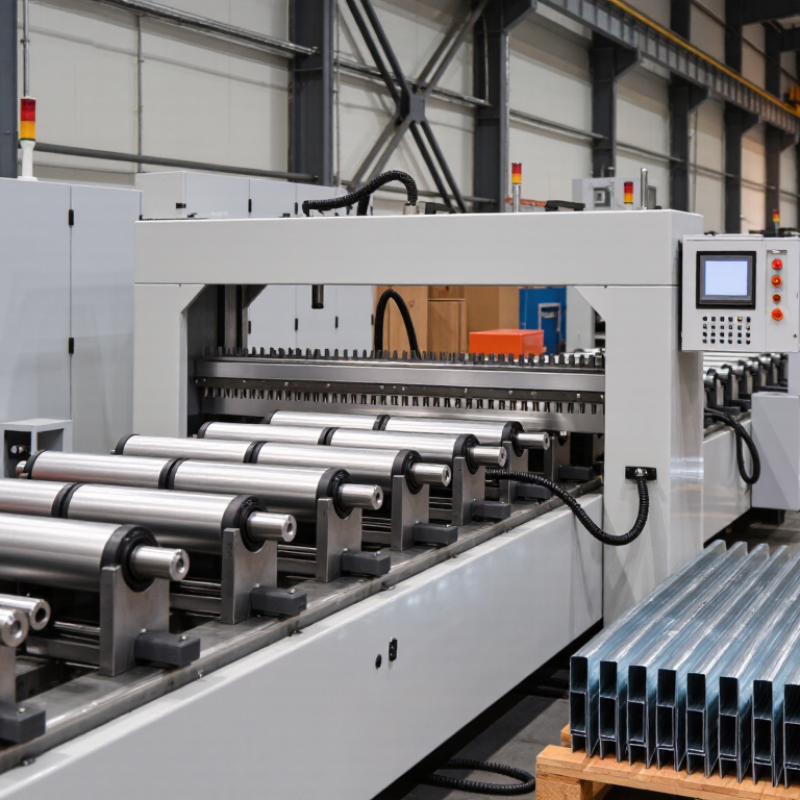
Before selecting a U panel machine, define the profile precisely. Record the panel width, sidewall depth, return-lip size, and overall height. These measurements control roll tooling, machine clearance, and forming stability. Do not rely on a sketch alone. A small dimensional error can produce poor joints or uneven panel edges.
Gauge needs equal attention. In many markets, gauge refers to thickness, but its meaning can vary. Confirm the actual millimeter thickness with the supplier and check the permitted tolerance. Thicker steel usually demands stronger forming stands and greater drive capacity.
However, thicker is not always better. It can increase cost, springback, and adjustment time.
ASTM A653/A653M identifies hot-dip zinc-coated steel sheet and related requirements. Specify the steel grade, coating designation, yield strength, and finish before discussing machine speed. Commercial steel forms differently from structural grades. Coating weight also affects surface protection and roll contact.
Ask for material certificates and test samples. Real production trials matter.
I have seen attractive specifications fail when the coil hardness differed from the sample. The mistake was not dramatic, but it was expensive. Leave room for setup corrections, because real coils rarely behave perfectly.
How to Choose the Right U Panel Machine?
Match Coil Specifications: 0.3–0.8 mm Thickness and 10–30 m/min Line Speed
Start with the coil, not the machine brochure. A U panel line must handle the full 0.3–0.8 mm thickness range without unstable forming. Thin material can wrinkle near the shoulders. Thicker coil demands stronger shafts, guides, and forming stands. Check the actual steel grade, yield strength, coil width, and inner diameter before selecting equipment. Thickness alone does not define performance.
Speed matters. A rated line speed of 30 m/min may not suit every profile or material. For delicate 0.3 mm coil, running near 10–15 m/min can reduce scratches and edge distortion. Heavier 0.8 mm material may require slower acceleration, especially during startup and stopping. Keep it realistic. Ask whether the stated speed includes cutting, feeding, and coil changes. Some specifications describe an ideal speed, not daily production.
From practical installation work, I would also inspect the decoiler capacity, leveling accuracy, roll tooling, and control response. A precise encoder helps maintain panel length at changing speeds. Adjustable side guides support different widths, but excessive adjustment can create alignment errors. I have seen operators choose speed first and regret it later. That choice ignored scrap, noise, and maintenance time. A useful machine should form a clean U panel repeatedly, across the intended thickness range, with measurable consistency.
How to Choose the Right U Panel Machine?
A U panel machine needs enough forming capacity for your material, profile depth, and production speed. In many applications, 12–16 forming stands provide a practical balance. Thinner steel may form well with fewer stands. Deeper panels or heavier gauges often need more gradual shaping. Too few stands can create sharp marks, edge waves, or uneven flanges. More stands are not always better. They can increase cost, maintenance, and setup time.
Cut-length accuracy of ±1 mm should be tested, not simply accepted from a specification sheet. Ask for trial pieces from your target material and panel length. Check the first, middle, and final pieces from a production run. A reliable system should combine a stable encoder, accurate measuring control, and a clean flying shear. Roll alignment also matters. Small deviations may appear after several forming stations. In practical evaluations, operators sometimes overlook temperature changes and coil tension. That is a mistake worth reconsidering.
Tips: Confirm the actual thickness range before choosing 12–16 stands. Measure ten finished panels, not just one. Inspect the cut edge, panel length, and flange shape. Keep a record of results at different line speeds. If accuracy drops during longer runs, the machine may need better calibration or tension control. Request a realistic acceptance test using your own coil material.
| Selection Dimension | Recommended Range or Requirement | Why It Matters | Evaluation Guidance |
|---|---|---|---|
| Forming stands | 12–16 stands | More stands generally provide smoother forming, better profile control, and lower deformation stress. | Choose 12–14 stands for standard U panels; consider 15–16 stands for deeper profiles, thicker steel, or tighter dimensional control. |
| Cut-length accuracy | Target: ±1 mm | Accurate cutting reduces installation gaps, material waste, and adjustment work on site. | Confirm the tolerance under actual production conditions, including material thickness, line speed, and batch length. |
| Compatible material | Pre-painted steel, galvanized steel, or stainless steel | Material grade and surface coating affect roll design, forming force, and surface protection. | Verify compatibility with the required yield strength, coating type, and surface finish before selecting the tooling. |
| Material thickness | Approximately 0.6–1.5 mm for common steel panel applications | Thickness determines the required forming force, roll strength, shaft diameter, and drive capacity. | Select a machine based on the thickest material in the production plan, not only the current specification. |
| Panel width | Define according to the finished U-panel profile and coil width | Incorrect width assumptions can cause edge trimming, unstable feeding, or unusable finished panels. | Provide a section drawing showing finished width, flange dimensions, bend radii, and allowable tolerances. |
| Production speed | Approximately 8–15 m/min, depending on profile and cutting method | Higher speed improves output but may increase vibration, burrs, and length variation if the line is not properly synchronized. | Compare rated speed with the expected operating speed while maintaining the ±1 mm cut-length target. |
| Cutting method | Flying cut or stop-to-cut system | The cutting method affects line speed, cut-end quality, production continuity, and length accuracy. | Use flying cutting for continuous production; use stop-to-cut when lower speed and simpler operation are acceptable. |
| Roller and shaft design | Precision-machined rollers with adequately sized shafts | Rigid tooling helps maintain profile symmetry and minimizes deflection during forming. | Check roller material, shaft diameter, bearing arrangement, and adjustment accessibility. |
| Drive and control system | Variable-speed motor, encoder feedback, and programmable control | Synchronized feeding and cutting are essential for repeatable length accuracy. | Confirm encoder resolution, length-setting range, emergency-stop functions, and fault diagnostics. |
| Quality verification | Test production using the customer’s material and profile drawing | A machine may perform differently when material strength, coating, or profile geometry changes. | Measure finished length, profile dimensions, squareness, surface condition, and cut-edge quality across multiple pieces. |
Selecting the drive and controls is central to stable U panel production. A 5.5–11 kW motor range suits many medium-duty forming applications. The correct rating depends on panel thickness, material strength, width, and production speed. A narrow panel may run efficiently with 5.5 kW. Wider or heavier panels can require 11 kW. Check the forming load, not only the machine’s advertised capacity. I have seen undersized motors overheat during continuous shifts. That mistake becomes expensive quickly.
A variable-frequency drive can control acceleration and forming speed smoothly. It also reduces sudden mechanical stress on rollers and chains. The PLC should coordinate motor starting, sensor signals, cutting sequences, and fault protection. Keep the interface simple. Operators need clear status messages and practical alarm codes. Useful controls include recipe storage, speed adjustment, emergency stop monitoring, and manual inching for setup work. Every input and output should be labeled in the electrical drawings. This detail helps technicians locate faults without guessing.
Before choosing the machine, ask for motor overload data and PLC documentation. Confirm whether the control cabinet can handle dusty, warm production areas. Test several panel sizes if possible. A machine may perform well during a short demonstration but struggle after six hours. I once focused too much on peak speed and overlooked changeover time. That was a poor judgment. Reliable production often depends on small details, such as stable sensors, accessible wiring, and consistent drive settings.
When choosing a U panel machine, inspect quality systems before comparing speed or price. ISO 9001 provides useful evidence of controlled processes, but it is not a complete machine safety certificate. Ask to see the certificate scope, validity, and recent audit records. Check whether it covers design, manufacturing, and service for this equipment. Quality paperwork matters.
Walk around the machine with the power isolated. Guards should cover moving rollers, cutting areas, and pinch points. They must remain secure during operation. Look for interlocks that stop motion when a guard opens. An open access panel should not allow a hidden restart. Emergency-stop buttons need clear red markings and easy reach from operating positions. Press each button during a supervised test. Check that movement stops quickly and does not restart automatically.
Ask for documented test procedures, inspection records, and calibration details for sensors and electrical protection. Review the wiring layout and fault indicators with a qualified technician. Operators should receive practical training, not only a signed manual. Small details matter.
A machine can look excellent and still hide weak controls. I would not rely on a showroom demonstration alone. Test it with realistic panel sizes and observe noise, vibration, and stopping behavior. No inspection is perfect. A rushed check can miss a damaged cable or poorly aligned guard, so record findings and revisit doubtful points before purchase.
Reference standards for quality management, risk assessment, guarding, and emergency-stop verification
Use ISO 9001:2015 to review documented quality processes, traceability, inspection records, and corrective actions. Use ISO 12100:2010 for machinery risk assessment, ISO 14120:2015 for the design and verification of guards, and ISO 13850:2015 for emergency-stop function principles. The applicable legal and technical requirements depend on the machine design, installation environment, and local jurisdiction.
Subscribe to our newsletter and receive the latest news and exclusive insights every month. No spam.
LabConsulting GmbH and LC LabService GmbH are Austrian companies which cooperate with over 600 manufacturers and offers a selection of more than 180,000 products and various laboratory product and service solutions for our Labcustomers.
Die LabConsulting GmbH und die LC LabService GmbH sind österreichische Unternehmen, die mit über 600 global verteilten Herstellern zusammenarbeiten und mit einer Auswahl von mehr als 180.000 Produkten und verschiedenen Laborprodukt- und Servicelösungen unseren Parnern im Labor anbieten.
INSTOCK CATALOGOur services
Our services