Explore cutting-edge articles on laboratory products, industry innovations, and research trends with Lab Consulting.
Choosing Surgical Dressing Pads is not a matter of picking the thickest pad or the brightest package. The right option depends on the wound’s size, location, drainage, and surrounding skin. A pad that works well on a dry incision may be unsuitable for a wound with heavier exudate. Small details matter. So does the patient’s comfort.
Professor Keith Harding, a wound-healing specialist, has contributed extensively to clinical wound-care research. In paraphrase, his work supports this practical principle: choose a dressing according to the wound’s condition and care goals, not its label. This is a guide, not a substitute for individual assessment. A clinician’s advice should shape decisions, especially when a wound is painful, worsening, or showing signs of infection.
This article will outline the main pad types, including absorbent and non-adherent options, and explain how their features affect everyday use. It will also cover fit, skin sensitivity, sterile packaging, and dressing-change instructions. Picture a pad lifting at the edge beneath a sleeve, or sticking to a healing incision during removal. Those details can affect comfort and care. Fit matters. No single pad suits every wound, and product descriptions do not always make the differences easy to judge. Readers can use these points to ask better questions and compare options with more confidence. Even a careful choice may need revisiting as the wound changes.
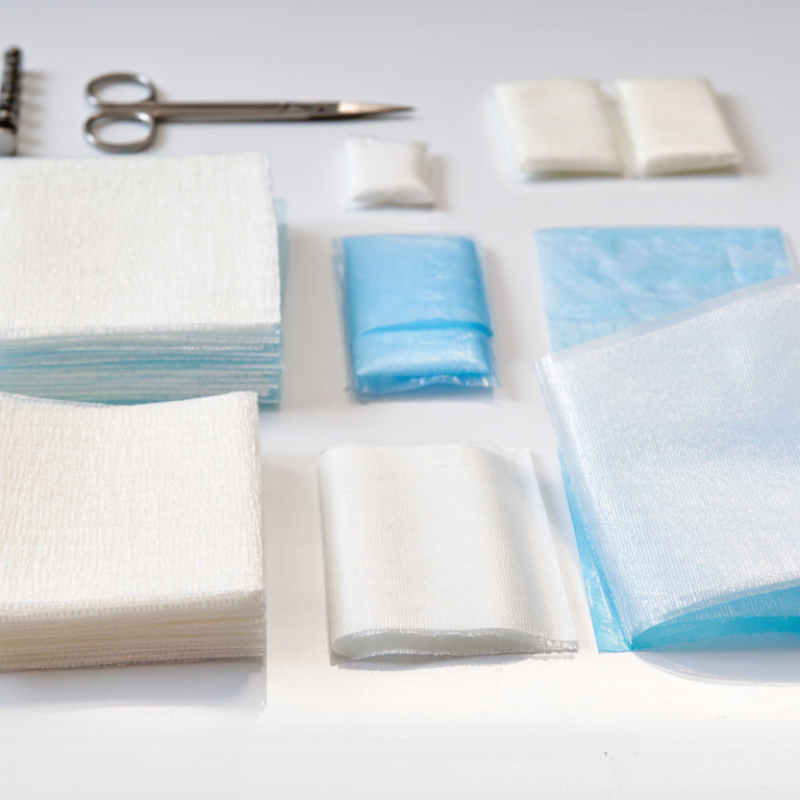
How to Choose the Right Surgical Dressing Pads for Your Needs?
Assess Infection Risk: CDC Estimates 2–4% of Inpatients Develop Surgical Site Infections
The CDC estimates that about 2–4% of patients having inpatient surgery develop a surgical site infection (SSI). This is a population estimate, not a prediction for one person. Risk varies with the procedure, health conditions, and wound care. That matters. A dressing cannot prevent every infection, but the right pad can protect an incision and manage drainage. Follow your surgical team’s instructions, especially when changing the dressing. Clean hands and a secure fit count.
Choose a pad based on the incision’s location, drainage, and your skin’s sensitivity to adhesives. A pad that is too small may leave the wound exposed; an oversized one can rub beneath clothing. Thickness alone is a poor guide. Some wounds need frequent changes, while others should be left covered for longer, as directed by your clinician. The details can feel fussy, and dressing choice is not always obvious. If fluid soaks through, or you notice spreading redness, worsening pain, warmth, or fever, contact your care team promptly.
The CDC estimates that 2–4% of inpatients develop a surgical site infection (SSI).
The 3% midpoint is calculated from the estimated range, not a separate CDC statistic. Dressing selection should also take the wound’s needs and a healthcare professional’s guidance into account.
Choosing a surgical dressing pad starts with the wound’s exudate, not the pad’s appearance. A lightly moist wound may need less absorbency than a heavily draining one. Too little capacity can leave fluid pooling near the wound. Too much absorbency may dry surrounding tissue or increase dressing changes.
EN 13726 provides test methods for assessing properties such as fluid absorption and moisture vapour transmission. These tests offer useful comparison points when reviewing technical product information. Absorption results can indicate how much test fluid a dressing takes up under specified conditions. Moisture vapour transmission helps describe how water vapour passes through the material. That matters.
A laboratory result is not a direct prediction of performance on every wound.
Match test data to what you observe: fluid volume, how quickly the pad becomes wet, and whether leakage reaches its edges. Check the stated test conditions, since results can vary with method and sample preparation. A number may look reassuring, but it is not the whole story. Wound location, movement, and surrounding skin also affect fit. If exudate changes, or the wound shows signs of infection, seek guidance from a qualified healthcare professional. Follow the dressing instructions and reassess the wound during routine changes.
Choosing a dressing starts with the wound surface, not the size of the pad. The contact layer sits against the wound, so consider whether tissue is fragile, dry, or producing fluid. A non-adherent layer can help limit trauma when a dressing is removed. Some silicone contact layers allow fluid to pass into an outer absorbent pad. For a dry wound, a moisture-supporting option may be more suitable, if advised by a healthcare professional. Not every wound behaves as expected. Check the wound’s condition and the care plan before changing materials.
The outer dressing should manage fluid without sticking, leaking, or rubbing against nearby skin. Foam pads can absorb moderate fluid and cushion areas exposed to friction. Gauze is flexible, but dry gauze may adhere to delicate tissue. Alginate dressings may be considered for heavier fluid, with clinical guidance. Keep it simple. The care plan should set how often to change the dressing and what signs to monitor, such as increasing redness, pain, odor, or drainage. If the wound worsens or the dressing repeatedly causes discomfort, seek professional advice rather than simply adding another layer. Even a neat-looking pad can be the wrong fit.
| Wound or Care Need | Suitable Contact Layer or Dressing Type | How It Helps | Key Considerations |
|---|---|---|---|
| Fragile skin, a superficial wound, or a wound that needs gentle dressing removal | Soft silicone contact layer, usually with an absorbent secondary pad | Allows wound fluid to pass through to the secondary dressing while helping reduce adherence to the wound surface. | Check that the secondary dressing can manage the amount of fluid. Follow product instructions for wear time and reuse, if applicable. |
| Low-exudate wound or a wound needing a simple, low-adherence interface | Non-adherent contact layer, such as a suitable perforated dressing, with a secondary pad if needed | Helps limit sticking to the wound and can make dressing changes less traumatic. | Some contact layers absorb little or no fluid, so a secondary dressing may be needed. Do not allow the wound to become excessively dry. |
| Dry wound or wound with soft, adherent slough, when moist wound healing is appropriate | Hydrogel with an appropriate secondary dressing | Adds moisture and may support autolytic debridement of suitable slough. | Use cautiously where surrounding skin is vulnerable to maceration or where fluid is already heavy. A clinician should assess wounds requiring debridement. |
| Moderate to heavy exudate | Alginate or gelling-fiber dressing, often with a secondary cover | Absorbs wound fluid and forms a gel as it takes up exudate. | Generally unsuitable for a dry wound. Ensure the dressing is removed as directed and does not leave material behind in the wound. |
| Moderate exudate, with a need for cushioning or protection | Foam dressing; a silicone contact layer may be used beneath it when appropriate | Provides absorption and cushioning, and can help protect the wound from friction or minor impact. | Select a size and design that fit the wound and surrounding skin. Change it when indicated by saturation, leakage, or the care plan. |
| Superficial wound with little exudate and intact surrounding skin | Transparent film dressing | Creates a flexible protective barrier and allows visual inspection without routine removal. | Has limited absorbency. Avoid using it where exudate is heavy or where infection requires a different management plan. |
| Shallow wound with low to moderate exudate and no need for frequent inspection | Hydrocolloid dressing | Supports a moist healing environment and can absorb some exudate. | Not suitable for every wound. Seek clinical advice if infection is suspected, the wound is deep, or frequent assessment is needed. |
| Wound needing a simple absorbent cover or additional protection | Sterile gauze or an absorbent surgical pad; use a non-adherent contact layer if sticking is a concern | Provides a practical cover and can absorb fluid, depending on the pad type and wound output. | Plain gauze may adhere to a drying wound. Secure without restricting circulation, and change according to the care plan and the dressing condition. |
Care note: Dressing choice depends on wound depth, exudate, surrounding skin, infection risk, and the overall care plan. Follow the product instructions and advice from a qualified healthcare professional. Seek prompt clinical advice for spreading redness, increasing pain, fever, worsening drainage, or other signs of infection.
When choosing surgical dressing pads, check more than the word “sterile” on the package. Look for a clearly identified sterilization method, an intact sealed pouch, a lot number, and an expiration date. The pouch should be dry and undamaged, with no lifted edges or punctures.
Small details matter.
ISO 11135 specifies requirements for developing, validating, and routinely controlling ethylene oxide sterilization. ISO 11137 covers radiation sterilization, including validation and routine control. These standards help assess whether a sterilization process is controlled; they do not, by themselves, guarantee that every individual pad or package is suitable for every procedure. Ask the supplier for documentation linking the product and lot to the validated process.
Also check that packaging is compatible with the chosen method and maintains its sterile barrier through the stated shelf life. A familiar standard number is useful, but it is not the whole story. Even a tidy label can leave questions unanswered, so verify the details against the product’s instructions and your facility’s requirements.
Choosing a surgical dressing pad means matching its dimensions to the wound and expected drainage. The pad should cover the wound with a margin, but excessive material can bunch beneath tape or clothing. Check whether the wound may swell, and whether the pad will sit near a joint. Movement matters. WHO’s Global Guidelines for the Prevention of Surgical Site Infection report that surgical site infections affect about 11% of patients undergoing surgery in low- and middle-income countries. This figure describes infection burden; it does not show that a particular dressing prevents infection. Size is easy to misjudge on a still patient.
Check fixation and packaging before use. Select tape, a retention bandage, or another method that holds the pad without pulling skin or restricting movement. If the pad shifts when the patient bends an elbow or knee, reassess the fit. Inspect the sterile pack for tears, moisture, broken seals, or expired dates; do not use compromised packaging. ISO 11607 addresses packaging systems designed to maintain the sterility of terminally sterilized medical devices until use. It is not a substitute for checking each pack. Open it using the stated aseptic instructions, and follow the clinician’s guidance for dressing changes. A neat package can still be damaged.
Subscribe to our newsletter and receive the latest news and exclusive insights every month. No spam.
LabConsulting GmbH and LC LabService GmbH are Austrian companies which cooperate with over 600 manufacturers and offers a selection of more than 180,000 products and various laboratory product and service solutions for our Labcustomers.
Die LabConsulting GmbH und die LC LabService GmbH sind österreichische Unternehmen, die mit über 600 global verteilten Herstellern zusammenarbeiten und mit einer Auswahl von mehr als 180.000 Produkten und verschiedenen Laborprodukt- und Servicelösungen unseren Parnern im Labor anbieten.
INSTOCK CATALOGOur services
Our services