


How to Choose the Right Screw Conveyor for Your Application
Choosing the right Screw Conveyor begins with the material, not the machine. A powder that flows freely may bridge inside a trough. Damp minerals can cling to flights, while abrasive sand can wear a carbon-steel surface surprisingly quickly. These details shape the conveyor’s diameter, speed, pitch, construction, and drive power.
Andrew W. Jenike, a pioneer in bulk-solids handling, observed, “The flowability of a bulk solid is not an intrinsic property of the material.” His warning remains practical. Material behavior changes with moisture, temperature, particle size, compression, and residence time. A reliable selection process must examine those conditions before comparing equipment prices. Capacity matters. So do inlet geometry, discharge location, cleaning access, and the expected duty cycle.
Small mistakes become expensive.
An undersized Screw Conveyor may overload its motor or leave material behind. An oversized unit can increase purchase costs, power consumption, and segregation risks. Experience also shows that laboratory data cannot represent every plant condition perfectly. That limitation deserves attention, not concealment. Testing representative material, reviewing operating records, and consulting established design guidance can reduce uncertainty. CEMA recommendations provide a useful technical reference, but they do not replace application-specific engineering judgment. The right choice should balance throughput, material protection, maintenance access, sanitation needs, and long-term reliability. This guide examines those decisions through practical examples, measurable criteria, and the questions engineers should ask before approving a Screw Conveyor design.
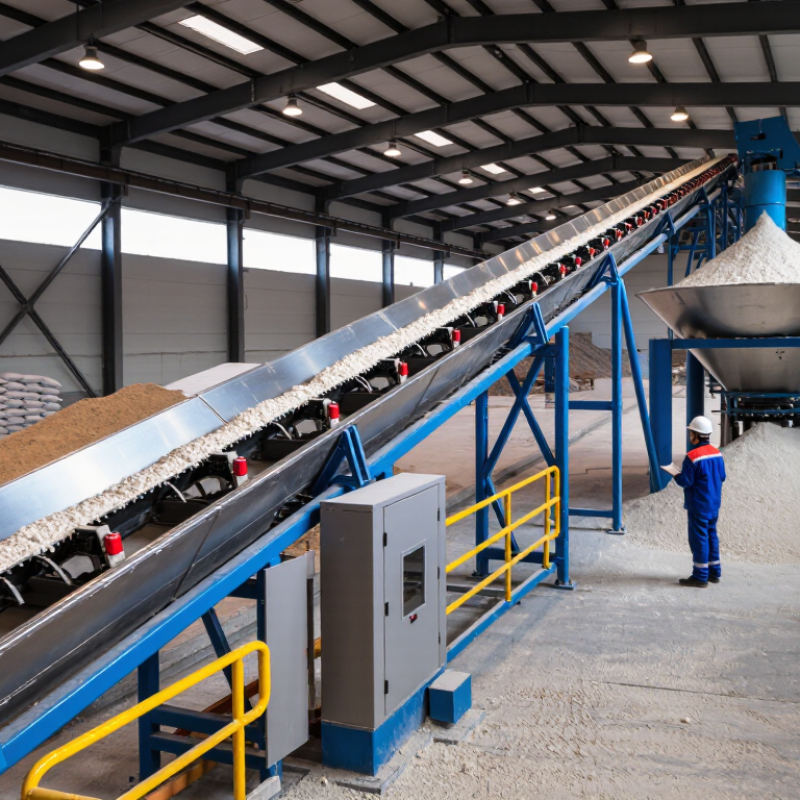
Define the Material Characteristics and Conveying Requirements
How to Choose the Right Screw Conveyor for Your Application
Define the Material Characteristics and Conveying Requirements
Start with the material, not the conveyor catalogue. Record bulk density, particle size, moisture, temperature, and flowability. These details determine the required screw diameter, speed, and drive power.
A powder may aerate and flood the inlet. Damp material may bridge above the flighting. Abrasive particles can wear the flight edges quickly. Sticky products may build up inside the trough. I have seen reliable equipment underperform because one small material change was ignored.
Test the material under realistic conditions. A dry laboratory sample can mislead you. Include actual moisture levels, expected temperature, and the longest operating cycle. Check whether the product degrades when flights rotate too quickly. Fragile granules may need gentle, slower conveying. Dense materials may require stronger torque and reinforced components.
Then define the conveying route. Measure capacity in kilograms or cubic metres per hour. Note the horizontal distance, incline angle, inlet arrangement, discharge height, and available space. Frequent starts need a motor with suitable starting torque. Long or inclined conveyors usually require careful power calculations.
Do not rely on capacity alone. It is a common mistake. The wrong inlet design can cause surging, even when the conveyor is oversized. Consider cleaning access, inspection points, dust control, and maintenance time. These practical requirements often decide whether the system remains dependable after installation.
How to Choose the Right Screw Conveyor for Your Application - Define the Material Characteristics and Conveying Requirements
| Material / Application | Typical Bulk Density | Typical Particle Size | Flowability | Moisture / Cohesion | Abrasiveness | Recommended Conveyor Configuration | Key Selection Considerations |
|---|---|---|---|---|---|---|---|
| Wheat flour | Approximately 500–650 kg/m³ | Generally below 150 µm | Free-flowing to moderately cohesive | Low moisture; dust-sensitive | Low | Enclosed tubular or U-trough screw conveyor with a continuous flight | Use dust-tight covers, controlled inlet loading, and gentle operating speed to reduce aeration and dust generation. |
| Whole grain | Approximately 600–800 kg/m³ | 2–12 mm | Generally free-flowing | Usually low to moderate moisture | Low | U-trough conveyor with standard or variable-pitch flighting | Select a flight design that minimizes impact and product breakage; avoid excessive speed and overfilling. |
| Wood chips | Approximately 150–350 kg/m³ | 5–50 mm, irregular shape | Variable; may bridge or interlock | Moderate to high moisture possible | Low to moderate | Heavy-duty U-trough conveyor with larger clearance and anti-wrap flighting | Allow sufficient inlet area, provide overload protection, and consider a variable-pitch or ribbon-style flight for irregular material. |
| Dry sand | Approximately 1,400–1,700 kg/m³ | 0.1–2 mm | Free-flowing | Low when dry; may become cohesive when wet | High | Heavy-duty U-trough conveyor with replaceable wear surfaces | Use abrasion-resistant components, robust bearings, and conservative screw speed to control wear and power demand. |
| Limestone powder | Approximately 900–1,300 kg/m³ | Typically below 250 µm | Moderately flowing; can compact | Usually dry; moisture can cause buildup | Moderate to high | Enclosed screw conveyor with abrasion-resistant flighting and trough liners | Check dust control requirements, prevent moisture ingress, and size the drive for increased starting torque. |
| Wet filter cake | Approximately 800–1,500 kg/m³ | Fine to coarse, often agglomerated | Poor; cohesive and potentially sticky | Typically 15–40% moisture, depending on process | Material-dependent | Shafted or shaftless screw conveyor with anti-wrap flighting | Evaluate stickiness, compressibility, and cleanout requirements; use a low-speed, high-torque drive and avoid excessive compression. |
| Wood pellets | Approximately 550–750 kg/m³ | 6–12 mm cylindrical pellets | Free-flowing but fragile | Generally below 10% moisture | Low | Tubular or U-trough conveyor operated at low to moderate speed | Prioritize low breakage, gentle transfers, and dust control; avoid excessive drop heights and overfilling. |
| Hot ash or mineral residue | Approximately 700–1,500 kg/m³ | Fine powder to coarse particles | Variable | Dry; temperature may exceed 200°C | Moderate to high | Heavy-duty conveyor with heat-resistant materials, expansion allowance, and reinforced flighting | Confirm maximum and continuous temperature, select suitable seals and bearings, and account for thermal expansion. |
Newsletter
Subscribe to our newsletter and receive the latest news and exclusive insights every month. No spam.

LabConsulting GmbH and LC LabService GmbH are Austrian companies which cooperate with over 600 manufacturers and offers a selection of more than 180,000 products and various laboratory product and service solutions for our Labcustomers.
Die LabConsulting GmbH und die LC LabService GmbH sind österreichische Unternehmen, die mit über 600 global verteilten Herstellern zusammenarbeiten und mit einer Auswahl von mehr als 180.000 Produkten und verschiedenen Laborprodukt- und Servicelösungen unseren Parnern im Labor anbieten.
INSTOCK CATALOG


Our services
Our services

