

BlogsBlogs

Explore cutting-edge articles on laboratory products, industry innovations, and research trends with Lab Consulting.

Explore cutting-edge articles on laboratory products, industry innovations, and research trends with Lab Consulting.

How to Choose the Best Vehicle Battery Checker?

Choosing the right Vehicle Battery Checker can prevent a silent start on a cold morning. It can also reveal problems that a simple voltage reading misses. A weak battery may show 12.6 volts at rest, yet fail when the starter demands strong current. For this reason, experienced technicians compare voltage, cold-cranking performance, and internal resistance. They also check whether the tester supports flooded, AGM, and EFB batteries. Compatibility matters more than a bright screen.

A dependable checker should provide clear results, stable clamps, and readable instructions. Look for models that test 12-volt batteries, estimate CCA, and perform load or conductance tests. Temperature can affect readings, so careful users record the battery condition before testing. Clean terminals also matter. Dirt can create a false result. I once trusted a quick voltage check and missed a battery that collapsed under load. That mistake was small, but inconvenient.

No tester is perfect. Accuracy depends on battery age, charge level, cable contact, and testing method. Reputable manufacturers explain these limits in their manuals. Independent reviews and professional workshop feedback can add useful evidence. However, impressive claims should not replace practical verification. A good choice balances measurement quality, ease of use, warranty support, and realistic operating conditions. The best Vehicle Battery Checker is not necessarily the most expensive model. It is the one that produces understandable results when your vehicle needs honest answers.
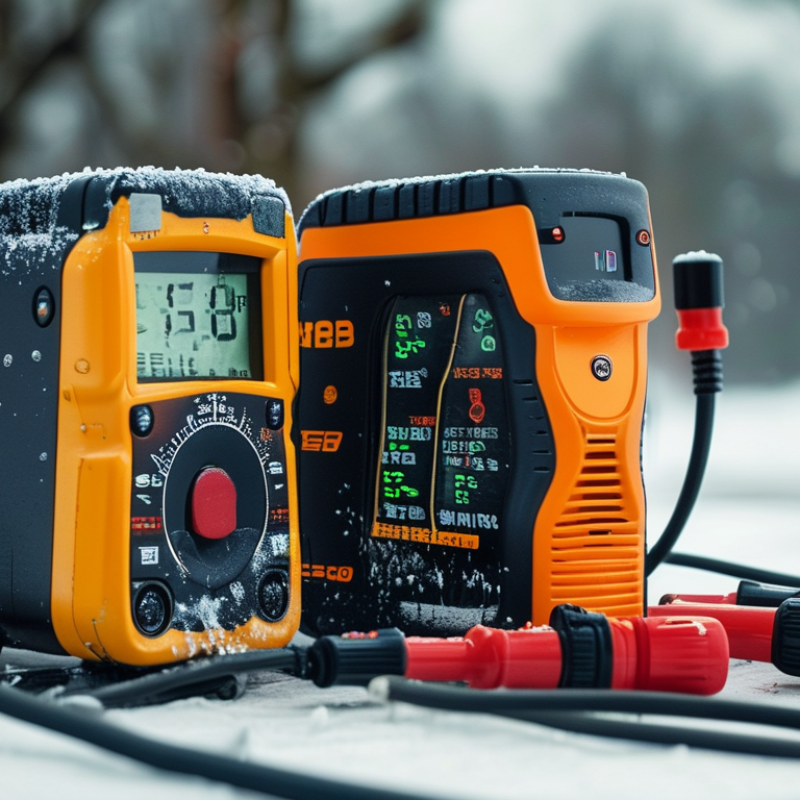
How to Choose the Best Vehicle Battery Checker?

Define Battery Tester Types: Conductance, Load, and Multimeter Methods

How to Choose the Best Vehicle Battery Checker?

A vehicle battery checker should match the test you need, not simply display impressive numbers. Conductance testers measure a battery’s ability to pass a small electrical signal. They work quickly without placing a heavy demand on the battery. This method suits routine inspections, especially in workshops or before long trips. However, conductance results can be less reliable when the battery is deeply discharged, cold, or recently charged.

Load testers apply a controlled electrical load for several seconds. This approach imitates the battery’s real starting duty and can reveal weakness that conductance testing misses. A technician must follow the tester’s time and load limits carefully. Excessive loading may heat the battery or produce a misleading result. Multimeters are simpler and widely useful. They measure resting voltage, starting voltage drop, and charging voltage. Yet, a multimeter alone cannot prove that a battery can deliver sufficient cranking power.

Tips: Let the battery rest before checking open-circuit voltage. Clean loose corrosion from the terminals first. Compare voltage before and during engine cranking. Record temperature and test conditions. I often repeat a borderline test because one reading can be misleading. That extra check takes little time. Use care. A weak connection can imitate a failing battery, while a recently driven vehicle may show temporary surface charge. Combining methods usually provides stronger evidence than trusting one number.

How to Choose the Best Vehicle Battery Checker?

Conductance testers estimate starting capability and battery health without applying a heavy load. Load testers assess cranking performance by placing a controlled electrical load on the battery. A digital multimeter directly measures terminal voltage but does not independently verify cranking capacity or battery health.

Check Voltage Benchmarks: 12.6 V Rested and 12.4 V at 75% Charge

How to Choose the Best Vehicle Battery Checker?

A reliable vehicle battery checker should measure voltage accurately, not merely display a number. For a typical 12-volt lead-acid battery, about 12.6 V indicates a fully charged battery after resting. A reading near 12.4 V usually suggests roughly 75% charge. These benchmarks are useful, but they are not absolute. Temperature, battery age, and recent driving can change the result.

Tips: Switch off the engine and accessories before testing. Let the battery rest for several hours, preferably overnight. Touch the red probe to the positive terminal and the black probe to the negative terminal. A checker with clear decimal readings is easier to trust. I prefer models that also support cranking or load tests. Resting voltage alone cannot reveal every weak cell.

A reading below 12.4 V deserves attention, especially after a full charge and rest period. Around 12.0 V may indicate serious discharge, but it does not prove permanent damage. Check the terminals for white residue, loose connections, or moisture. I once blamed a battery for a starting problem, but the ground connection was poor. That mistake was useful. Test twice. Compare results. A professional inspection may be sensible when readings conflict.

Compare CCA Testing with SAE J537 Load-Test Requirements

How to Choose the Best Vehicle Battery Checker?

A reliable battery checker should distinguish estimated CCA from a true load test. Electronic CCA testers measure conductance and calculate an expected cold-cranking value. They work quickly, even during routine service visits. However, their readings can change with temperature, surface charge, and poor terminal contact. A high CCA result does not always prove strong starting performance. No tester is perfect.

A SAE J537-style load test checks the battery under a real electrical burden. For a 12-volt battery, a common service procedure applies about half the rated CCA for 15 seconds at approximately 21°C. The battery should maintain around 9.6 volts during the test. Exact requirements depend on the test method and current standard edition. This test can reveal voltage collapse that a conductance reading may miss. Yet it needs a known CCA rating, adequate charge, and safe connections. A partly charged battery may fail unfairly. That detail is easy to overlook.

Tips: Clean both terminals before testing. Let the battery rest after charging, or remove surface charge. Compare CCA readings with load-test voltage when possible. Record ambient temperature, battery rating, and test duration. If results conflict, repeat the test after correcting the connections. The first reading may be wrong.

Assess Accuracy, Safety Features, and 6–12 V System Compatibility

How to Choose the Best Vehicle Battery Checker?

A reliable battery checker should provide stable readings, not just impressive numbers. Accuracy matters when a battery shows 12.4 volts but still fails under load. Choose a tester that combines voltage measurement with load or conductance testing. Look for clear results, repeatable readings, and a stated accuracy range. A calibration option is useful for workshops and frequent users. Even experienced technicians can misread a battery after charging. Let it rest before testing.

Accuracy matters Choose a tester that combines voltage measurement with load or conductance testing.

Safety features deserve equal attention. Select a unit with insulated clamps, reverse-polarity protection, and overload control. Spark-resistant connections are helpful near battery terminals. The tester should also have a readable display in dim garages. I have found that simple controls reduce mistakes, especially when hands are cold or dirty. Still, no tester removes every risk. Inspect damaged cables and follow the equipment instructions.

Tips: Confirm both 6-volt and 12-volt compatibility before purchase. Some devices detect voltage automatically, while others require manual selection. Check the supported battery range, including starting and deep-cycle batteries. Test a known-good battery occasionally to notice unusual readings. Keep the clamps clean and firmly attached. Small details matter. A tester may support 12-volt systems but provide weak results on older 6-volt batteries, so verify its specifications carefully.

Select the Best Checker by Vehicle Type, Battery Chemistry, and Data Needs

Choosing the best vehicle battery checker starts with the vehicle type. A compact car, diesel van, motorcycle, and hybrid vehicle may need different testing functions. Check the vehicle manual before buying any device. A tester should support the battery’s rated voltage and starting-current range. For example, a diesel engine often needs stronger cranking analysis than a small petrol engine.

Battery chemistry also matters. Conventional flooded lead-acid batteries, AGM batteries, EFB batteries, and lithium-based batteries do not behave identically. A checker designed for one chemistry may produce unreliable results on another. Look for selectable battery modes, not just a general “12-volt” label. I once trusted a basic voltage reading on an aging AGM battery. The voltage looked acceptable, but the engine still cranked slowly. That experience taught me that voltage alone is incomplete.

Data needs should guide the final choice. A home driver may only need battery voltage, charge status, and a simple pass-or-replace result. A workshop technician may need cold-cranking performance, internal resistance, state of health, and printed or stored test records. Clear readings matter more than crowded screens. Bluetooth data can help with fleet inspections, but it adds setup and privacy considerations. No tester is perfect. Temperature, loose terminals, surface charge, and poor connections can distort results. Test after checking the terminals, and repeat doubtful readings.

How to Choose the Best Vehicle Battery Checker? - Select the Best Checker by Vehicle Type, Battery Chemistry, and Data Needs
Vehicle Type Typical System Battery Chemistry Recommended Checker Type Essential Measurement Range Useful Data Outputs Important Selection Notes
Passenger Cars 12 V electrical system; battery usually rated by CCA, EN, or another regional starting-current standard Flooded lead-acid, EFB, or AGM At least 7–16 V; starting-current test coverage commonly around 100–2,000 A Open-circuit voltage, estimated starting capacity, state of charge, state of health, and replacement or recharge recommendation Confirm that the tester supports the battery’s chemistry and the rating printed on its label, such as CCA or EN
Vehicles with Start-Stop Systems 12 V system with frequent engine restarts and higher charging demands EFB or AGM; conventional flooded batteries are used in some applications At least 7–16 V; suitable for the battery’s specified starting-current range Battery health, available starting current, charge acceptance indication, and test results before and after charging Do not test an AGM or EFB battery using a generic flooded-battery profile; chemistry selection affects interpretation
Light Commercial Vans 12 V system; larger starting batteries and accessory loads are common Flooded lead-acid, EFB, or AGM At least 7–16 V; preferably supports ratings above 1,000 A when required Starting capacity, state of health, state of charge, battery voltage, and pass/fail trend history Choose a model that can test large-capacity batteries without requiring the battery to be disconnected
Heavy-Duty Trucks and Buses 24 V system made from two 12 V batteries, or a 12 V system with high-capacity batteries Flooded lead-acid or AGM Approximately 7–32 V input; high-current rating coverage is strongly recommended Individual battery results, combined system voltage, imbalance indication, starting capacity, and charging-system data Test each 12 V battery separately before evaluating the 24 V series system; one weak battery can affect the pair
Motorcycles and Scooters Usually 12 V; compact batteries and limited reserve capacity Small flooded lead-acid, AGM, or gel Approximately 6–16 V; low starting-current ranges are important Voltage, state of charge, estimated starting performance, and recharge or replacement indication Use a tester that can handle small batteries; some automotive testers may be less reliable at very low rated currents
Recreational Vehicles and Marine Craft 12 V or 24 V; separate starting and auxiliary battery banks may be installed Flooded deep-cycle, AGM, gel, or dual-purpose lead-acid At least 7–32 V; current-rating range should match the battery label or manufacturer specification Starting capacity, voltage, state of charge, health estimate, and charging-system voltage Starting-current results alone do not fully describe deep-cycle performance; inspect reserve capacity and operating history as well
Vehicles with 12.8 V LiFePO4 Batteries Nominal 12.8 V; charging voltage and battery-management-system behavior differ from lead-acid Lithium iron phosphate, commonly called LiFePO4 Typically about 10–15 V for a 12 V-class pack; exact limits depend on the battery design Pack voltage, protection status, fault codes, temperature information, and available capacity when supported Do not rely on a lead-acid CCA algorithm unless the tester explicitly supports LiFePO4; a BMS can interrupt or alter the test
Hybrid Vehicles with a 12 V Auxiliary Battery High-voltage traction system plus a separate low-voltage auxiliary battery Usually AGM or flooded lead-acid for the auxiliary battery; traction battery chemistry is separate Approximately 7–16 V for the auxiliary battery Auxiliary-battery voltage, state of health, state of charge, and charging behavior in the low-voltage network A 12 V checker does not diagnose the high-voltage traction battery; follow high-voltage safety procedures
Electric Vehicles High-voltage traction battery plus a separate 12 V or 16 V auxiliary system, depending on vehicle design Auxiliary battery may be AGM, flooded lead-acid, or lithium-based; traction battery is commonly lithium-ion Use a tester matched to the auxiliary system voltage; traction-battery testing requires dedicated equipment Auxiliary-battery health, low-voltage faults, diagnostic trouble codes, and selected battery-management data Never connect a conventional 12 V tester directly to a high-voltage traction battery
Workshop and Fleet Maintenance Mixed 12 V and 24 V fleets with different battery sizes and chemistries Flooded lead-acid, AGM, EFB, gel, and selected lithium batteries Approximately 6–32 V; broad current-rating coverage and support for multiple rating standards Detailed test reports, battery history, charging-system test, starter-system test, temperature input, and fleet records Prioritize repeatability, data export, calibration information, replaceable leads, and clear pass/fail criteria
Practical rule: Match the checker to the battery chemistry, nominal voltage, battery rating standard, and the type of information required. A voltage reading alone can show charge level, but it cannot reliably determine battery health or available starting performance.

Newsletter

Subscribe to our newsletter and receive the latest news and exclusive insights every month. No spam.