How to Choose a Short Hydraulic Jack for Global Sourcing?
Choosing a Short Hydraulic Jack for global sourcing requires more than comparing prices and lifting capacities. The smallest dimensions can hide serious performance differences.
Anthony Esposito, author of Fluid Power with Applications, emphasizes a practical principle: “Select components according to the application, not appearance.” This idea matters when evaluating a Short Hydraulic Jack for workshops, service vehicles, construction equipment, or emergency maintenance. A compact body may fit beneath a low chassis, yet its limited stroke could create delays during real repairs.
Experienced buyers should verify rated capacity, minimum height, maximum lift, saddle diameter, pump effort, and overload protection. Check whether the jack maintains pressure overnight. It should.
Request technical drawings, test records, material details, and operating instructions before placing a global order. Supplier experience also matters. A factory may offer attractive pricing but lack consistent sealing, welding, or final inspection. Sample testing can expose these weaknesses quickly. Place the jack on a level steel plate, measure height changes, and inspect oil leakage after repeated cycles.
Packaging deserves attention too. A damaged handle or bent release valve can turn a low-cost purchase into an expensive claim. Confirm corrosion protection, carton strength, spare-part availability, and replacement seals. Certifications should be relevant and verifiable, not decorative labels.
There is no perfect sourcing formula. I would not rely on capacity alone. Some buyers, including experienced ones, overlook storage temperature or local service support. That oversight can become costly after delivery. The right Short Hydraulic Jack balances fit, safety, durability, documentation, and supplier reliability across the entire purchasing cycle.
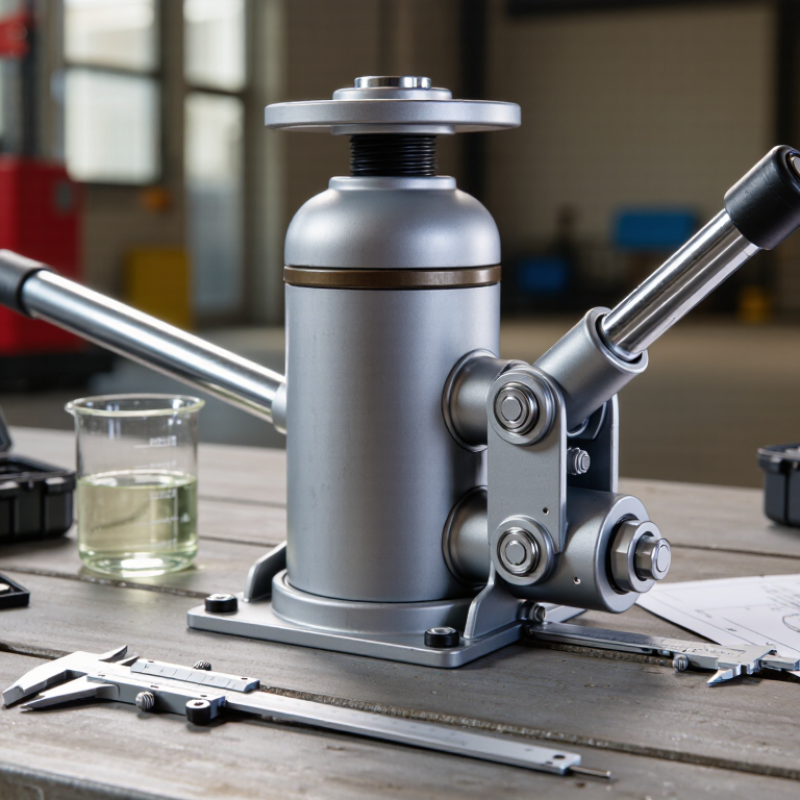
Define Required Capacity, Lift, and Closed Height for Global Applications
How to Choose a Short Hydraulic Jack for Global Sourcing?
Define required capacity, lift, and closed height before comparing suppliers. Start with the real load, not the vehicle’s brochure weight. Add the weight of tools, attachments, and uneven load transfer. A practical sourcing target is 125% to 150% of the maximum working load. This margin is not a substitute for engineering review. ASME PASE-2019 and EN 1494 require rated capacity controls, stability checks, and safe operating practices. The U.S. Bureau of Labor Statistics recorded 5,283 fatal work injuries in 2023. That figure covers all industries, but it reinforces one point: lifting equipment deserves serious risk assessment.
Measure the closed height at the exact support point. A jack that is 12 millimeters too tall may not fit beneath a low chassis. Then confirm lift range, saddle diameter, base width, and hydraulic hose clearance. For global applications, compare metric and imperial ratings carefully. A 20-ton rating may describe maximum capacity, not capacity through the full stroke. Field experience also shows that cold temperatures can slow hydraulic response. This detail is easy to miss.
Tips: Request a load chart, test certificate, material specification, and operating-temperature range. Ask for dimensions in millimeters and inches. Test one sample under a controlled load before placing a larger order. I would also recheck packaging strength; short jacks are compact, but dense steel can damage cartons during long-distance handling.
Compare 700-bar (10,000-psi) Hydraulic Systems and Rated Load Performance
How to Choose a Short Hydraulic Jack for Global Sourcing?
A short hydraulic jack fits tight spaces, but compact size does not guarantee strong performance. Most 700-bar systems operate at 10,000 psi, making pressure a useful comparison point. However, pressure alone does not determine lifting capacity. Rated load depends on cylinder area, seal condition, stroke length, and side-load resistance. A small jack may reach its rated load, yet require more pumping force and careful alignment.
Compare the rated load with your real working load, not the maximum load on a product sheet. Leave a practical safety margin for uneven floors, temperature changes, and repeated cycles. Field inspections often reveal damaged seals or unstable contact surfaces before pressure becomes the main problem. I have found that buyers sometimes focus on the shortest retracted height and overlook return speed. That can slow production. It is a small detail, but it matters.
Tips: Request pressure-test records, load charts, material details, and clear unit conversions. Confirm whether the rating applies throughout the stroke or only at the starting position. Check the saddle shape, base width, and connection size. Ask for sample measurements before placing a global order. Packaging and technical instructions also deserve attention. A perfect specification can still disappoint if the documentation is vague.
How to Choose a Short Hydraulic Jack for Global Sourcing? - Compare 700-bar (10,000-psi) Hydraulic Systems and Rated Load Performance
| Reference Configuration | Rated Load | Maximum Working Pressure | Calculated Piston Area | Approximate Bore Diameter | Closed Height | Hydraulic Stroke | Maximum Extended Height | Approximate Oil Volume | Typical Net Weight | Recommended Application |
| Short 10-ton single-acting jack | 10 metric tonnes
(98.1 kN) | 700 bar
(10,000 psi) | 140 cm² | 133 mm | 115 mm | 50 mm | 165 mm | 0.70 L | 6–8 kg | Compact lifting, machinery positioning, maintenance work |
| Short 20-ton single-acting jack | 20 metric tonnes
(196.2 kN) | 700 bar
(10,000 psi) | 280 cm² | 189 mm | 135 mm | 60 mm | 195 mm | 1.68 L | 12–16 kg | Structural installation, vehicle and equipment service |
| Short 30-ton single-acting jack | 30 metric tonnes
(294.3 kN) | 700 bar
(10,000 psi) | 420 cm² | 231 mm | 155 mm | 70 mm | 225 mm | 2.94 L | 20–25 kg | Heavy machinery lifting where installation space is limited |
| Short 50-ton single-acting jack | 50 metric tonnes
(490.3 kN) | 700 bar
(10,000 psi) | 700 cm² | 299 mm | 175 mm | 80 mm | 255 mm | 5.60 L | 35–45 kg | Bridge, plant, shipyard and industrial maintenance operations |
| Short 100-ton single-acting jack | 100 metric tonnes
(980.7 kN) | 700 bar
(10,000 psi) | 1,400 cm² | 422 mm | 220 mm | 100 mm | 320 mm | 14.00 L | 85–110 kg | Very heavy industrial lifting and controlled load transfer |
Technical basis: Theoretical hydraulic force is calculated from pressure multiplied by piston area. At 700 bar, the theoretical force is approximately 10 kN per 1 cm² of effective piston area. Actual rated capacity is lower than the theoretical maximum because of design safety factors, friction, seals, side loading, material strength and applicable local standards. Oil volume is estimated as piston area multiplied by stroke; actual reservoir capacity may be higher. Never exceed the manufacturer’s rated load, working pressure or specified operating conditions.
Assess Stroke, Stability, Side-Load Resistance, and Return Mechanisms
How to Choose a Short Hydraulic Jack for Global Sourcing?
A short hydraulic jack should match the real lifting geometry, not only the advertised capacity. Measure the smallest clearance under the load, then select enough stroke to reach the support point safely. A 50-ton rating does not compensate for insufficient stroke. Stability depends on base width, center of gravity, contact shape, and floor condition. ASME B30.1-2023 addresses jacks, including rated capacity, inspection, and operating requirements. Request current test records, load markings, and dimensional drawings from each supplier.
Side-load resistance deserves careful attention. Hydraulic jacks mainly support vertical forces; misalignment can bend components, damage seals, or cause sudden movement. Ask suppliers for lateral-load test methods, allowable side-load limits, and overload protection details. Do not accept “heavy-duty” as technical evidence. The U.S. Bureau of Labor Statistics recorded 5,283 fatal occupational injuries in 2023. That report does not isolate hydraulic jacks, so it cannot provide a jack-specific failure rate. Still, it supports disciplined lifting controls. Return mechanisms also matter. Check spring-return fatigue, gravity-return speed, hose routing, and performance at low temperatures. Test repeated cycles with a realistic load. One sample is not enough. My practical weakness is trusting catalog data too early; supplier claims still need independent verification, dimensional checks, and documented acceptance criteria.
How to Choose a Short Hydraulic Jack for Global Sourcing?
This chart compares representative specification values commonly found in compact industrial hydraulic jacks. Stroke determines usable lifting travel, while retracted and maximum heights determine whether the jack fits beneath the load and reaches the required lifting point.
For stability, check the base footprint, rated capacity, and support surface rather than relying on height alone. Side-load resistance should be confirmed from the supplier’s tested rating because standard hydraulic jacks are primarily designed for vertical loading. Spring-return models generally provide faster automatic retraction, while gravity-return designs depend on the load and operating position.
Verify ASME B30.1, EN 1494, and ISO 9001 Compliance Documentation
How to Choose a Short Hydraulic Jack for Global Sourcing?
A short hydraulic jack must fit the equipment’s lowest clearance and lifting points. Check rated capacity, minimum height, stroke, saddle diameter, and return speed. A compact body is useful, but limited stroke can create unsafe repositioning. I have seen specifications that looked complete, yet omitted the working height range. Request a dimensional drawing and a real product photograph.
Verify ASME B30.1 and EN 1494 documentation carefully. Confirm the certificate names the correct jack type, capacity, model, and test standard. Check the issuing laboratory, test date, report number, and product identification. Do not treat ISO 9001 as proof of lifting performance. It indicates a quality management system, not automatic product compliance. Ask for load-test records, inspection procedures, material traceability, and calibration certificates. Documents should match the factory and shipment details.
Tips: Build a document checklist before requesting quotations. Compare certificate wording with the actual nameplate. Ask for samples when capacity claims seem unusually high. Keep copies of revisions and approval dates. A supplier may provide valid paperwork, but an outdated report still needs review. This is easy to overlook. My own preference is to verify one production unit before approving a larger order, although this adds time and cost. Reliability sometimes requires an inconvenient second check.
Audit MOQ, Incoterms, Lead Time, Warranty, and Spare-Part Availability
When sourcing a short hydraulic jack, audit the MOQ before discussing price. A low unit cost can hide excessive inventory and storage risk. Request tiered MOQs, sample costs, pallet quantities, and mixed-model options. Confirm whether the quoted price includes testing, export packing, and documentation. Under ICC Incoterms 2020, define who pays freight, insurance, customs clearance, and unloading. Do not accept “shipping included” without a named Incoterm and destination.
Lead time needs evidence. Ask for production days, inspection time, port handling, and a realistic buffer. UNCTAD’s Review of Maritime Transport 2023 notes that over 80% of global trade by volume moves by sea. Delays can therefore affect even small hydraulic components. The World Bank’s 2023 Logistics Performance Index reports an average 44-day journey from port entry to final destination. Build stock accordingly, but avoid overbuying. That balance is difficult.
Warranty terms should state coverage period, leakage limits, load-cycle expectations, and claim evidence. Require serial tracking and a replacement procedure. Ask for failure-analysis reports, not only verbal promises. Spare parts matter after the first sale. Confirm seals, release valves, pins, wheels, and repair kits, including prices and availability for at least two years. A supplier may promise fast support, yet provide no inventory records. That is a warning. I would also test one jack under repeated loads before approving a large order. One sample cannot prove everything, but skipping it is worse.


