How to Choose the Right Laboratory Tools for Your Experiments?
Choosing the right laboratory tools is crucial for any experimental work. According to Dr. Emily Carter, a leading expert in laboratory technology, "The right tools can make or break your results." This statement underscores the importance of selecting appropriate instruments for successful experiments.
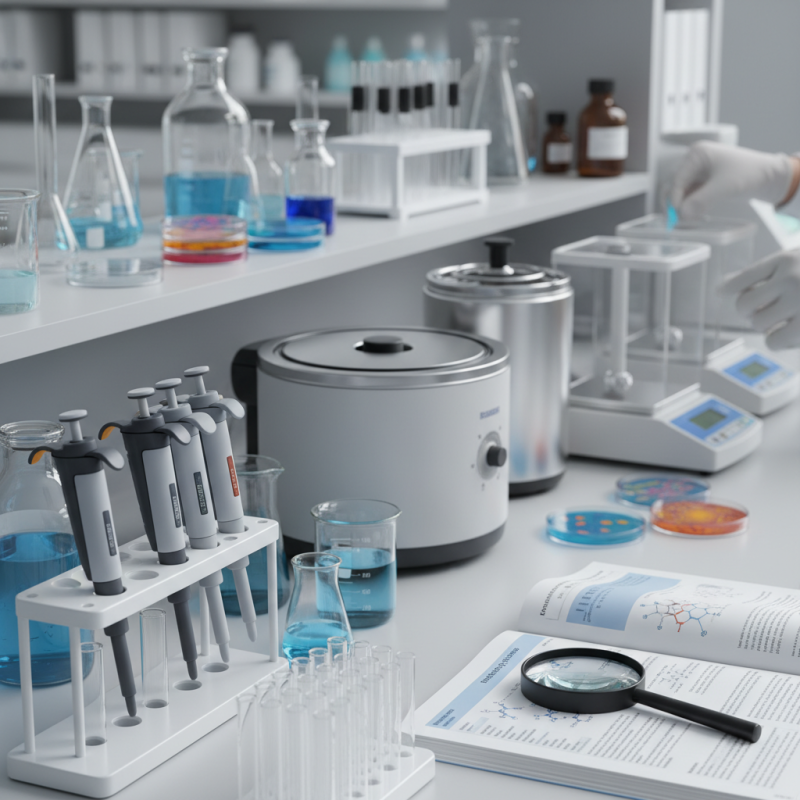
Laboratory tools come in various shapes and sizes. Each tool has a specific function, which can significantly impact the outcome of your experiments. For example, precision pipettes can ensure accurate measurements in biochemical assays. However, not all pipettes are created equal, and using subpar options can lead to unreliable data. Many researchers underestimate this aspect.
When selecting laboratory tools, consider the specific needs of your experiments. Are you working in biochemistry, microbiology, or another field? Each discipline requires tailored tools. Often, new researchers may overlook essential features like calibration or usability. Reflecting on your choices can be enlightening. The right laboratory tools not only enhance results but also contribute to a more efficient workflow.
Identifying Your Experimental Needs and Goals
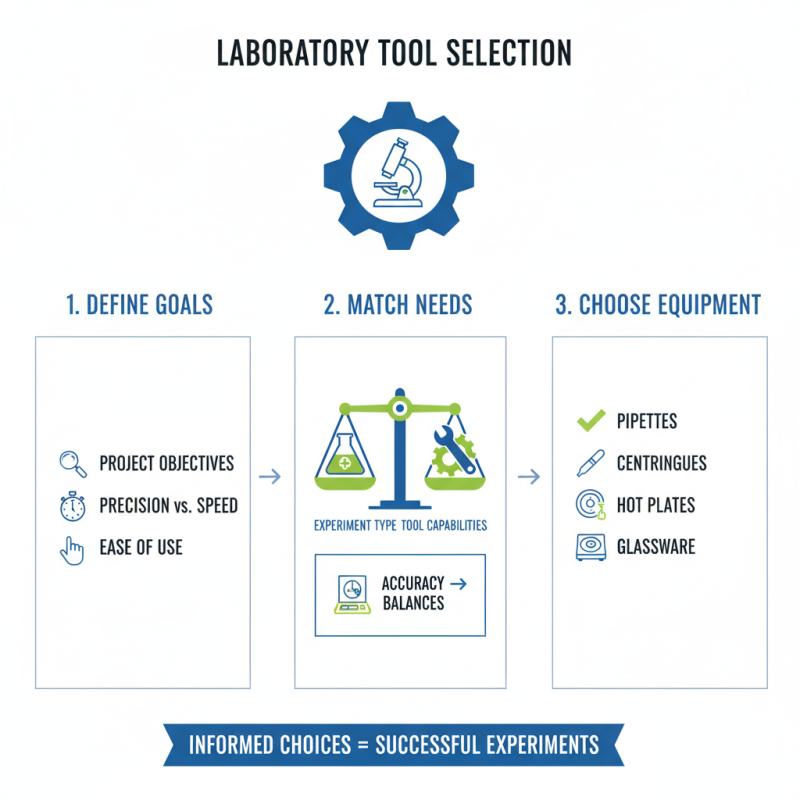
When selecting laboratory tools for your experiments, it's crucial to identify your specific experimental needs and goals. Begin by defining the objectives of your project. What are you trying to achieve? Knowing whether you need precision, speed, or ease of use will guide your choices. For example, if accuracy is paramount, investing in high-quality analytical balances might be essential.
Think about the scale of your experiments, too. Are you working with small samples or larger quantities? This decision affects tool selection. Smaller samples may require specialized pipettes or microcentrifuges, while larger volumes could necessitate bulk handling equipment. Reflecting on these aspects can be challenging, but it's critical for success.
Don’t overlook the possibility of trial and error. Sometimes, an initially chosen tool might not perform as expected. Maybe a thermometer is not sensitive enough, or a centrifuge is too complex. In such cases, learn from these experiences. Adjust your approach and keep refining your toolkit. The right tools significantly enhance your experimental outcomes if chosen with thoughtful consideration.
Understanding Different Types of Laboratory Tools
Laboratory tools come in various types, each serving distinct functions.
Choosing the right tools impacts the quality and
accuracy of experiments. Common tools include
pipettes, beakers, and centrifuges.
Each tool has its specific applications. For instance, pipettes are used for precise
liquid handling. They allow for measurements in microliters. Beakers are
essential for mixing and heating substances.
According to a recent industry report, 70% of
researchers find accuracy to be a primary factor when selecting equipment. Yet, many
tools can be misused due to a lack of understanding. Misreading measurements or using
the wrong tool can lead to inconsistent results.
Centrifuges, which separate components based on density, require careful setting
adjustments to avoid sample damage.
Additionally, ongoing training is needed. New researchers often overlook this aspect.
Tools need regular calibration and maintenance as well. Research shows that improper
care reduces tool effectiveness by about 25%.
Identifying the right tools is not just a matter of preference; it requires
critical thinking and awareness. Experimentation with various tools
can yield unexpected insights, but it’s essential to reflect on tool usage regularly.
Evaluating Quality and Precision of Laboratory Equipment
When evaluating laboratory equipment, quality and precision are paramount. According to a 2021 industry survey, 45% of researchers reported that inaccurate measurements significantly hindered their experiments. Finding the right tools can prevent such disappointments. Look for instruments that comply with international standards, as they often ensure greater reliability.
Precision in measurements is crucial for reproducibility. A 2020 study revealed that 38% of new experiments failed due to inadequate precision of tools used. Calibrating equipment regularly can mitigate this issue, but not all labs prioritize this maintenance. Even high-quality tools may falter without proper calibration.
Quality isn't just about cost; it's about functionality. In a recent report, nearly 30% of labs admitted to purchasing equipment that didn't meet their specific needs. These decisions can lead to wasted funds and effort. It's essential to evaluate not only the specifications but also the intended application of each tool. Always consider how these choices align with the goals of your research.
Considering Budget and Cost-effectiveness in Tool Selection
Selecting the right laboratory tools is crucial for successful experiments. Your budget plays a significant role in this process. According to a recent survey by LabManager, nearly 65% of labs report budget constraints affecting their tool selection. This statistic is a reminder that cost-effectiveness must drive decisions.
Consider the total cost of ownership when choosing tools. That includes purchase price, maintenance, and operational costs. Many tools may have lower upfront costs but lead to higher expenses later. For instance, a basic microscope might be cheaper, but its limited capabilities could hinder research outcomes. A more advanced but efficient tool could save time and resources in the long run.
Sometimes, cheap tools can signal corners cut in quality. You might save money initially, but poor performance can waste precious experimental time and skew results. Organizations often overlook this aspect, focusing only on upfront expenses. A closer analysis of long-term value could lead to better outcomes. Balancing cost with functionality is essential for any lab's success.
How to Choose the Right Laboratory Tools for Your Experiments?
| Tool Type |
Typical Cost ($) |
Cost-effectiveness Rating |
Recommended Usage |
| Pipette |
50 |
High |
Liquid handling, sample transfer |
| Balance |
300 |
Medium |
Measuring sample weights accurately |
| Microscope |
1000 |
Medium |
Viewing cellular structures, precision analysis |
| Centrifuge |
1200 |
Medium |
Separating liquids based on density |
| Spectrophotometer |
1500 |
High |
Analyzing light absorption and concentrations |
Ensuring Compatibility with Safety and Compliance Standards
When selecting laboratory tools, safety and compliance are paramount. Using instruments that meet regulatory standards is vital. Approximately 42% of lab accidents stem from improper equipment. This statistic highlights the importance of choosing compatible tools. Equipment should adhere to local and international safety standards.
Regular audits can help ensure compliance. Many laboratories fail to conduct these necessary checks. According to recent reports, 55% of facilities do not update their safety protocols annually. This oversight can lead to significant risks. Test tubes, pipettes, and chemical storage options must all conform to safety guidelines. Neglecting these aspects can compromise the integrity of experiments.
Material compatibility also plays a key role in safety. Incompatible tools may react negatively during experiments. For instance, using plastic containers for certain chemicals can lead to hazardous reactions. It’s essential to verify that all instruments are suitable for their intended use. Engaging with professional resources, like safety data sheets, can guide these decisions.