How to Choose the Best Scientific Glassware for Your Lab?
Choosing the right scientific glassware is crucial for any laboratory. The market for scientific glassware is expected to grow significantly, reaching $3 billion by 2025, according to recent industry reports. This underscores the importance of making informed choices when selecting glassware essential for scientific work.
Laboratories rely heavily on high-quality glassware for accurate results. Flaws in the selection process can lead to costly errors or compromised experiments. It is vital to understand the different types of glassware available, such as beakers, flasks, and test tubes. Each serves a unique purpose and can affect experimental outcomes.
In addition, safety is a priority when handling scientific glassware. Even minor cracks can lead to hazardous situations. Therefore, lab technicians must assess their specific needs and ensure they select appropriate, durable options. The path to finding the best scientific glassware requires careful consideration and reflection on potential needs and past experiences.
Essential Types of Scientific Glassware for Laboratory Use
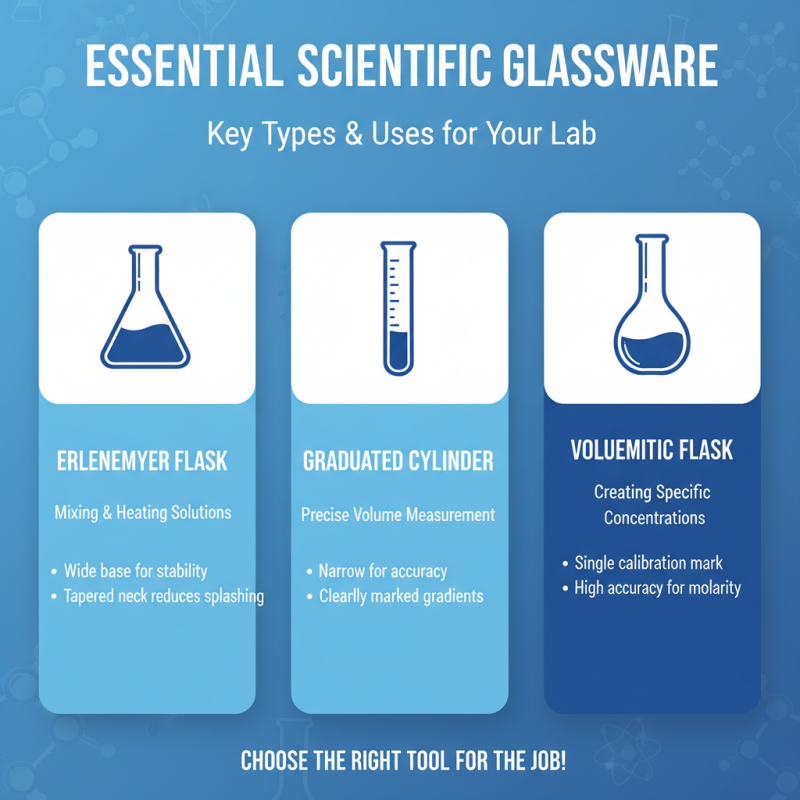
When selecting scientific glassware for your lab, understanding essential types is crucial. Erlenmeyer flasks, graduated cylinders, and volumetric flasks are among the most commonly used. Each serves distinct functions. For example, Erlenmeyer flasks are excellent for mixing and heating solutions because of their wide base. Graduated cylinders offer precise volume measurements. In contrast, volumetric flasks are best for creating specific concentrations.
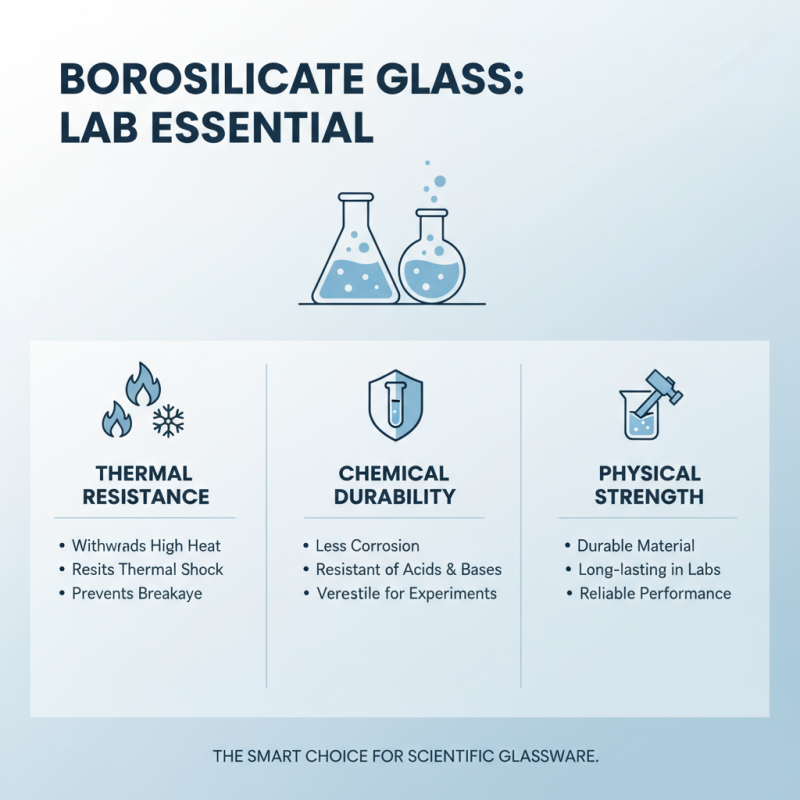
Additionally, borosilicate glass is often the preferred material. It withstands high temperatures and sudden temperature changes. According to a 2022 industry report, around 75% of lab personnel opt for borosilicate due to its durability. However, it is essential to be cautious. Not all glassware is created equal. Thin glass can break easily, posing safety hazards.
Tips: Always check for quality certifications. Don’t overlook how glass thickness impacts performance. Furthermore, label all glassware to prevent mix-ups. These small steps can lead to improved safety and efficiency in the lab. Always reflect on your choices. Sometimes, less popular options might better suit your specific lab needs.
Factors to Consider When Selecting Scientific Glassware
Selecting the right scientific glassware for your lab is crucial. Several factors influence this decision. First, consider the material. Borosilicate glass is a popular choice because of its thermal resistance. It can withstand heating and cooling without breaking. According to industry reports, over 75% of labs prefer borosilicate for its durability.
Next, size matters. Glassware comes in various sizes. Using the correct volume is essential for accurate measurements. Incorrect sizes can lead to errors in experiments. A study showed that 30% of lab errors stem from improper glassware use. This statistic highlights the importance of careful selection.
Finally, the shape of your glassware can impact your experiments. Different shapes promote different mixing techniques. A round-bottom flask allows for even heat distribution. However, it might not fit all setups. These considerations matter. Each choice has consequences. Ignoring them could lead to faulty results or wasted resources.
Comparison of Different Types of Scientific Glassware
Glassware Material Options: Borosilicate vs. Soda-Lime
When it comes to scientific glassware, material choice is critical. Borosilicate glass is popular in labs. It's known for its durability and resistance to thermal shock. This means it can withstand high temperatures without breaking. In addition, it is less prone to chemical corrosion. This makes it suitable for a variety of experiments.
On the other hand, soda-lime glass is often more affordable. However, it is not as heat-resistant. It can crack under sudden temperature changes. For labs that perform more routine tasks, soda-lime may suffice. Still, potential risks, like breakage, should be considered.
Choosing the right material also depends on the specific application. Think about what chemicals will be used. This can impact the longevity of the glassware. Reflect on your lab's needs. Is durability a priority? Or is cost a bigger factor? Balancing these considerations can be challenging, but it's essential for effective lab work.
Maintaining and Cleaning Your Scientific Glassware Properly
Cleaning and maintaining scientific glassware is crucial for accurate results in the lab. Proper care can prolong the life of glassware and ensure your experiments are not compromised.
Start cleaning immediately after use. Residues can harden and become difficult to remove over time.
Tips: Rinse glassware with distilled water right after use. This prevents any leftover materials from drying. Use a soft brush to clean hard-to-reach areas.
Scratches and chips can harbor contaminants. Treating glassware gently can avoid these issues.
Don't forget about drying. Air drying is fine, but it may leave streaks. Instead, use lint-free cloths to wipe down glassware. However, be careful not to apply too much pressure. You might accidentally break delicate pieces.
Inspect each item regularly for cracks or cloudiness. Discard any glassware that shows these signs. It’s better to be safe than sorry!
Choosing Glassware Based on Specific Experiment Requirements
Choosing the right glassware is crucial for any lab experiment. Different experiments have unique requirements. Understanding these needs helps in making the best choice.
For chemical reactions, look for borosilicate glass. It endures high temperatures and thermal shocks. Do not overlook the size of the glassware. A beaker that's too small may overflow. A flask that's too large might waste reagents. Precision is key.
When working with sensitive substances, use glassware that minimizes contamination. Choose glass with smooth surfaces. Avoid scratches that can harbor unwanted particles.
**Tips:** Always verify that your glassware is compatible with the chemicals you are using. Check for any potential reactivity. If you are uncertain, consult reliable resources. Think about how easy it is to clean. Dirty glassware can skew results.
Careful selection of glassware makes a significant difference. Experimenting without proper tools can lead to flawed results. The little details often matter the most.
How to Choose the Best Scientific Glassware for Your Lab? - Choosing Glassware Based on Specific Experiment Requirements
| Type of Glassware |
Common Uses |
Material Type |
Heat Resistance (°C) |
Sustainability |
| Beakers |
Mixing, heating, and cooling liquids |
Borosilicate Glass |
~500 |
Recyclable |
| Flasks |
Preparing solutions, culturing |
Borosilicate Glass |
~500 |
Recyclable |
| Pipettes |
Transferring small volumes of liquids |
Glass or Plastic |
N/A |
Plastic may not be recyclable |
| Test Tubes |
Holding and heating samples |
Borosilicate Glass |
~500 |
Recyclable |
| Petri Dishes |
Culturing microorganisms |
Glass or Plastic |
N/A |
Plastic may not be recyclable |