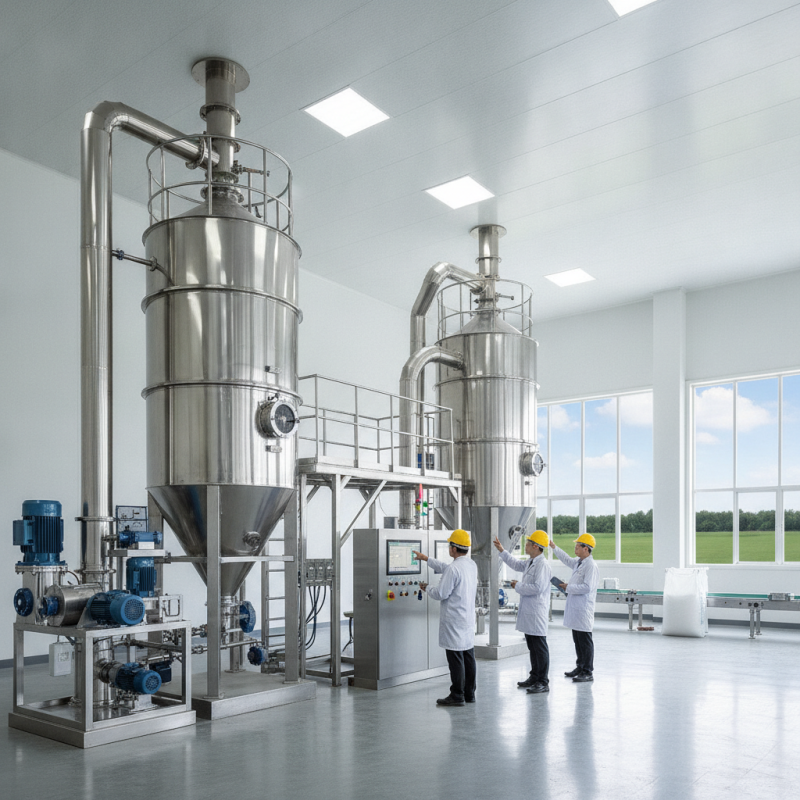
How to Choose the Best Pressure Spray Dryer for Your Needs?
Selecting the right Pressure Spray Dryer can significantly impact your production efficiency and product quality. With various models available, it’s crucial to evaluate options based on your specific needs.
When assessing a Pressure Spray Dryer, consider factors like drying capacity, energy efficiency, and ease of use. The right model should meet your production volume while minimizing energy costs. Additionally, think about the materials you need to process. Compatibility with different substances can be a game-changer.
Don't overlook the importance of reliable suppliers. Established brands often provide better support and warranties. However, newer companies may offer innovative features worth considering. Always weigh their experience against your unique requirements. A thoughtful approach here can lead to better outcomes in your drying processes.
Understanding Pressure Spray Drying Technology
Pressure spray drying technology is a key process used in various industries. It transforms liquid solutions into dry powders. The technology employs high-temperature air to evaporate moisture quickly while ensuring the product maintains its essential properties. This method is efficient for producing fine particles.
When selecting a pressure spray dryer, understanding the technology is crucial. The design affects drying rates and product quality. Some systems utilize atomization techniques to enhance dispersion. These techniques influence droplet size and drying uniformity. However, not all designs are perfect. Some may lead to inconsistent results or energy inefficiency.
Evaluating the system's performance is essential. Look for metrics such as particle size distribution and moisture content. Additionally, consider the material being dried. Different substances may respond differently to spray drying. Sometimes, adjustments are necessary to optimize results. This complexity adds a layer of challenge but also an opportunity for innovation in applications.
Key Factors to Consider When Choosing a Spray Dryer
When selecting a pressure spray dryer, various key factors come into play. The capacity of the dryer is paramount. Assess your production needs to determine the right size. An undersized unit may lead to inefficiencies. A larger unit may result in higher operating costs. Understand your material properties too. Some products need gentle handling to avoid degradation during drying.
Temperature control is crucial as well. Different materials react uniquely to heat. Consistent temperature helps maintain product quality. Look for features that allow precise adjustments. Another important factor is the design of the drying chamber. A well-designed chamber promotes uniform drying. Poor designs can lead to clumping or uneven moisture content.
Consider your budget, but don’t compromise on quality. A low-cost option may save money now. However, it might require frequent repairs later. Researching the manufacturer’s reputation is also essential. Reliable companies often provide better after-sales support. They can guide you in case of operational challenges. Balancing these elements is not always straightforward. Take time to evaluate your options carefully to avoid future issues.
Comparing Different Types of Pressure Spray Dryers
When comparing different types of pressure spray dryers, it's essential to consider their unique features and applications. Pressure spray drying is a complex process used across various industries. The choice depends on material properties, output requirements, and production scale. According to a recent industry report, rotary atomizers are often favored for their efficient droplet formation and consistent particle size, making them ideal for food and pharmaceutical products.
Another option is nozzle atomizers, which excel in high-viscosity applications. They are effective for producing finer particles and are often more cost-efficient. Researchers indicate that nozzle atomizers can achieve a mean particle size of 30 to 50 micrometers, suitable for specialty chemicals. However, their maintenance can be a drawback, as they require regular cleaning to prevent clogging.
While selecting the right type, consider the thermal sensitivity of your product. Some materials may degrade under high temperatures, necessitating lower drying temperatures and longer dwell times. It's vital to understand these parameters before investing in equipment. Additionally, industry experts recommend evaluating the dryer’s efficiency and energy consumption as well. Inconsistent performance can lead to costly waste through product loss or energy inefficiency. Balancing these factors is crucial for optimizing your spray drying process.
Comparison of Different Types of Pressure Spray Dryers
This chart compares the efficiency, cost, and production capacity of different types of pressure spray dryers including industrial, laboratory, and pilot-scale models.
Evaluating Manufacturer Reputation and Support Services
When selecting a pressure spray dryer, manufacturer reputation plays a crucial role. A well-established manufacturer typically has a proven track record. They often provide support services that can be vital for maintenance and troubleshooting. Look for companies with positive reviews and case studies. A reputable manufacturer likely has experience that will benefit your operation.
Tip: Research customer support availability. Quick response times can save you days of downtime. Evaluate if they offer training for your staff. This can boost efficiency during the operation of the dryer.
Another important aspect is the manufacturer’s expertise in your specific industry. Different sectors may require different features in a spray dryer. Ensure they understand your needs and can recommend tailored solutions. This can prevent costly mistakes and delays in production.
Tip: Reach out to past customers. First-hand experiences can provide insights into the manufacturer's reliability. Consider how they handle issues when they arise. This reflection can guide you towards a more informed decision.
Assessing Cost-Effectiveness and Energy Efficiency
When selecting a pressure spray dryer, energy efficiency is key. An efficient dryer minimizes operating costs over time. Look for models with advanced heat recovery systems. These systems recycle energy, reducing overall consumption. This can lead to significant long-term savings.
Assessing cost-effectiveness requires careful consideration. Analyze initial costs against expected operational expenses. Sometimes, cheaper models may incur higher energy bills. Think about the total cost of ownership. Ensure maintenance costs are factored in. A low purchase price can be misleading.
**Tips:** Focus on your production capacity. A model too small may force you to run it more, increasing energy use. Evaluate the drying characteristics for your specific materials. Some dryers perform better with certain products, affecting both efficiency and quality. Engaging with industry experts can provide insights into energy-efficient options tailored to your needs.
How to Choose the Best Pressure Spray Dryer for Your Needs?
| Dimension | Value |
| Initial Cost | $50,000 |
| Operating Cost Per Hour | $25 |
| Energy Efficiency | 85% |
| Throughput Capacity | 500 kg/h |
| Maintenance Frequency | Every 6 months |
| Noise Level | 80 dB |
| Expected Lifespan | 15 years |
| Material Compatibility | Organic and Inorganic |