

BlogsBlogs

Explore cutting-edge articles on laboratory products, industry innovations, and research trends with Lab Consulting.

Explore cutting-edge articles on laboratory products, industry innovations, and research trends with Lab Consulting.

What Are China Top 10 Police Drone Detector Suppliers?

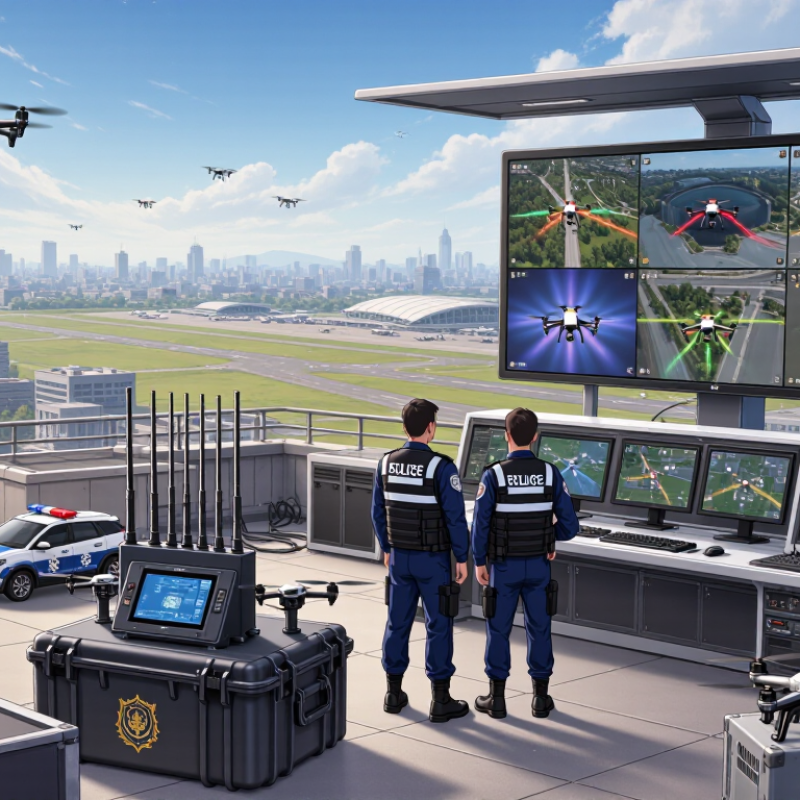
China’s police technology sector is expanding alongside the wider unmanned aircraft market. Drone Industry Insights reported continued global growth in commercial drone operations, public safety applications, and supporting infrastructure through 2024. This development increases demand for reliable situational awareness near airports, prisons, stadiums, and emergency response zones. A Police Drone Detector can help authorized teams identify nearby drone signals, estimate direction, and support safer operational decisions. It should not be confused with systems designed to interfere with communications.

Industry research also shows strong momentum in counter-unmanned aircraft solutions. MarketsandMarkets has identified detection, tracking, and command integration as important segments within the counter-UAS market. Grand View Research similarly describes rising investment in drone detection across critical infrastructure and public safety. These reports provide useful market context, but supplier claims still require careful verification. Evidence matters.

This guide examines China’s top 10 Police Drone Detector suppliers through practical criteria, including detection range, spectrum coverage, false-alarm control, portability, software integration, testing records, and after-sales support. Product brochures can look impressive under perfect conditions. Real environments are harder. Buildings, trees, crowded radio frequencies, weather, and autonomous flight modes may affect performance. Procurement teams should request independent test results, technical datasheets, training details, warranty terms, and documented compliance with applicable regulations. No single detector fits every mission. The ranking therefore considers measurable capability, field experience, engineering transparency, and supplier reliability rather than marketing language alone. Some information may change as manufacturers update hardware and software. That limitation deserves attention.
What Are China Top 10 Police Drone Detector Suppliers?

Definition and Role of Police Drone Detection Systems

A police drone detection system identifies, classifies, and locates unmanned aircraft near public facilities, roads, or planned events. It may combine radio-frequency monitoring, radar, acoustic sensors, and optical cameras. Each method sees a different detail. Radio signals may reveal a control link, while radar can track movement in poor visibility. Cameras help confirm shape and direction, but they can struggle at night or in bad weather.

The system’s role is awareness, not automatic judgment. Officers can receive an alert, review the location, and assess whether the flight affects public safety or privacy. FAA registration statistics have exceeded 785,000 civil drones in recent reporting, showing why local agencies need clear detection procedures. The FAA Aerospace Forecast also expects continued growth in commercial drone activity. This growth increases demand for reliable monitoring near sensitive areas.

A useful platform should record time, altitude, confidence level, and sensor source. It should also limit unnecessary personal data. No sensor is perfect. Buildings create blind spots, and crowded radio environments can produce false alerts. NIST guidance on trustworthy systems supports testing, access control, audit records, and human review. Supplier comparisons should therefore examine detection range, weather performance, integration, maintenance, and evidence handling. A high detection rate alone is not enough. Practical field trials often reveal uncomfortable gaps.

Criteria for Ranking China’s Top Police Drone Detector Suppliers

What Are China Top 10 Police Drone Detector Suppliers?

Ranking China’s top police drone detector suppliers requires more than comparing advertised detection distances. A credible assessment should examine radio-frequency coverage, radar performance, optical confirmation, and software integration. MarketsandMarkets’ 2024 Counter-UAS report forecasts double-digit annual growth for this sector, showing rising demand for dependable detection systems. However, market growth does not prove product quality.

Independent testing matters.

The ranking should measure detection accuracy in crowded urban areas, near glass buildings, and during heavy rain. Suppliers should disclose false-alarm rates, response time, battery endurance, and operating temperature. A 2023 U.S. Government Accountability Office review identified testing limitations and interoperability challenges in counter-drone programs. These concerns apply to public-safety buyers everywhere. Therefore, verified field trials should receive more weight than brochure specifications.

Supplier reliability also depends on cybersecurity, data protection, training, maintenance, and transparent after-sales support. Products should support lawful identification and situational awareness without creating unnecessary interference. Relevant certifications, documented quality controls, and export compliance deserve clear scoring. Price remains important, but a low purchase cost can hide expensive software updates or replacement parts. That is easy to miss. A fair Top 10 list should publish its scoring method, separate verified evidence from supplier claims, and acknowledge incomplete data. Even experienced evaluators can overvalue detection range while underestimating installation, operator training, and long-term service performance.

Criteria for Ranking China’s Top Police Drone Detector Suppliers

This chart presents a supplier-evaluation framework rather than company-specific results. The proposed weights prioritize detection performance, target identification, system integration, regulatory compliance, operational reliability, and after-sales support. The weights total 100% and can be used to compare suppliers consistently through technical testing and procurement review.

Overview of China’s Top 10 Police Drone Detector Suppliers

China’s police drone detector market includes manufacturers with different technical strengths and deployment experience. A practical overview of the top ten suppliers should examine more than production volume. It should compare detection range, spectrum coverage, false-alarm control, response time, and system stability. Some suppliers focus on compact handheld detectors. Others build vehicle-mounted or fixed-site platforms for airports, public events, and secure facilities.

Field experience matters. Officers may need a clear alert beside crowded roads, concrete buildings, or heavy radio traffic. A reliable unit should show direction, approximate distance, signal type, and battery status on a readable screen. Integrated platforms may add radar, radio-frequency analysis, optical confirmation, or controlled tracking functions. These systems require trained operators and documented authorization. Supplier evaluations should also review factory quality control, software updates, repair support, and local technical training. Independent testing is valuable because advertised ranges can change in urban conditions.

No shortlist is perfect. Product specifications may vary between production batches, and laboratory results rarely match every field environment. Buyers should request trial records, calibration procedures, cybersecurity documents, and evidence of compliance with applicable regulations. Clear data handling policies are equally important when equipment operates near the public. The strongest suppliers usually provide transparent limitations instead of promising universal detection. That detail deserves attention. A careful procurement team should compare total ownership costs, not only the initial quotation, while checking whether the equipment can integrate with existing command systems.

Comparison of Technologies, Detection Ranges, and Key Features

China’s top ten police drone detector suppliers typically use three technology paths: radio-frequency sensing, passive direction finding, and radar-assisted detection. Radio-frequency systems identify control links and common communication patterns. Their practical range often reaches 1–5 kilometers in dense cities. Open terrain may extend detection to 8–15 kilometers. Obstacles, interference, and antenna height change results quickly.

Passive direction-finding equipment estimates signal direction without transmitting. It can support multi-sensor positioning and reduce false alerts. Radar-based systems detect movement, even when radio signals are weak or unavailable. Typical compact radar ranges fall between 3 and 8 kilometers. Optical or thermal cameras then verify the target visually. This layered design improves confidence, but it costs more and requires careful calibration.

Ranges are not promises. A supplier should provide test conditions, including altitude, weather, antenna position, and background interference. In procurement reviews, I would compare detection latency, target classification, recording quality, and integration with authorized command platforms. Battery life matters for mobile patrol teams. Fixed systems need stable cooling and reliable network links. Smaller suppliers may offer faster customization, while larger engineering teams often provide stronger maintenance coverage. The “top ten” label is not a permanent ranking. It should be checked against recent field tests, service records, and transparent technical documents. Some specifications still look overly optimistic. That deserves closer review.

How to Select the Right Police Drone Detector Supplier in China

What Are China Top 10 Police Drone Detector Suppliers?

How to Select the Right Police Drone Detector Supplier in China

China’s police drone detector market includes systems using radio-frequency sensing, radar, optical cameras, and acoustic analysis. Choose a supplier with tested integration, not attractive specifications alone. MarketsandMarkets estimated the global counter-UAS market could grow from about USD 1.6 billion in 2023 to USD 3.8 billion by 2028. This growth increases supplier choices, but also increases evaluation risks.

Ask for independent test reports, detection accuracy data, false-alarm rates, and performance records in rain, dense buildings, and crowded streets. A practical trial should measure alert time, tracking stability, and operator workload. Request factory quality records, software update policies, warranty terms, and spare-parts availability. Verify whether the supplier can provide documented electromagnetic compatibility testing and cybersecurity controls.

Field experience matters.

A capable supplier should explain detection limits clearly. Claimed ranges may change sharply near concrete structures, trees, or other radio equipment. I would compare at least three suppliers using the same test route and weather conditions. That process is slower, but more reliable. Grand View Research has reported strong growth in anti-drone technology, yet market forecasts cannot replace local validation. A polished demonstration can still hide weak maintenance support. Speak with technical engineers, inspect production procedures, and require acceptance criteria before signing a procurement agreement.

Newsletter

Subscribe to our newsletter and receive the latest news and exclusive insights every month. No spam.