BlogsBlogs

Explore cutting-edge articles on laboratory products, industry innovations, and research trends with Lab Consulting.

Explore cutting-edge articles on laboratory products, industry innovations, and research trends with Lab Consulting.

China Best Industrial Mixing Machine Manufacturer?

Choosing China’s best Industrial Mixing Machine manufacturer is not a contest decided by price or polished brochures. The right partner must understand the material, batch size, viscosity, and production target. A powder blender and a high-viscosity planetary mixer solve different problems. Details matter: impeller geometry, shaft seals, vessel finish, and cleaning access can shape daily performance. Suzanne M. Kresta, co-editor of Handbook of Industrial Mixing, describes mixing as “the process of reducing nonuniformities in order to achieve a desired result.” That principle offers a useful test: ask manufacturers how their equipment will deliver the required result for your specific process.

Look beyond product photos. Request drawings, material specifications, operating limits, and evidence from comparable applications. If possible, review a test plan using your actual ingredients; a sample run can expose dead zones, foaming, or slow discharge. Ask how the supplier handles commissioning, spare parts, and operator training. Good answers should be clear, documented, and consistent. Not every factory will share the same level of detail. That matters. I would not trust a broad capacity claim without understanding the test conditions behind it. Even a capable machine may need adjustment after installation. This guide examines practical ways to compare Chinese manufacturers, assess technical fit, and spot unanswered questions before purchase. The goal is not to name a winner by slogan. It is to identify a dependable supplier for your process. Start with the material, then verify the machine.
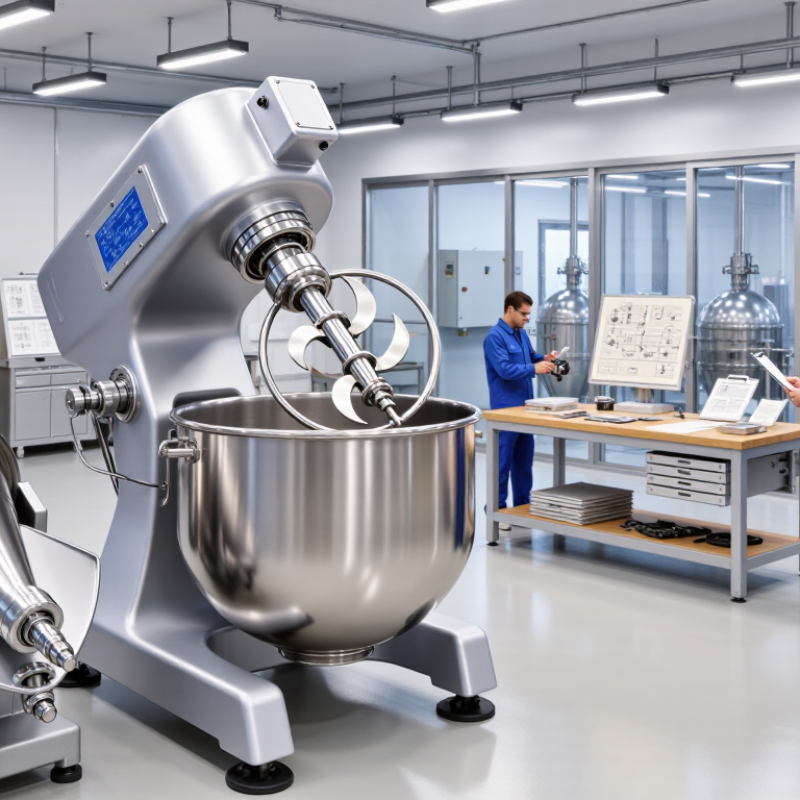
China Best Industrial Mixing Machine Manufacturer?

What Is an Industrial Mixing Machine?

An industrial mixing machine combines materials to create a consistent blend, suspension, or paste. It may use rotating blades, paddles, ribbons, or high-speed dispersers. The right design depends on the material’s viscosity, particle size, and sensitivity to heat. A powder blend behaves differently from a thick liquid. One machine cannot suit every process.

Inside a typical mixer, a motor drives an agitator within a vessel. The moving parts circulate ingredients and reduce uneven pockets. Operators may adjust speed, mixing time, and temperature to meet a target. Small details matter. A few unmixed clumps can affect product quality. For example, powders may need controlled feeding to limit dust and improve distribution. Liquid batches may require baffles to prevent a deep vortex. These choices should be checked against real production conditions, not just a machine’s rated capacity. Even a well-designed mixer may need trial runs; that part is easy to underestimate. Cleaning access, batch size, and maintenance also deserve attention. A practical assessment starts with the actual recipe and workflow.

Which Types of Industrial Mixers Are Made in China?

China-made industrial mixers include ribbon blenders, paddle mixers, planetary mixers, high-shear units, and double-cone blenders. Ribbon models use long horizontal troughs and rotating blades to blend dry powders or granules. Paddle designs handle gentle blending, while planetary machines scrape and mix thick pastes from several directions. High-shear mixers create finer dispersions in liquids, using a rotor and stator. Inline versions process product as it flows through a pipe.

The range reflects varied production needs. A food plant may blend flour in a ribbon machine, while a coatings workshop may use a high-shear mixer for pigment dispersion. For fragile ingredients, gentler action can help protect texture. Small pilot batches need a different setup. Not every mixer suits every material.

Grand View Research’s 2024 Industrial Mixer Market report estimated the global market at about USD 2.1 billion in 2023, with a projected 5.5% compound annual growth rate from 2024 to 2030. This market data describes demand, not the quality of any individual machine. Buyers should compare working volume, viscosity range, contact materials, cleaning access, and test-batch results. A catalog alone cannot show whether powder will cling to the vessel wall or form lumps; that part deserves careful testing.

How Do Chinese Industrial Mixer Manufacturers Serve Different Industries?

Chinese industrial mixer manufacturers serve different industries by matching equipment to materials, batch sizes, and cleaning needs. Food processors may need stainless-steel contact parts, gentle blending, and easy washdown. A ribbon blender handles dry powders; a paddle mixer suits heavier, uneven ingredients. Small details matter, such as whether sticky product clings to the vessel wall.

The FAO’s 2023 SDG Progress Report estimates that 13.2% of food was lost between harvest and retail in 2021. Mixing alone cannot prevent that loss. Still, reliable blending and discharge can help reduce avoidable batch waste. Pharmaceutical plants usually require controlled mixing, documented process settings, and validated cleaning. Chemical producers may prioritize corrosion-resistant materials and temperature control. Construction-material makers often need high torque for dense powders and pastes. Different jobs.

A capable supplier should ask about viscosity, abrasiveness, moisture, and the intended cleaning method before proposing a machine. It should also explain how blade geometry and speed affect the process. One caution: a polished specification sheet cannot prove performance with your actual material. Buyers should request a trial using representative samples, then inspect blend uniformity, residue, and discharge time. Even a well-designed mixer can disappoint when the test recipe differs from production.

What Criteria Help Identify a Reliable Chinese Mixer Manufacturer?

A reliable Chinese mixer manufacturer should prove process fit, not merely show a polished catalogue. Ask for working-volume limits, viscosity range, batch time, and wetted-part material records. Request a factory acceptance test using a representative batch or a documented test medium. Watch the agitator start, listen for abnormal vibration, and inspect welds and seals. Small details matter.

The ISO Survey 2023 recorded 1,265,216 valid ISO 9001 certificates worldwide. That scale makes certification a useful screening point, not proof of mixer performance. Check that the certificate is current, covers the actual manufacturing site, and comes from an accredited certification body. Then review inspection records, material traceability, calibration logs, and written acceptance criteria. A certificate alone cannot tell you whether a mixer handles your product consistently.

Ask for references from comparable applications and confirm spare-parts lead times in writing. A dependable supplier should explain impeller options, cleaning access, motor sizing, and what happens if a test fails. A video call can help, but it cannot replace a site audit for a high-value order. Some buyers overfocus on price; I would also compare weld finish, documentation, and service response. These checks take time. That is not always convenient, and no checklist removes every risk.

China Best Industrial Mixing Machine Manufacturer? — What Criteria Help Identify a Reliable Chinese Mixer Manufacturer?

Evaluation Criterion What to Check Reliable Evidence Potential Warning Sign
Process and application understanding Whether the supplier asks about material properties, batch size, viscosity, solids content, temperature, mixing purpose, and required production rate. A written process review that links the proposed mixer type, impeller or mixing element, vessel geometry, and operating conditions to the application. A recommendation based only on a requested motor power or vessel volume, without discussing the material or mixing objective.
Mixing performance validation How the supplier will evaluate blend uniformity, dispersion, dissolution, emulsification, or other specified process outcomes. Agreed acceptance criteria and a documented test plan, such as a representative trial or a defined sampling and testing method. Guaranteed performance claims without defined test conditions, measurement methods, or acceptance criteria.
Engineering and customization capability Whether drawings, equipment interfaces, operating conditions, and required options are reviewed before production. Application-specific drawings, a clearly defined scope of supply, and documented approval of key specifications before manufacture. Unclear responsibility for controls, installation interfaces, utilities, or customer-specified options.
Materials and fabrication quality Material grade, wetted-part requirements, surface finish where relevant, weld quality, and component traceability. Material declarations or inspection records appropriate to the project, plus agreed fabrication and inspection documentation. Material descriptions that are vague, inconsistent, or unsupported by records when traceability is required.
Quality management Whether the manufacturer uses documented procedures for design review, purchasing, production, inspection, and corrective action. A current quality-management certificate that can be checked with its issuer, together with records relevant to the equipment being supplied. Use of a certificate logo or claim that cannot be independently verified, or a certificate whose scope does not fit the work.
Safety and regulatory requirements Applicable requirements based on the destination market and operating environment, including electrical safety and any hazardous-area or hygienic-design needs. A written compliance plan identifying applicable requirements and the documents, assessments, or declarations supplied for the specific machine. Broad claims of universal compliance without identifying the applicable market, machine configuration, or supporting documentation.
Testing and inspection What is inspected before shipment, including mechanical operation, controls, safety functions, and any agreed process-related checks. An agreed inspection and test plan, recorded results, and a factory acceptance test where appropriate to the project. Testing is promised verbally but has no defined scope, records, or opportunity for review.
After-sales service and spare parts Availability of manuals, troubleshooting support, spare-parts identification, and service arrangements for the destination country. A parts list, operating and maintenance documentation, clear support contacts, and stated service and warranty terms. Unclear response arrangements, missing documentation, or no practical way to identify replacement parts.
Delivery and project communication Whether milestones, customer approvals, packaging, shipping responsibilities, and required delivery documents are defined. A written schedule and responsibility matrix, with named project contacts and agreed document deliverables. Delivery promises that omit approval steps, shipping scope, or responsibilities for customs and installation.
References and business verification Whether the supplier can provide relevant project references and verifiable business and manufacturing information. References for comparable applications, subject to customer consent, and business details checked through appropriate official or independent channels. References that cannot be verified or inconsistencies between the contracting party, payment details, and manufacturing information.

How Should Buyers Compare Industrial Mixing Machine Suppliers?

When comparing industrial mixing machine suppliers, start with your actual process, not the catalogue’s maximum capacity. Give each supplier the same details: batch volume, viscosity range, solids content, target mixing time, and cleaning method. Ask for a test using a representative material. A clear test record should include blade type, speed, temperature, and the time needed to reach a defined result. Otherwise, performance claims are hard to compare.

Check energy use per batch or per tonne, not motor power alone.

The U.S. Department of Energy’s 2014 report, Improving Motor and Drive System Performance, estimates that motor-driven systems use about 68% of U.S. manufacturing electricity. That makes operating efficiency worth checking, though it does not predict one mixer’s consumption. Request measured figures under stated conditions.

Inspect wetted materials, seals, access points, and cleaning steps; a hard-to-clean shaft area can slow a real production shift. Ask who handles commissioning, spare parts, and troubleshooting, and request response times in writing.

A polished specification sheet can still leave gaps. I would verify it twice. Compare references from plants with similar products and batch sizes, then assess the supplier’s technical answers as carefully as its price.

Newsletter

Subscribe to our newsletter and receive the latest news and exclusive insights every month. No spam.