



10 Best Medical Lab Equipment for Optimal Testing and Results?
In today's fast-paced healthcare environment, choosing the right medical lab equipment is crucial. Quality equipment directly impacts testing outcomes. Trustworthy lab devices help ensure accurate results and patient safety.
Many labs struggle with outdated or unreliable tools. This can lead to errors in diagnosis and treatment. Investing in modern medical lab equipment can mitigate these risks. Selecting the best tools requires careful consideration and evaluation of options.
In this guide, we will explore the ten best medical lab equipment choices. These selections aim to enhance testing accuracy and improve overall lab performance. Each piece of equipment plays a vital role in providing reliable results. You might find unexpected solutions and tools that you hadn't considered before. Optimal lab performance starts with the right equipment.
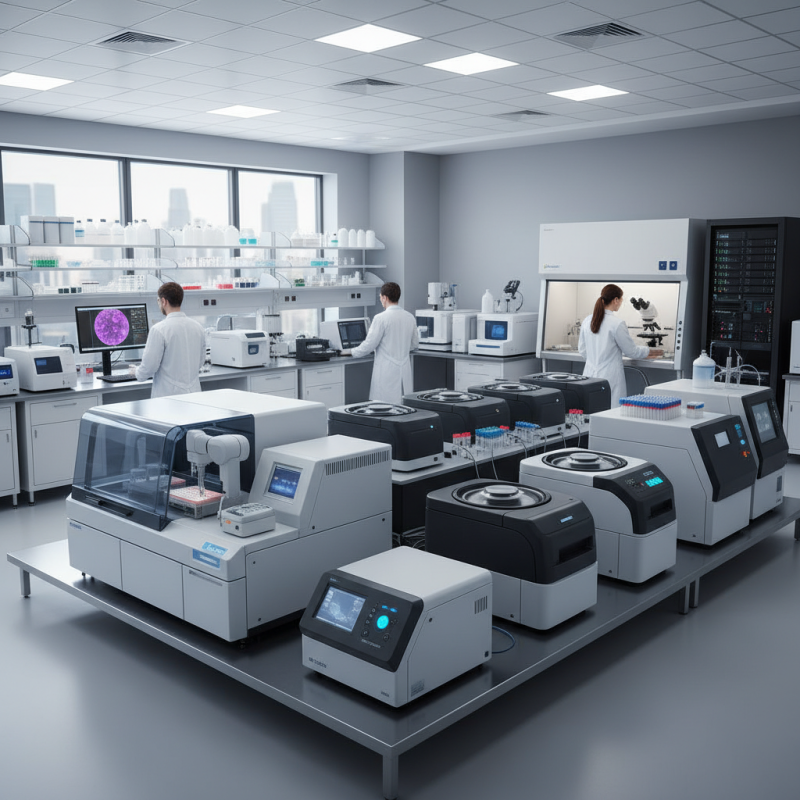
Top Categories of Medical Lab Equipment for Testing
In any medical laboratory, having the right equipment is crucial for accurate testing. One of the top categories includes diagnostic instruments. These devices help in identifying diseases by analyzing blood, urine, and other samples. For instance, microscopes allow technicians to see cells up close. This reveals abnormalities that could indicate serious health issues.
Another essential category is analytical equipment. This includes machines that measure specific components in samples. They often provide quantitative results that are vital for treatment decisions. However, these tools require regular calibration and maintenance. Incorrect settings can lead to misleading results.
Moreover, safety equipment is just as important. Personal protective gear and biohazard disposal tools keep laboratory staff safe. Neglecting safety protocols can lead to accidents. Labs must prioritize equipment that enhances both accuracy and security. This reflection on different categories highlights the intricate balance needed in medical testing environments.
10 Best Medical Lab Equipment for Optimal Testing and Results
| Equipment Type | Description | Key Features | Common Uses |
|---|---|---|---|
| Microscope | An optical instrument for viewing small objects. | High magnification, adjustable lenses, LED illumination. | Cell analysis, microbiology, histology. |
| Centrifuge | Equipment to separate fluids of different densities. | Variable speed, temperature control, multiple rotors. | Blood separation, PCR preparation, cell culture. |
| incubator | Provides controlled environmental conditions for cultures. | Temperature control, humidity control, CO2 control. | Bacterial growth, tissue culture, fermentation. |
| Spectrophotometer | Measures the amount of light that a sample absorbs. | Wide wavelength range, digital display, easy calibration. | Concentration determination, enzyme kinetics, colorimetric assays. |
| Autoclave | Used for sterilizing instruments and laboratory materials. | High pressure, steam sterilization, programmable cycles. | Sterilization of tools, media preparation, glassware. |
| Pipette | A laboratory tool used to transport a measured volume of liquid. | Adjustable volume, precision tips, ergonomic design. | Liquid handling, sample preparation, dilution. |
| Refrigerator | Maintains low temperatures for storing samples. | Temperature stability, digital monitoring, energy-efficient. | Storage of reagents, biological samples, vaccines. |
| Blood Gas Analyzer | Analyzes blood samples for respiratory and metabolic status. | Rapid results, multiple analytes, user-friendly interface. | Critical care, arterial blood gas analysis, metabolic assessment. |
| Microplate Reader | Measures and analyzes samples in microplates. | Versatile read modes, high throughput, automated. | ELISAs, protein assays, nucleic acid quantification. |
| PCR Machine | Amplifies DNA sequences for analysis. | Programmable cycles, high precision, multiple sample capacity. | Genetic analysis, cloning, forensic studies. |

Related Posts
-
Why Are Laboratory Supplies Essential for Research Success?
-
What is a Comprehensive Lab Equipment List for Scientific Research?
-

Why Are Laboratory Supplies Essential for Scientific Research?
-
How to Choose the Best Scientific Glassware for Your Lab?
-
Top Tips for Shopping at Eppendorf Shop Online?
-
2026 Best Scientific Glassware for Effective Laboratory Experiments?
Newsletter
Subscribe to our newsletter and receive the latest news and exclusive insights every month. No spam.

LabConsulting GmbH and LC LabService GmbH are Austrian companies which cooperate with over 600 manufacturers and offers a selection of more than 180,000 products and various laboratory product and service solutions for our Labcustomers.
Die LabConsulting GmbH und die LC LabService GmbH sind österreichische Unternehmen, die mit über 600 global verteilten Herstellern zusammenarbeiten und mit einer Auswahl von mehr als 180.000 Produkten und verschiedenen Laborprodukt- und Servicelösungen unseren Parnern im Labor anbieten.
INSTOCK CATALOG


Our services
Our services

