



What Are the 2026 Top Passenger Elevator Types?
In 2026, the best Passenger Elevator will not be defined by speed alone. Building height, traffic patterns, energy targets, and maintenance access will shape each decision. A compact office tower may need machine-room-less traction equipment. A hospital may require smoother starts, wider cars, and dependable emergency operation. A low-rise residential project may still find hydraulic systems practical, despite their higher energy demands.
Safety remains the foundation. During his famous 1854 elevator demonstration, industry pioneer Elisha Otis reportedly declared, “All safe, gentlemen! All safe!” That short statement still reflects the central responsibility of every Passenger Elevator design. Modern systems add overspeed governors, door sensors, emergency communication, regenerative drives, and digital monitoring. However, technology cannot replace careful installation or trained technicians.
This guide examines the leading Passenger Elevator types expected in 2026. It compares traction, hydraulic, vacuum, destination-control, and smart connected systems. It also considers ride comfort, operating cost, carbon performance, floor capacity, and service reliability. Some emerging options sound impressive but remain expensive or difficult to maintain. That matters. A system that looks advanced in a showroom may perform poorly in a dusty machine room. Regional codes, building conditions, and supplier support can change the final recommendation. There is no universal winner. The most suitable elevator is usually the one that fits its building honestly, even when that choice appears less futuristic.
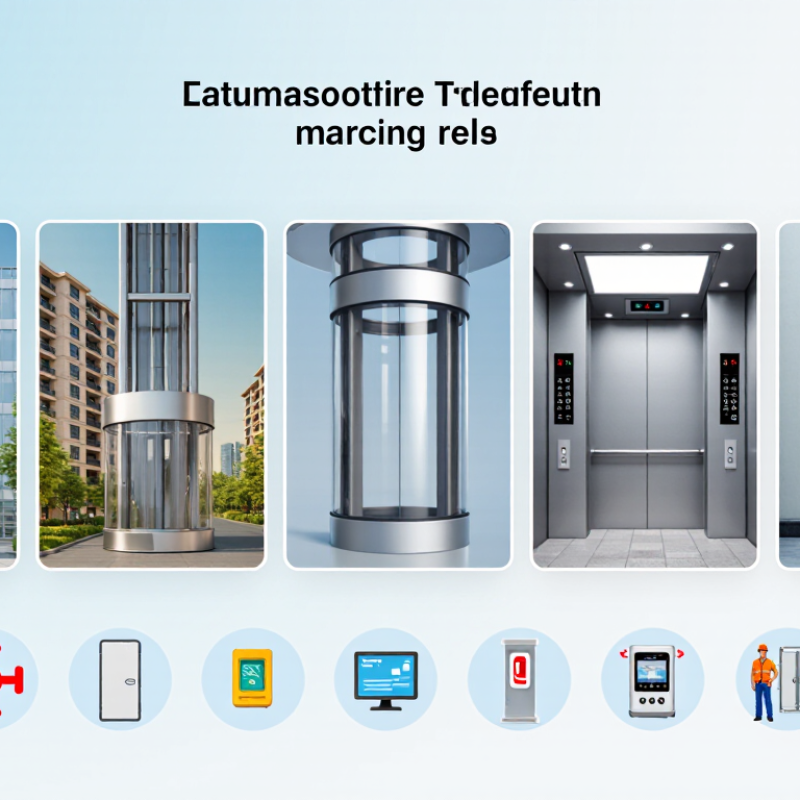
Passenger Elevator Basics and the Main Types in 2026
Passenger elevators move people safely between floors, but their designs differ greatly. In 2026, the main types include traction, hydraulic, machine-room-less, and vacuum elevators. Traction elevators use ropes, sheaves, and counterweights. They suit medium- and high-rise buildings because they offer faster travel and efficient operation. Hydraulic elevators use a piston and fluid pressure. They are practical for low-rise buildings, although their speed and energy performance can be limited.
Machine-room-less elevators place the drive equipment inside the hoistway. This can save valuable roof space in apartments, offices, and hotels. However, maintenance access needs careful planning. Vacuum elevators use air pressure to move a cabin through a clear tube. They may fit small buildings, but capacity and weather conditions require close review. No type is perfect. Building height, traffic flow, shaft size, energy targets, and local safety requirements should guide the decision. A qualified lift engineer should verify the final design.
Tips: Watch the doors during a test ride. They should open smoothly and close without hesitation. Ask about emergency communication, backup lighting, inspection access, and maintenance intervals. Check the rated load against real use, not just the average number of passengers. A crowded morning can expose a weak choice quickly. Also, reflect on future needs; a building’s traffic pattern may change sooner than expected.
| Passenger Elevator Type | Typical Building Applications | Drive and Equipment Configuration | Typical Speed Range | Typical Rated Capacity | Main Advantages | Important Considerations |
|---|---|---|---|---|---|---|
| Geared Traction Elevator Established solution | Low- to mid-rise residential buildings, offices, hotels, schools, and public buildings. | An electric motor drives a traction sheave through a gearbox. It may use a machine room above or beside the hoistway. | Approximately 0.5–2.5 m/s | Approximately 450–2,000 kg | Proven technology, flexible layout options, suitable for moderate traffic, and generally easier to maintain than some specialized systems. | The gearbox can create additional noise and energy loss. A dedicated machine room may increase construction requirements. |
| Gearless Traction Elevator High-rise standard | High-rise offices, residential towers, hotels, hospitals, and buildings with heavy or continuous passenger traffic. | A gearless motor directly turns the traction sheave. Counterweights, ropes, and regenerative or variable-frequency controls are commonly used. | Approximately 2.5–10 m/s | Approximately 1,000–3,000 kg | High travel speed, smooth ride quality, strong traffic-handling capability, and good efficiency for tall buildings. | Higher initial cost, more demanding installation, and greater requirements for traffic planning, vibration control, and maintenance. |
| Machine-Room-Less (MRL) Traction Elevator Space-efficient choice | New residential buildings, offices, retail buildings, and mid-rise projects where roof space is limited. | A compact traction machine is installed inside the hoistway, normally with a permanent-magnet motor and variable-frequency control. | Approximately 1.0–2.5 m/s | Approximately 450–1,600 kg | Eliminates a separate machine room, can reduce building height and structural work, and supports efficient modern layouts. | Hoistway access for maintenance must be carefully designed. Heat dissipation, rescue procedures, and equipment replacement space require attention. |
| Hydraulic Passenger Elevator Low-rise specialist | Low-rise buildings, small commercial properties, homes, and projects where travel speed and height are limited. | An electric pump moves hydraulic fluid to a cylinder that raises the car. The pump unit is usually located near the elevator shaft. | Approximately 0.15–1.0 m/s | Approximately 450–2,500 kg | Strong lifting capacity, simple shaft arrangement, no overhead machine room, and practical for buildings with limited floors. | Lower speed, higher energy use during upward travel, possible fluid leakage, and practical travel limits caused by cylinder and shaft design. |
| Home and Residential Platform Elevator Accessibility focused | Private homes, small residential buildings, duplexes, and accessibility upgrades with short travel distances. | May use a compact traction, hydraulic, screw-drive, or vertical platform mechanism, depending on the building and accessibility requirements. | Approximately 0.15–0.3 m/s | Approximately 250–500 kg | Small footprint, low-rise suitability, improved access between levels, and reduced construction impact compared with a full commercial system. | Limited capacity and speed. Local accessibility, fire-safety, enclosure, landing-door, and emergency-lowering rules must be verified. |
| Observation or Panoramic Passenger Elevator Experience-oriented | Hotels, shopping centers, museums, transport hubs, tourist attractions, and landmark buildings. | Usually based on traction technology, with glass panels or transparent sections incorporated into the car or hoistway design. | Approximately 0.5–3.0 m/s | Approximately 630–2,000 kg | Enhances passenger experience, supports architectural design goals, and can improve wayfinding in public spaces. | Glass, lighting, heat gain, cleaning, privacy, glare, and structural requirements can increase design and operating costs. |
| Firefighter and Emergency-Service Elevator Safety-critical system | Taller buildings and structures where local building codes require protected elevator access for firefighting or emergency operations. | Commonly uses a traction system with protected lobbies, fire-rated construction, emergency power, water protection measures, and special controls. | Project-specific; commonly about 1.0–6.0 m/s | Often at least 630 kg; code-dependent | Supports emergency response, evacuation assistance where permitted, and reliable access to upper floors during specified emergency conditions. | It is not simply a standard passenger elevator. Fire resistance, backup power, protected access, communication, drainage, and inspection requirements are code-driven. |
| Hospital and Bed Elevator Large-car transport | Hospitals, medical centers, care facilities, and buildings transporting beds, medical equipment, staff, and visitors. | Usually a high-capacity traction elevator with wide doors, durable finishes, accurate leveling, and controls suited to priority service. | Approximately 0.5–2.5 m/s | Approximately 1,600–3,000 kg | Large cabin dimensions, smooth stopping, high load capacity, durable interiors, and support for stretcher or bed movement. | Requires careful planning for door width, turning radius, infection-control materials, cleaning, standby power, and operational priority modes. |
| High-Speed Double-Deck or Destination-Control Elevator High-demand traffic | Very tall office towers, major mixed-use developments, and buildings with concentrated peak-period passenger demand. | Generally uses advanced traction equipment, group supervisory control, destination dispatch, and in some projects, double-deck cars serving two floors at once. | Approximately 4.0–10.0 m/s | Approximately 1,600–2,500 kg per car or deck | Reduces average waiting and travel times, improves shaft utilization, and can increase handling capacity in dense high-rise buildings. | High design and coordination complexity. Floor-to-floor alignment, zoning, passenger-flow analysis, emergency procedures, and high-speed comfort are essential. |
Newsletter
Subscribe to our newsletter and receive the latest news and exclusive insights every month. No spam.

LabConsulting GmbH and LC LabService GmbH are Austrian companies which cooperate with over 600 manufacturers and offers a selection of more than 180,000 products and various laboratory product and service solutions for our Labcustomers.
Die LabConsulting GmbH und die LC LabService GmbH sind österreichische Unternehmen, die mit über 600 global verteilten Herstellern zusammenarbeiten und mit einer Auswahl von mehr als 180.000 Produkten und verschiedenen Laborprodukt- und Servicelösungen unseren Parnern im Labor anbieten.
INSTOCK CATALOG


Our services
Our services

