

Explore cutting-edge articles on laboratory products, industry innovations, and research trends with Lab Consulting.
Mechanical Watches are entering 2026 with stronger buyer interest in craftsmanship, durability, and personal identity. Yet the market is not simple. Global buyers now compare movements, case materials, service access, and long-term value before purchasing.
The Federation of the Swiss Watch Industry reported Swiss watch exports of approximately CHF 26 billion in 2024. That figure shows the sector’s continued economic importance, despite softer demand in several major markets. Deloitte’s 2024 Swiss Watch Industry Study also highlights the lasting influence of brand heritage, product quality, and changing consumer expectations. These findings support a practical approach to watch selection. Brand prestige alone is not enough.
This guide examines the leading types expected to attract international buyers in 2026. Automatic watches may suit daily wear, especially when convenience matters. Manual-winding models offer a more direct connection with the movement. Chronographs bring timing functions, while GMT watches support frequent travelers. Dive watches emphasize legibility and water resistance. Dress watches remain thinner and quieter. Tourbillon and skeleton designs appeal to collectors seeking visible mechanical complexity.
Details matter.
A 40-millimeter case can feel large on a narrow wrist. A polished bracelet may show scratches quickly. A high water-resistance rating does not remove the need for regular pressure testing. Buyers should also verify warranty terms, movement specifications, service intervals, and local repair support. Rankings can never fit every wrist or budget. Some preferences remain subjective, and even experts can disagree. That limitation deserves attention when comparing the top Mechanical Watches for global buyers.
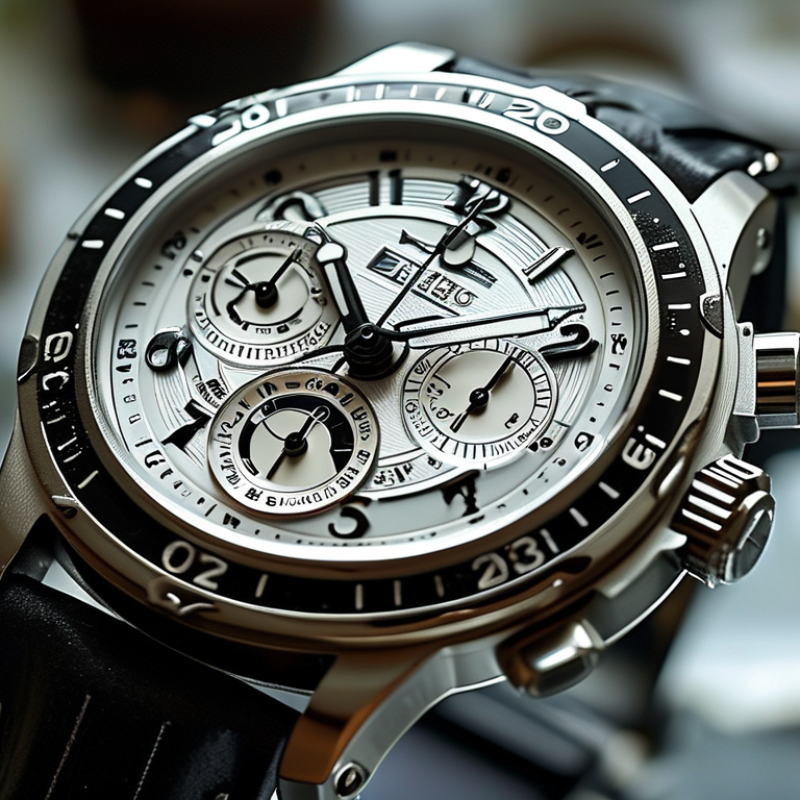
For 2026 global buyers, mechanical watch fundamentals begin with frequency.
A 3 Hz movement makes 21,600 vibrations per hour. At 4 Hz, the figure reaches 28,800. A 5 Hz movement reaches 36,000. These numbers describe balance oscillations, not guaranteed accuracy. Higher frequency can improve stability, but it may increase friction and servicing demands.
Power reserve shows how long the watch runs after full winding. A 40-hour reserve may stop after one night away. A 70- or 80-hour reserve usually survives a weekend, depending on wearing habits.
In practical testing, winding resistance should feel smooth, without grinding or sudden looseness. That small detail matters. It is easy to overlook.
Power reserve shows how long the watch runs after full winding.
A 40-hour reserve may stop after one night away. A 70- or 80-hour reserve usually survives a weekend, depending on wearing habits.
In practical testing, winding resistance should feel smooth
without grinding or sudden looseness. That small detail matters. It is easy to overlook.
Industry data provides useful market context. The Federation of the Swiss Watch Industry reported approximately CHF 26 billion in watch exports during 2024, despite a year-on-year decline. Deloitte’s 2024 Swiss Watch Industry Study surveyed more than 75 industry executives and over 6,000 consumers.
Its findings underline continuing interest in mechanical craftsmanship, while affordability and value remain concerns. Specifications can look impressive on paper. However, accuracy also depends on regulation, position, temperature, and maintenance.
My own view is cautious: an 80-hour reserve is useful, but it does not automatically make a movement superior.
Source references: FH Swiss Watch Industry, Swiss Watch Exports 2024; Deloitte, Swiss Watch Industry Study 2024.
For global buyers, the practical choice is often automatic or manual-wind. An automatic movement uses a rotor to convert wrist motion into stored energy. The rotor swings as your arm moves. Convenient, but not self-sustaining. Long desk hours may leave the watch running slowly or stopping overnight. A manual-wind movement needs regular crown turns, usually at the same time each day. That small ritual can reveal changes in winding resistance, which may signal a service concern.
Servicing deserves more attention than movement style. Many mechanical watches need inspection every three to five years, but the correct interval depends on construction, use, and manufacturer guidance. A qualified watchmaker checks amplitude, accuracy, lubrication, seals, and winding performance. Water resistance should also be tested after opening the case. I once assumed a clean-looking watch needed little care. That was a poor assumption. Dried oils can affect performance before visible damage appears.
Daily use adds practical limits. Avoid strong magnetic sources, sharp impacts, and unnecessary crown operation near water. An automatic watch suits buyers who wear one piece frequently and prefer minimal daily adjustment. Manual winding suits users who enjoy control or rotate several watches. Keep a simple record of winding time, accuracy, and service dates. Accuracy can change with position, temperature, and power reserve. A few seconds of daily variation is not automatically a fault. The inconvenient truth is that personal habits often matter as much as the movement.
2026 buyers are comparing dress, field, pilot, and dive watches with sharper practical expectations. The market is cautious. The Federation of the Swiss Watch Industry reported Swiss watch exports of CHF 26.0 billion in 2024, down 2.8% year on year. Deloitte’s 2024 Swiss Watch Industry Study also describes uneven demand across major markets. Mechanical watches still attract buyers who value serviceability, tactile winding, and long-term ownership.
The 100-metre benchmark matters most for dive watches. ISO 6425:2018 requires more than a printed water-resistance number. A compliant diver’s watch must meet tests for water resistance, legibility, shock resistance, magnetic resistance, and strap security. The standard sets 100 metres as the minimum rated depth for this category. A 100-metre marking alone does not prove ISO 6425 compliance. That distinction is often missed.
A field watch may survive rain and handwashing, while a pilot watch prioritizes clear reading under changing light. A dress watch usually sacrifices protection for thinness and visual restraint.
Practical inspection helps. Check the crown, case-back wording, lume, and test documentation. Do not trust a polished specification sheet alone.
Even careful buyers can overestimate depth ratings after years of light use. Water resistance also declines as gaskets age. Mechanical accuracy can vary with position, temperature, and winding state. That is inconvenient, but real. A sensible global buyer should match the watch to actual water exposure, not imagined adventure.
In 2026, luxury mechanical watches are defined by useful complications and refined engineering. A chronograph measures elapsed time with a dedicated start-and-stop system. It suits racing, travel, and timing daily tasks. A GMT watch tracks a second time zone through an additional hand or rotating bezel. It is practical for international buyers who cross borders often. Perpetual calendars display the date, weekday, month, and leap-year cycle. They require careful adjustment after long periods of inactivity. Tourbillons remain visually fascinating, but they do not guarantee superior accuracy in every position.
Tips: Check the movement’s power reserve, accuracy records, and service history. For a GMT, confirm whether the local hour hand adjusts independently. With a perpetual calendar, ask about correction procedures and storage needs. Water resistance is not permanent. Gaskets age, even when the case looks perfect.
Experienced buyers should inspect finishing under strong, neutral light. Look for clean gear edges, steady hand alignment, and a smooth crown action. Request technical documentation from an established seller. Independent inspection adds confidence, especially for high-value purchases. A chronograph should reset precisely to zero. A tourbillon should operate without hesitation or unusual noise. I still find some complications difficult to justify when their functions remain unused. That is a fair criticism. Beauty matters, but ownership costs, service access, and daily readability matter too.
A practical comparison of major mechanical watch complications, their functions, ownership considerations, and typical specifications.
| Watch Type | Primary Function | How It Works | Typical Power Reserve | Typical Case Size | Typical Water Resistance | Best Use Case | Buyer Considerations |
|---|---|---|---|---|---|---|---|
| Chronograph | Measures elapsed time, commonly from seconds to 12 hours. | A separate timing mechanism starts, stops, and resets a central seconds hand and one or more sub-dials. | Approximately 38–72 hours for many modern mechanical movements. | Approximately 39–44 mm. | Commonly 30–100 m, depending on case and crown design. | Travel timing, motorsport-inspired styling, sports, and everyday wear. | More components can increase thickness and servicing complexity. Readability of the sub-dials is important. |
| GMT / Dual-Time | Displays a second time zone while retaining local time. | A dedicated 24-hour hand or secondary display indicates another time zone; some designs allow independent local-hour adjustment. | Approximately 40–80 hours. | Approximately 39–43 mm. | Commonly 50–100 m. | International travel, remote work across time zones, aviation, and business use. | Check whether the watch has a caller-style or traveler-style GMT mechanism, as local-time adjustment convenience differs. |
| Perpetual Calendar | Shows the date, day, month, and usually leap-year information. | A programmed mechanical calendar differentiates between 30-day and 31-day months and accounts for February in leap years. | Approximately 40–72 hours; some examples provide longer reserves. | Approximately 39–42 mm. | Commonly 30–50 m. | Formal occasions, collection building, and buyers who value long-term calendar engineering. | Calendar settings require care. Under the Gregorian calendar, the year 2100 is not a leap year, so a manual correction may be required then. |
| Tourbillon | Showcases a rotating escapement and represents advanced mechanical construction. | The balance wheel, escapement, and related components are mounted in a rotating cage, often completing one rotation per minute. | Approximately 48–120 hours, depending on movement architecture. | Approximately 40–45 mm; double-axis versions may require more space. | Commonly 30–50 m. | Haute horlogerie collections, special occasions, and buyers focused on visible craftsmanship. | High construction and servicing complexity. A tourbillon is primarily a craftsmanship feature and does not guarantee superior everyday accuracy. |
| Annual Calendar | Displays the date, day, and month with limited annual adjustment. | The mechanism recognizes months with 30 or 31 days but normally requires correction after February. | Approximately 40–72 hours. | Approximately 39–42 mm. | Commonly 30–100 m. | Daily business wear and buyers seeking calendar functionality with less complexity than a perpetual calendar. | Usually easier to operate and maintain than a perpetual calendar, but February adjustment is still required. |
| Moonphase | Indicates the current phase of the moon. | A geared display follows the lunar cycle using a rotating disk or aperture. | Approximately 40–72 hours. | Approximately 38–42 mm. | Commonly 30–50 m. | Dress watches, formal events, and buyers who prefer astronomical displays. | Accuracy depends on the lunar gearing. Many standard displays require periodic correction over time. |
| Minute Repeater | Chimes the hours, quarter-hours, and minutes on demand. | A slide or button activates hammers that strike tuned gongs in a programmed sequence. | Approximately 40–72 hours. | Approximately 40–44 mm. | Commonly 30–50 m; acoustic openings require careful protection. | Collectors and formal settings where sound, finishing, and mechanical artistry are priorities. | Highly complex and sensitive construction. Sound quality can vary with case materials, construction, and room acoustics. |
2026 Top Types of Mechanical Watches for Global Buyers
For global buyers, accuracy begins with a measurable standard. COSC certifies mechanical movements within −4/+6 seconds per day. Its testing lasts 15 days, across five positions and three temperatures. This is stricter than many buyers expect. A watch gaining four seconds daily may still meet certification, yet lose nearly two minutes monthly. That small drift matters during travel, meetings, and timed medication reminders.
The Federation of the Swiss Watch Industry reported Swiss watch exports of approximately CHF 26.0 billion in 2024. This figure shows a large, competitive market, but export value does not prove timekeeping quality. Buyers should request a valid chronometer certificate, movement test results, and service records. Case material and water resistance deserve attention too. A polished case cannot correct poor regulation. In my experience, temperature changes and long periods off the wrist often explain real-world deviations. COSC performance is impressive, but it is not a promise of perfect accuracy after years of use.
Tips: Compare the daily rate on a full wind and after 24 hours. Check the date, test conditions, and certificate number. Ask whether regulation occurred after casing. Some sellers provide vague claims. That should invite careful questions. Keep a simple seven-day log, because personal wearing habits can reveal more than one showroom measurement.
The chart compares representative power-reserve figures commonly found in mechanical watch movements. Actual performance varies by movement design, adjustment quality, service condition, and usage.
For global buyers, the COSC chronometer benchmark is a daily rate accuracy of −4/+6 seconds per day. This accuracy requirement applies to certified movements and is separate from power-reserve capacity.
Subscribe to our newsletter and receive the latest news and exclusive insights every month. No spam.
LabConsulting GmbH and LC LabService GmbH are Austrian companies which cooperate with over 600 manufacturers and offers a selection of more than 180,000 products and various laboratory product and service solutions for our Labcustomers.
Die LabConsulting GmbH und die LC LabService GmbH sind österreichische Unternehmen, die mit über 600 global verteilten Herstellern zusammenarbeiten und mit einer Auswahl von mehr als 180.000 Produkten und verschiedenen Laborprodukt- und Servicelösungen unseren Parnern im Labor anbieten.
INSTOCK CATALOGOur services
Our services