BlogsBlogs

Explore cutting-edge articles on laboratory products, industry innovations, and research trends with Lab Consulting.

Explore cutting-edge articles on laboratory products, industry innovations, and research trends with Lab Consulting.

What Are the 2026 Top Laboratory Tools for Global Buyers?

Choosing the 2026 top laboratory tools requires more than comparing prices or viewing attractive product catalogs. Global buyers need equipment that performs consistently across different laboratories, climates, regulations, and skill levels. This overview examines practical laboratory tools such as automated pipettes, high-speed centrifuges, PCR systems, analytical balances, spectrophotometers, biosafety cabinets, and laboratory information management systems. Performance matters. So does reliability.

A strong purchasing decision should consider measurement accuracy, calibration records, operator safety, energy use, maintenance access, and supplier support. Buyers should review recognized quality certifications, validation documents, warranty terms, and the availability of replacement parts. These details become important when a centrifuge stops during a time-sensitive test or when a balance drifts by a few milligrams. Regional voltage requirements and import procedures also deserve careful attention. Budgets vary. Service quality varies more.

The “top” tool is not always the newest model. In some facilities, a durable manual system may outperform an advanced instrument with limited technical support. That gap matters. A perfect global ranking does not exist, because laboratory workflows differ between hospitals, universities, manufacturers, and independent testing centers. This guide therefore focuses on informed comparison rather than exaggerated promises. It also recognizes a practical limitation: product specifications can look impressive, yet real performance depends on installation, training, preventive maintenance, and correct use. Careful buyers should verify claims with independent test data, qualified distributors, and experienced laboratory professionals before making a final decision.
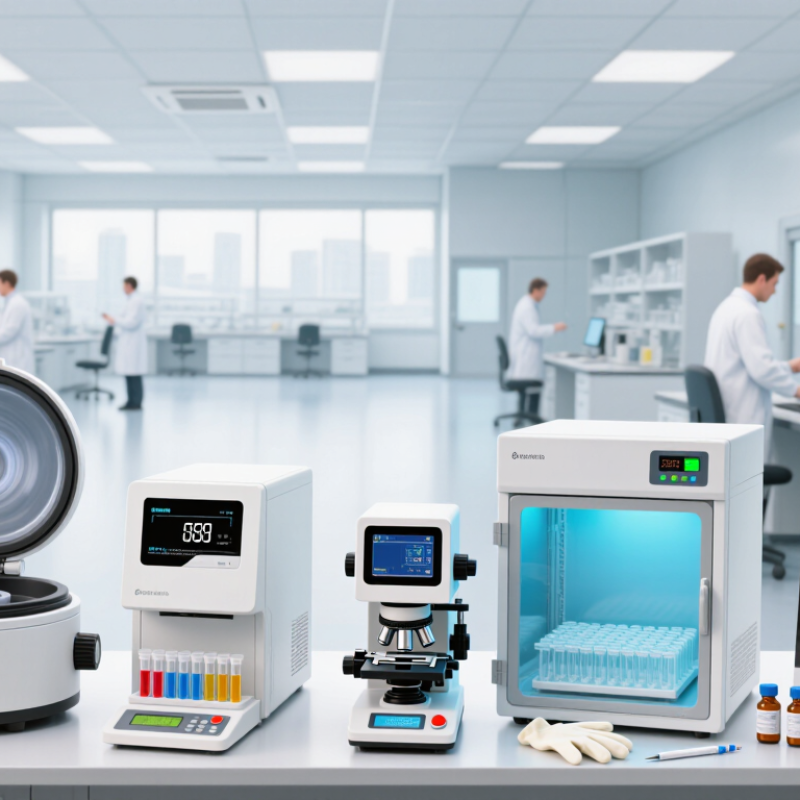
What Are the 2026 Top Laboratory Tools for Global Buyers?

Defining the Laboratory Tools Market for Global Buyers in 2026

Defining the Laboratory Tools Market for Global Buyers in 2026 requires more than listing popular instruments. It means judging accuracy, service access, data integrity, and total ownership cost. MarketandMarkets estimated the global laboratory automation market at about USD 5.3 billion in 2023, with growth toward roughly USD 7.1 billion by 2028. This expansion reflects demand for automated liquid handling, sample tracking, centrifugation, and high-throughput analysis.

Automation is only one part of the purchasing decision. Global buyers still need calibrated balances, low-retention pipettes, temperature-controlled storage, spectrophotometers, and molecular testing equipment. Grand View Research reported that laboratory automation growth is supported by rising testing volumes and pressure to reduce manual errors. A busy laboratory shows the issue clearly: a mislabeled tube can delay an entire batch, while unstable refrigeration can damage valuable samples.

Specifications matter. So does evidence.

Buyers should request calibration records, uncertainty data, maintenance schedules, and regional service response times. ISO/IEC 17025 remains a useful reference for testing and calibration competence. However, published market figures are not perfectly comparable; companies classify instruments differently, and regional pricing varies widely. A cheaper device may require costly consumables, specialist training, or frequent replacement parts. That weakness is easy to overlook. In 2026, reliable laboratory tools will be defined by verified performance, transparent support, and practical fit with each laboratory’s workflow.

Classifying the Main Types of Laboratory Tools and Their Uses

What Are the 2026 Top Laboratory Tools for Global Buyers?

Laboratory tools are easier to compare when classified by function, not appearance. Analytical instruments measure composition, concentration, and physical properties. Chromatography systems, spectrometers, and balances support this work. Sample-preparation tools include centrifuges, mixers, grinders, and homogenizers. They improve consistency before testing begins. Life-science laboratories often require thermal cyclers, microscopes, incubators, and microplate readers. These tools support molecular testing, cell studies, and routine screening. Safety equipment also matters. Fume hoods, biosafety cabinets, sterilizers, and cold-storage units protect samples and users. Grand View Research reported that the global laboratory equipment market reached about USD 39.7 billion in 2023. It forecasts approximately 7.1% annual growth from 2024 to 2030.

Digital tools now connect instruments with laboratory information systems and electronic records. They reduce manual transcription and help trace each result. However, automation does not guarantee reliable data. Poor calibration still produces poor results. ISO/IEC 17025 principles emphasize competence, traceability, and controlled measurement processes. Global buyers should check accuracy, operating temperature, power compatibility, spare parts, and technical support. A cheaper instrument may perform better when local maintenance is stronger. No classification is perfect. Some laboratories need compact equipment, while others need high-throughput platforms.

Tips: Match the tool to the sample, workload, and method. Request calibration evidence and validation records. Test software before purchase. Confirm service response times, training, and consumable availability. Leave space for ventilation and future capacity. In practice, the most advanced tool is not always the most useful.

What Are the 2026 Top Laboratory Tools for Global Buyers? - Classifying the Main Types of Laboratory Tools and Their Uses

Tool Category Primary Instrument Main Laboratory Uses Typical Samples Common Technical Range or Capacity Key Buying Criteria 2026 Buyer Priority Operational Notes
Liquid Handling Adjustable Micropipette Accurate transfer of microliter-scale liquids for analytical, molecular biology, clinical, and pharmaceutical workflows. Buffers, reagents, DNA/RNA solutions, cell suspensions Common volume ranges: 0.1–2.5 µL, 2–20 µL, 20–200 µL, and 100–1,000 µL Accuracy, precision, ergonomic design, autoclavability, calibration support, and compatibility with universal or specialized tips High Regular calibration and correct pipetting technique are essential for reliable results.
Sample Preparation Benchtop Centrifuge Separates components according to density, including cells, precipitates, nucleic acids, and serum fractions. Blood, urine, cell cultures, protein solutions, particulate suspensions Typical maximum relative centrifugal force: approximately 2,000–30,000 × g Rotor capacity, maximum speed, imbalance protection, temperature control, noise level, and tube compatibility High Rotor selection directly affects tube size, separation performance, and usable sample volume.
Thermal Processing Laboratory Incubator Maintains controlled temperature for cell growth, microbiological culture, sample conditioning, and stability studies. Microbial cultures, cell cultures, media, environmental samples Common operating range: ambient temperature plus 5 °C to approximately 60 °C Temperature uniformity, recovery time, chamber volume, contamination control, and data logging High Applications involving living cultures may require humidity, carbon dioxide, or contamination-control features.
Sterilization Steam Autoclave Uses saturated steam under pressure to sterilize laboratory instruments, glassware, media, and biohazard waste. Glassware, metal instruments, aqueous media, microbiological waste Common cycles use approximately 121 °C or 134 °C, depending on load and protocol Chamber volume, cycle validation, drying performance, safety interlocks, water quality, and serviceability High Load configuration and air removal are critical to achieving effective sterilization.
Optical Analysis UV-Visible Spectrophotometer Measures absorbance or transmittance for concentration analysis, reaction monitoring, and purity assessment. Clear liquid samples, nucleic acid solutions, protein solutions, colored compounds Common spectral range: approximately 190–1,100 nm Wavelength accuracy, photometric range, stray light, cuvette path length, software, and data export High Blank selection, sample turbidity, and cuvette cleanliness can significantly influence results.
Separation Science Liquid Chromatography System Separates, identifies, and quantifies dissolved compounds in complex mixtures. Pharmaceutical formulations, food extracts, biological fluids, environmental extracts Typical analytical flow rates: approximately 0.1–5 mL/min; pressure depends on column and system design Pump precision, detector compatibility, solvent management, pressure rating, column flexibility, and software workflow High Method development requires compatible columns, mobile phases, standards, and validated operating procedures.
Gas Analysis Gas Chromatograph Separates and measures volatile or semi-volatile compounds after vaporization. Solvents, essential oils, hydrocarbons, residual solvents, air samples Common oven temperature ranges extend from near ambient temperature to approximately 400 °C Injector design, detector selection, oven uniformity, carrier-gas control, column compatibility, and automation Medium Samples must generally be thermally stable and sufficiently volatile for the selected method.
Mass Measurement Analytical Balance Provides precise mass measurements for reagent preparation, formulation, gravimetric analysis, and quality control. Powders, solids, liquids in containers, reference materials Readability commonly ranges from 0.1 mg to 1 mg; capacity often ranges from 100 g to 500 g Repeatability, linearity, draft protection, vibration control, calibration options, and environmental monitoring High Stable temperature, low vibration, clean surfaces, and proper leveling are necessary for dependable readings.
pH and Electrochemistry Benchtop pH/Conductivity Meter Measures acidity, alkalinity, ionic conductivity, salinity, and related solution properties. Water, buffers, culture media, process solutions, wastewater samples Typical pH range: 0–14; conductivity ranges vary from low microsiemens to high millisiemens levels Measurement accuracy, temperature compensation, calibration memory, electrode quality, and data connectivity High Electrodes require suitable storage, regular calibration, and replacement when response time deteriorates.
Microscopy Digital Optical Microscope Provides magnified observation, imaging, documentation, and basic dimensional assessment of specimens. Cells, tissues, particles, fibers, materials surfaces, prepared slides Optical magnification commonly ranges from approximately 40× to 1,000× Optical resolution, illumination, camera performance, stage stability, image software, and ergonomic design High Magnification should be selected together with numerical aperture and resolution rather than alone.
Molecular Biology Real-Time PCR System Amplifies and monitors nucleic acids for gene expression, pathogen detection, genotyping, and research assays. DNA, RNA-derived complementary DNA, purified nucleic acid extracts Common formats include 48- or 96-reaction plates or tubes; optical channels vary by system Thermal uniformity, optical sensitivity, multiplex capability, contamination control, analysis software, and service support High Reliable results depend on validated primers, controls, clean workflow separation, and appropriate reference materials.
Cell and Tissue Processing CO₂ Incubator Maintains temperature, humidity, and carbon dioxide conditions for mammalian cell and tissue culture. Adherent cells, suspension cells, organoids, tissue cultures Typical set points include approximately 37 °C and 5% CO₂, subject to the cell model Temperature and CO₂ uniformity, humidity recovery, contamination control, sensor stability, and chamber cleaning High Frequent door opening, water quality, and cleaning practices affect culture stability and contamination risk.
Water and Solvent Purification Laboratory Water Purification System Produces water with defined purity for analytical testing, media preparation, rinsing, and instrument feed. Feed water, purified water, ultrapure water Product grades may include purified water and ultrapure water approaching 18.2 MΩ·cm resistivity at 25 °C Purity monitoring, flow rate, filter life, storage design, microbial control, alarms, and replacement costs High Water quality should be matched to the application; not every test requires the highest purity grade.
Mixing and Homogenization Vortex Mixer or Orbital Shaker Mixes small tubes, flasks, plates, and culture vessels to improve sample uniformity and reaction consistency. Cell suspensions, assay mixtures, extraction solvents, culture media Typical shaking speeds range from approximately 100 to 3,000 rpm, depending on the instrument type Speed range, orbit diameter, load capacity, timer, platform accessories, and continuous or touch operation Medium Mixing intensity should be controlled to prevent foaming, shear damage, or sample heating.
Drying and Concentration Laboratory Drying Oven Dries glassware and samples, removes moisture, and supports thermal conditioning or aging studies. Glassware, powders, metal parts, moisture-sensitive materials Common temperature range: ambient temperature plus 10 °C to approximately 250–300 °C Temperature uniformity, maximum temperature, air circulation, ventilation, chamber size, and safety controls Medium Materials with flammable solvents may require specialized equipment rather than a standard drying oven.

Evaluating Accuracy, Safety, Automation, and Digital Connectivity

What Are the 2026 Top Laboratory Tools for Global Buyers?

Accuracy now depends on more than instrument resolution. WHO reports that laboratory results influence about 70% of medical decisions, making calibration and traceability essential. In 2026, buyers should examine automated pipetting systems, digital balances, real-time monitoring sensors, and analytical platforms supporting ISO 15189 workflows. A temperature alarm should arrive before a refrigerator reaches an unsafe range. Small details matter.

Safety must be visible in daily use. Look for sealed sample paths, ergonomic loading, contamination controls, and documented maintenance intervals. Grand View Research estimates the laboratory automation market will continue growing through 2030, driven by labor pressure and higher testing volumes. Yet automation is not automatically reliable. Poorly configured software can repeat an error faster. Human review still has value.

Digital connectivity is becoming a purchasing requirement. Instruments should export structured results, record audit trails, and connect with laboratory information systems through recognized standards. The HIMSS Digital Health Indicator research shows that interoperability remains uneven across healthcare organizations. Buyers should test real data transfers, not trust a brochure. In practice, a disconnected smart tool can create extra manual work. That weakness is easy to underestimate.

Comparing Suppliers, Standards, Costs, and International Availability

For global buyers, the best laboratory tools are not always the newest or cheapest. In routine purchasing, I compare analytical balances, centrifuges, pipettes, microscopes, and spectrophotometers against the actual workflow. A tool must fit sample volume, accuracy requirements, operator skill, and available bench space. Small details matter. A balance may need a stable table and controlled humidity. A centrifuge may require compatible rotors, documented speed accuracy, and safe lid locking. Supplier evaluation should include technical support, calibration records, warranty terms, and replacement-part lead times. A polished catalogue is not enough.

International standards create a useful baseline, but they do not remove every risk. Buyers should request test reports, user manuals, electrical specifications, and calibration certificates traceable to recognized national or international standards. For quality-sensitive work, ISO/IEC 17025 calibration evidence can be important. Electrical safety, electromagnetic compatibility, and local import rules also vary by destination. Check voltage, plug type, language requirements, and service access before payment. I have seen delays caused by one missing document. That was avoidable.

The quoted price rarely shows total cost. Add freight, insurance, duties, installation, training, calibration, consumables, and disposal. Compare landed cost, not invoice price. Ask whether replacement parts can arrive within weeks, not months. Temperature-sensitive instruments need careful packaging and reliable transit monitoring. Some suppliers promise worldwide delivery but outsource support. That can be acceptable, yet response times need written confirmation. My comparisons are not perfect; exchange rates and customs decisions can change quickly. A short pilot order may reveal more than a long sales presentation. Keep records of every assumption.

What Are the 2026 Top Laboratory Tools for Global Buyers?

Indicative 2026 planning benchmarks for commonly purchased laboratory equipment, comparing typical purchase cost, international availability, and relevant standards.

Costs are indicative mid-market USD estimates before tax, freight, installation, and local certification. Availability scores reflect the number of major global regions where equivalent equipment is commonly distributed. Standards shown include ISO/IEC 17025, IEC 61010-1, ISO 13485, EN 12469, and ISO 15189, depending on the equipment category.

Selecting the Right Laboratory Tools for Different Research Needs

What Are the 2026 Top Laboratory Tools for Global Buyers?

Selecting the right laboratory tools starts with the research question, not the catalog page. Molecular biology teams may need adjustable pipettes, centrifuges, thermal cyclers, and contamination-controlled workspaces. Materials researchers often prioritize analytical balances, microscopes, hardness testers, and temperature-controlled chambers. Field laboratories need compact instruments, rechargeable power, and simple calibration checks. The best choice depends on sample volume, measurement range, workflow speed, and local service access. Bigger is not always better.

Tips: Match each tool to one documented task. Check accuracy, repeatability, cleaning requirements, and replacement parts before purchasing. Ask for calibration records and test unfamiliar equipment with reference samples. A clear warranty matters, but responsive technical support matters more. Keep the operator’s training level in mind. A sophisticated instrument can still fail when its interface is confusing.

Global buyers should compare electrical standards, software compatibility, shipping conditions, and language support. Confirm that consumables are legally importable and consistently available in the destination market. Review independent test data, user manuals, and laboratory feedback instead of trusting specifications alone. I have seen teams overlook bench space and ventilation, then delay installation for weeks. That mistake is avoidable, although planning is rarely perfect. Leave room for maintenance, future methods, and unexpected sample types. Reliability grows from careful verification, not impressive features.

Newsletter

Subscribe to our newsletter and receive the latest news and exclusive insights every month. No spam.