Explore cutting-edge articles on laboratory products, industry innovations, and research trends with Lab Consulting.
Choosing the right Hex Nut means balancing thread fit, load, environment, and assembly method. For global buyers, these details can affect installation time, maintenance, and the consistency of finished equipment. Common options include standard hex nuts, heavy hex nuts, nylon-insert lock nuts, flange nuts, and stainless-steel versions. Each serves a different purpose. A heavy pattern may suit demanding structural assemblies, while a flange can spread bearing pressure on a suitable surface. Locking features help resist loosening, but they do not replace correct torque or sound joint design. Material and finish matter. Carbon steel offers strength at competitive cost; stainless steel can help where moisture or frequent cleaning is expected. Yet corrosion performance depends on the exact grade, coating, exposure, and contact with other metals. Small details matter.
This 2026 buyer’s guide examines nut types through practical selection criteria rather than broad claims of universal superiority. It considers thread size and pitch, strength class, dimensions, coating, operating conditions, and compatibility with the mating bolt. Buyers should compare drawings, product markings, test documentation, and supplier consistency before approving a source. Where a project specifies a recognized standard, confirm the edition and dimensions against the engineering documents. Ask suppliers how they control material batches and inspection records. That evidence is useful. Prices and availability can vary by region, and cheaper components may increase rework if fit or finish is inconsistent. Still, paperwork alone cannot prove performance in every installation. Trial assemblies and qualified engineering review can reveal issues early. Some choices remain context-dependent. The comparisons ahead are intended to help buyers shortlist options, ask better questions, and make decisions that match real service conditions. Not every detail has a neat answer; that is worth admitting.
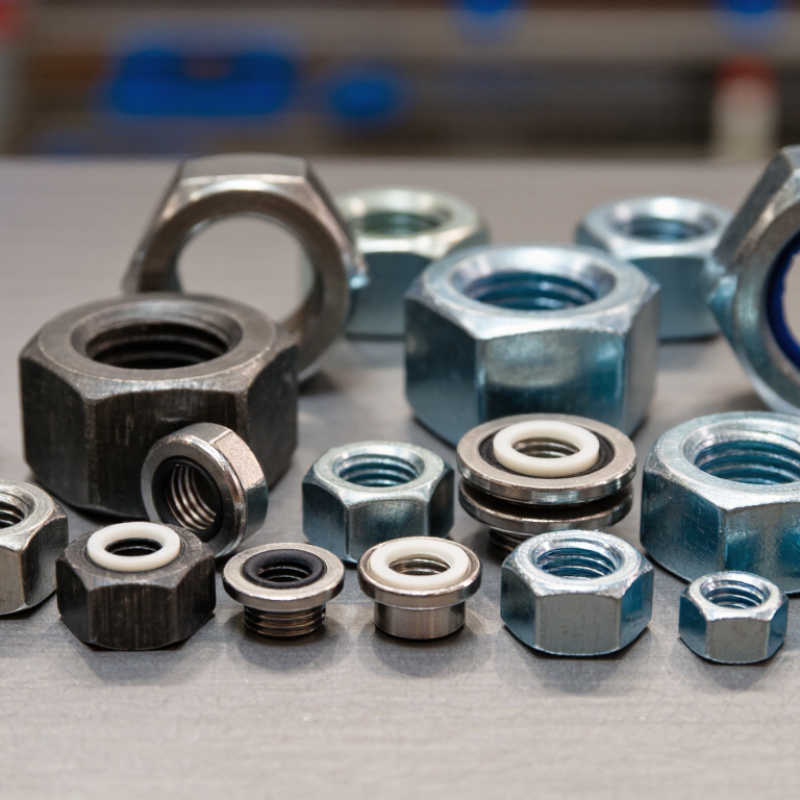
A hex nut is a threaded fastener with six flat outer faces and a central opening. Its shape gives a wrench several firm contact points. The tool grips opposing faces and turns the nut along a matching bolt or threaded stud. Simple, but not trivial. Tightening creates clamping force that holds joined parts together.
Inside the nut, threads must match the bolt in diameter and pitch. When the nut turns, those threads convert rotation into forward movement. The nut’s flat bearing face then presses against the connected material, helping keep the assembly secure. A poor thread match can bind, damage threads, or leave the joint loose. Check the fit before applying force.
For buyers, the six-sided profile is only one part of choosing a nut. Material, strength class, dimensions, and coating affect how it performs in a particular assembly. A coating may help resist corrosion, but it can also change fit slightly. One detail is easy to miss: appearance alone cannot confirm a nut’s strength class. Verify markings and specifications against the intended bolt and service conditions. Even careful selection has limits; vibration, heat, and repeated assembly can still loosen or wear a joint.
A hex nut’s six-sided shape gives a wrench several flat faces to grip. The chart compares nominal across-flats width for selected metric thread sizes: larger threads generally use wider nuts. Actual dimensions can vary by nut type, standard, and tolerance.
Reference: ISO 4032 nominal dimensions for regular hexagon nuts. Values shown are across-flats widths in millimetres.
How Standard, Heavy, Jam, and Flange Hex Nuts Differ
Standard hex nuts suit everyday assemblies where space and load requirements are moderate. Their familiar six-sided shape makes them easy to tighten with common tools. Heavy hex nuts have larger dimensions and thicker bodies. They are often selected for demanding connections, but the nut alone does not determine joint strength; bolt grade, materials, and installation matter too.
Jam nuts are thinner than standard nuts. Install one against another nut when a low-profile arrangement or resistance to loosening is needed. They are not a substitute for a purpose-designed locking system. Flange nuts add a wide, washer-like base that spreads pressure across the surface. Serrated versions may grip better, yet can scratch softer finishes. Small details matter.
Tips: Before ordering, confirm thread diameter, pitch, material, finish, and dimensional system. Metric and imperial threads can look deceptively similar. Check the mating bolt and available wrench clearance, too. I’ve seen selections go wrong when buyers compare only the nut’s outer shape. A sample fit can catch that mistake early.
For 2026 purchasing, match the nut to the exposure first, then confirm its strength class. The AMPP-sponsored IMPACT study estimated global corrosion costs at US$2.5 trillion annually, about 3.4% of global GDP. That figure is from 2013, not a current price tag, but it shows why corrosion protection matters. For dry indoor machinery, carbon-steel nuts with a zinc coating are often practical. Coastal spray and de-icing salts call for closer review: stainless steel can resist corrosion, yet chloride exposure may still cause pitting. That detail is easy to overlook.
For structural or high-load joints, verify the nut’s property class against the bolt and the relevant standard. ISO 898-2 covers mechanical properties of carbon- and alloy-steel nuts; ISO 3506-2 covers stainless-steel nuts. Hot-dip galvanizing offers a thicker zinc layer for outdoor exposure, but coating buildup can affect thread fit. Specify compatible, coated mating parts and confirm assembly requirements. In humid industrial settings, nickel-based or other engineered coatings may suit the process, but test compatibility with chemicals and temperature. A grade number alone is not enough. Check the drawing, service conditions, and supplier test documentation; real installations are sometimes less tidy than the specification.
| Hex Nut Type / Material | Common Grade or Standard | Typical Coating or Finish | Suitable Environments and Uses | Selection Notes |
|---|---|---|---|---|
| Carbon steel, general-purpose | ISO 898-2 property class 5 or 8; ASTM A563 grades may be specified for inch-series applications | Plain, zinc electroplated, or zinc-flake coating | Indoor machinery, furniture, equipment, and general assembly in dry or mildly corrosive conditions | Choose a nut strength class appropriate for the bolt and the specified assembly. Standard zinc electroplating is generally intended for relatively mild exposure, not prolonged marine or chemical exposure. |
| Quenched-and-tempered carbon or alloy steel | ISO 898-2 property classes 10 or 12, where the applicable dimensions and product standard permit | Controlled zinc-flake coating or another specified corrosion-protection system | High-load machinery, automotive assemblies, and equipment subject to substantial clamping forces | Match the nut, bolt, lubrication, and coating as a qualified assembly. Do not select a high-strength nut based on grade alone; follow the design and applicable product standards. |
| Heavy hex carbon steel | ASTM A563 Grade DH where specified for compatible structural bolting assemblies | Plain or hot-dip galvanized, according to the project specification | Structural steel connections and other engineered applications that call for heavy hex nuts | Use the nut grade, dimensions, bolt specification, and installation method required by the structural design. A heavy hex shape by itself does not establish strength or suitability. |
| Carbon steel, hot-dip galvanized | Underlying nut grade selected for the application; ASTM A563 requirements may apply to specified structural assemblies | Hot-dip galvanized zinc coating | Outdoor infrastructure, agricultural equipment, and exposed steelwork in general atmospheric conditions | Specify compatible galvanized mating components and thread dimensions. The thicker coating affects thread fit; use nuts and bolts produced for the same galvanized system. |
| Stainless steel, austenitic A2 (commonly 304 family) | ISO 3506-2 property class 70 or 80, when available and suitable for the required dimensions | Usually uncoated; passivated or cleaned as specified | Outdoor equipment, food-processing surroundings, and general applications where corrosion resistance is needed | A2 stainless resists many atmospheric conditions but can pit or corrode in chloride-rich or crevice conditions. Stainless fasteners can gall; compatible materials, clean threads, and suitable assembly practices matter. |
| Stainless steel, austenitic A4 (commonly 316 family) | ISO 3506-2 property class 70 or 80, when specified and available | Usually uncoated; passivated or cleaned as specified | Marine atmospheres and many outdoor or chemical-processing environments where improved chloride resistance over A2 is required | A4 offers improved resistance in many chloride environments compared with A2, but it is not immune to pitting, crevice corrosion, or every chemical. Confirm suitability for the actual concentration, temperature, and exposure. |
| Brass or copper-alloy hex nut | Alloy and mechanical properties specified by the supplier or applicable product standard; not directly interchangeable with steel property classes | Usually plain; decorative or functional finishes may be specified | Low-load electrical, plumbing, instrument, and decorative assemblies where the alloy is compatible with the service | Generally has lower mechanical strength than high-strength steel nuts. Check the alloy, load, temperature, and galvanic compatibility with connected metals. |
Selection guidance: Match the nut to the bolt, thread system, dimensions, load, temperature, and governing standard. Property classes describe mechanical performance; coatings and stainless-steel grades address corrosion resistance differently. For safety-critical, structural, pressure, or regulated applications, use the project specification and verify the complete fastener assembly.
Hex nuts may look interchangeable, but standards differ by market. Metric fasteners are common in many regions, while inch-based threads remain widely used in North America. A matching thread diameter alone does not guarantee compatibility. Thread pitch matters too. Check both before ordering.
Dimensional standards can also change the nut’s height and width across flats—the distance between two opposite faces, measured by a wrench. For example, a nut with an M10 thread may require a different wrench size under different specifications. ISO 4032 and North American ASME standards define different dimensional systems. Older drawings may also refer to superseded specifications, so confirm the actual dimensions rather than relying on a familiar label.
Material grades and markings vary as well. ISO property classes and North American grade systems are not automatically equivalent. Match the nut’s strength and material to the bolt, service conditions, and relevant specification. Coatings can affect fit, especially in tight assemblies. Small differences matter. Ask suppliers for a current data sheet, dimensional tolerances, and traceable test documentation. It is easy to overlook a legacy drawing; even experienced buyers should verify it before approving a shipment.
Choosing a hex nut starts with the joint, not the catalog photo. For general machinery with steady loads, a standard hex nut may be suitable when its thread and strength class match the bolt. Heavy hex nuts offer a larger bearing face for some structural connections, but they need compatible bolts and enough clearance. Check the assembly drawing and supplier specifications; appearance alone is not a reliable guide.
Vibration changes the choice. A nylon-insert lock nut can resist loosening in many applications, but heat may limit where it works well. All-metal lock nuts can suit hotter conditions, though installation torque may feel higher. Flange nuts spread pressure across a wider area, useful on slotted or softer surfaces. Jam nuts help where space is tight. Fit matters.
Material deserves equal attention. Stainless steel can help in damp environments, while coated carbon steel may suit other conditions; pairing dissimilar metals can create corrosion concerns. Confirm thread pitch, temperature range, expected load, and exposure before ordering. A nut that fits the bolt can still be wrong for the job. I have seen buyers focus on strength and overlook access for a wrench. That detail is easy to miss, and worth checking early.
Subscribe to our newsletter and receive the latest news and exclusive insights every month. No spam.
LabConsulting GmbH and LC LabService GmbH are Austrian companies which cooperate with over 600 manufacturers and offers a selection of more than 180,000 products and various laboratory product and service solutions for our Labcustomers.
Die LabConsulting GmbH und die LC LabService GmbH sind österreichische Unternehmen, die mit über 600 global verteilten Herstellern zusammenarbeiten und mit einer Auswahl von mehr als 180.000 Produkten und verschiedenen Laborprodukt- und Servicelösungen unseren Parnern im Labor anbieten.
INSTOCK CATALOGOur services
Our services